Reviewed · TOURS IN BUDAPEST
Memento Park Entrance Ticket
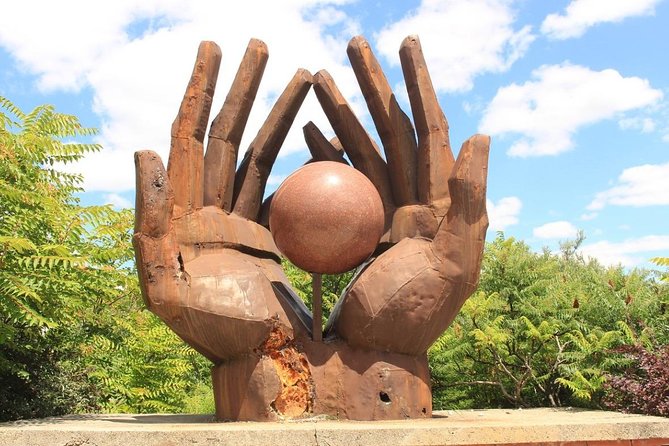
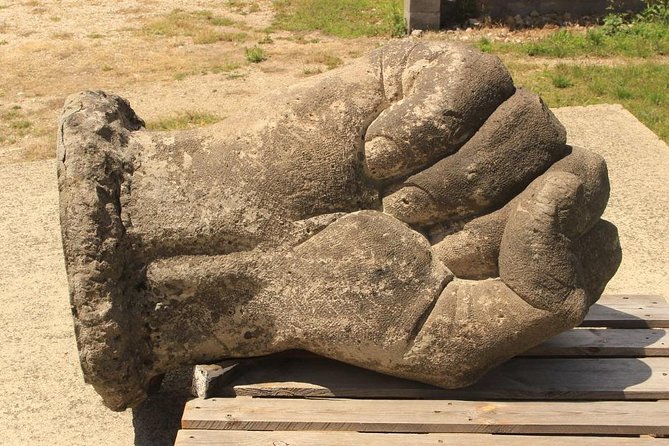
Memento Park gathers 42 oversized Communist-era statues in one open-air site outside Budapest. Lenin, Marx, Engels, Red Army soldiers, and political figures once displayed in public spaces now sit together, making the old system easier to examine than it ever was in the city center.
I like the park’s directness, and I like the chance to see the six-meter Liberation Army Soldier that once towered over Budapest from Gellért Hill. The mobile ticket is simple, and the visit can take less than an hour or stretch to two and a half hours. The main drawback is its location, about a 20-minute drive from central Budapest, so you need to allow extra time for the trip.
Key points to know before you go
- Forty-two original Communist-era works: See monuments tied to Hungarian-Soviet friendship, liberation, labor movements, and the Red Army.
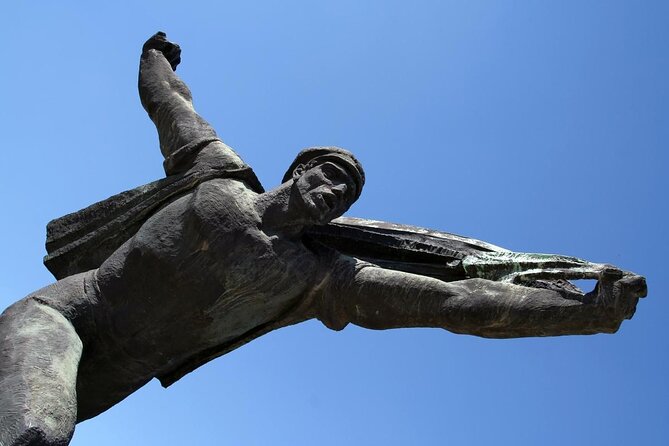
- The six-meter soldier: Look for the Liberation Army Soldier with a hammer-and-sickle flag and a cartridge-disc machine pistol around his neck.
- A short or lengthy visit: The stated visit time ranges from 45 minutes to 2 hours and 30 minutes.
- Outside central Budapest: The park is about a 20-minute drive from the city, near public transportation.
- Mobile admission: Your ticket is provided for mobile use, and admission to Memento Park is included.
- Flexible cancellation: Cancel at least 24 hours before the start time for a full refund.
Why Memento Park matters in Budapest
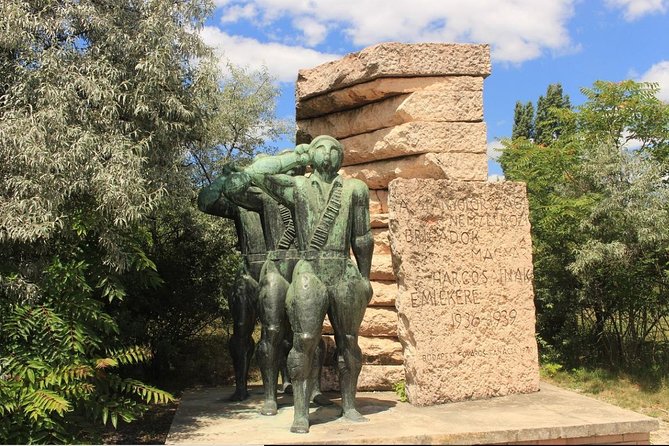
Budapest is filled with reminders of its complicated 20th-century past, but most city sightseeing keeps moving. Memento Park gives you time to stop and look at the statues that once carried official political messages.
The park presents 42 pieces from the Communist period between 1945 and 1989. That range matters. You are not seeing one monument from one year. You are seeing a collection linked to several decades of Hungarian public life, Soviet influence, labor politics, military power, and official ideas about liberation.
The setting also changes how you read the statues. In their original locations, these works were meant to dominate public spaces. They directed attention, honored political leaders, or presented a particular version of history. At Memento Park, they are grouped together outside the city, where you can compare their size, poses, symbols, and subjects in one visit.
I find that arrangement useful because it removes some of the original political power. The statues remain huge and serious, but the park lets you examine them as objects. You can think about what each figure was meant to communicate, and how that message changes when the monument is no longer placed in front of a government building, on a major hill, or in a central square.
Other tickets worth booking ahead in Budapest:
- Budapest: Széchenyi Spa Day Ticket with Optional Upgrades
★ 4.3 · 23,911 reviews - Budapest: Parliament Building Entry Ticket and Audio Guide
★ 4.5 · 3,844 reviews - Budapest: Full-Day Gellért Spa Ticket
★ 4.2 · 3,340 reviews
The 42 statues and their Communist-era subjects
The collection includes allegorical monuments connected with Hungarian-Soviet friendship and liberation. It also includes statues of people linked with the labor movement, soldiers of the Red Army, and other figures presented as heroes of the Communist world.
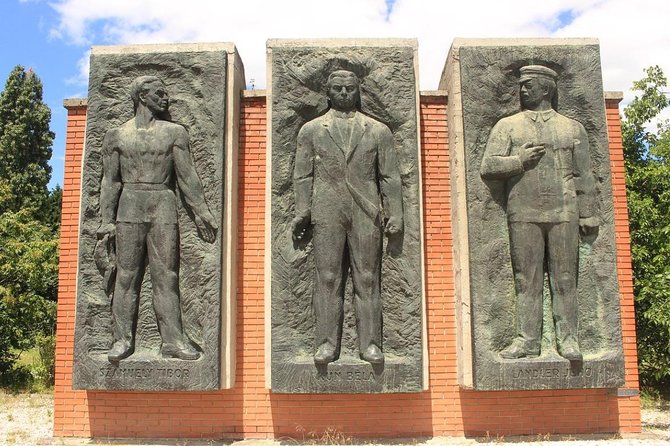
You will see names such as Lenin, Marx, Engels, Dimitrov, Captain Ostapenko, and Béla Kun. Each name carries a different political association, but the park brings them into the same walk. For you, that means the visit is less about one famous statue and more about seeing how a whole public system represented authority and ideology.
The statues are also physically striking. Communist monuments often used scale to make people look powerful, historic, or larger than ordinary life. At Memento Park, that scale becomes one of the main things to notice. Compare a standing figure with a military monument or an allegorical group, and you begin to see how the artists used posture and mass to create a public message.
The park is not presented as a collection of small museum objects. These are large outdoor works. Give yourself room to look at them from different angles. At close range, you can notice details that would have been hard to see from the street. From farther away, you can judge the effect their size was meant to create.
The Liberation Army Soldier is the park’s memorable centerpiece
The most distinctive work described for the park is the Liberation Army Soldier. This six-meter statue once stood on top of Gellért Hill in central Budapest, where it could be seen from every direction.
The figure carries a hammer-and-sickle flag. A cartridge-disc machine pistol hangs around his neck. Those details make the statue more than a generic military figure. They show how political symbols and military power were combined in official public art.
The statue’s evil-eyed expression is another detail worth noticing. The face gives the figure a stern, forceful quality, while its size makes it difficult to ignore. In its former position on Gellért Hill, the statue had a citywide presence. At Memento Park, you can study it at ground level and consider the difference between seeing a monument from far away and standing near it.
I would give this statue extra time even if you are making a short visit. It is one of the clearest examples of how the park turns Budapest’s former public symbols into objects for examination. You can look at the flag, the weapon, the face, and the pose without having to rush past it in city traffic.
Allow 45 minutes, or stay for 2.5 hours
The stated duration ranges from 45 minutes to 2 hours and 30 minutes. That is a wide range, but it makes sense for a site where your pace depends on your interest in political history, sculpture, and visual detail.
A 45-minute visit works if you want to see the major works, focus on the most recognizable names, and spend a little time with the Liberation Army Soldier. It is a practical choice if Memento Park is one stop in a busy Budapest day.
Plan closer to two hours or more if you like reading context, comparing the statues, and thinking about how public monuments work. The park’s value is not only in counting the 42 pieces. It is in noticing repeated ideas: labor, military service, friendship with the Soviet Union, liberation, and the presentation of political figures as heroic.
You do not need to force yourself to stay for the full two and a half hours. The flexible duration is useful because you can match the visit to your own interest. Someone curious about sculpture may finish sooner than someone focused on Hungary’s Communist period.
The opening hours provided for this experience are 10:00 a.m. to 4:00 p.m., Monday through Sunday. That daytime schedule gives you a clear window, but it also means you should avoid arriving near closing if you want a long visit.
A completely different kind of day out:
- Budapest: City Highlights Cruise with Welcome Drink
★ 4.6 · 35,610 reviews - Budapest: Unlimited Prosecco, Beer and Aperol Spritz Cruise
★ 4.8 · 25,310 reviews - Budapest: Nighttime or Daytime Sightseeing Cruise
★ 4.2 · 21,062 reviews - Budapest: 1-Hour Evening Sightseeing Cruise with Drink
★ 4.5 · 8,330 reviews
Getting to an out-of-center Budapest site
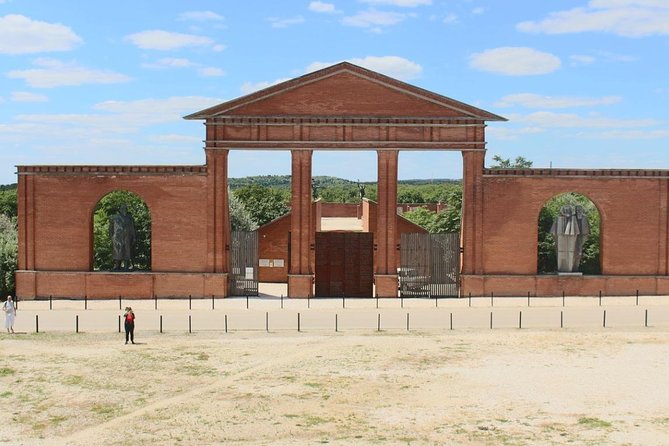
Memento Park is not in the middle of the city. The supplied practical information places it about a 20-minute drive outside Budapest and near public transportation.
That distance is the main planning issue. A visit takes more than the time spent among the statues because you also need to account for getting out there and returning. If your Budapest schedule is tight, place the park alongside other plans in the same part of town, if that works for your route.
The mobile ticket helps once you arrive. You do not need to manage a paper admission ticket, and confirmation is received at booking. The information also says most people can participate, but it does not provide detailed accessibility information, so you should check directly if you have specific mobility needs.
Because the park is a separate stop rather than a monument you can casually pass while walking through central Budapest, I would treat it as a planned outing. Set aside a block of daytime, check the opening hours, and avoid squeezing it between two appointments with little time for transport.
What the ticket gives you for the price
The listed price is $11.41 per person, with admission included. For a site containing 42 major outdoor works, that is a modest entry cost, especially if you have a serious interest in modern European history or political sculpture.
The value depends on how you visit. If you spend only 45 minutes looking at a few statues, the ticket is still reasonably priced, but the trip to the park may feel like a larger part of the outing. If you stay for two hours or more and examine the collection carefully, the admission feels stronger because you are getting time with a large group of works rather than a single monument.
There is no guide name or guided commentary specified for this ticket. You should book it as admission to the park, not as a promise of a personal guide. That distinction matters if you want structured historical explanation at every stop.
For me, the ticket makes the most sense for visitors who already know they want to see Communist-era monuments. If you have no interest in political history or monumental sculpture, the trip outside central Budapest may not offer enough payoff. If you are curious about how a former political system presented itself through public art, the price is easier to justify.
Who will get the most from this visit
Memento Park suits you if you enjoy history that is presented through real objects rather than only through indoor displays. The statues are large, physical, and openly political. You can see how a government used public art to honor people, shape memory, and promote certain ideas.
It is also a good fit for anyone interested in Hungary’s 20th-century changes. The collection covers the Communist era from 1945 to 1989, so the park offers a way to think about the years between the postwar period and the end of Communist rule.
Architecture and sculpture enthusiasts may enjoy the visit for a different reason. The works show how posture, scale, symbols, and group arrangements can make a statue feel commanding. You do not need to agree with the messages these monuments once carried to study how they were made to work.
Families with older children may find the statues an accessible starting point for discussing propaganda, public memory, and political change. The subject can be serious, but the giant figures make the park visually clear. Younger children may simply notice the size and unusual details, such as the weapon and flag carried by the Liberation Army Soldier.
You may want to skip it if you have only a few hours in Budapest and prefer central sights. The park requires a separate trip, and the experience rewards attention rather than quick photo stops.
A practical way to plan your walk
Start by looking at the collection as a whole. Notice the size and repeated political themes before choosing individual statues. This gives you a better sense of the park than immediately checking off famous names.
Next, spend time with the best-known figures: Lenin, Marx, Engels, Dimitrov, Captain Ostapenko, and Béla Kun. Their presence shows the range of political and ideological figures represented in the park.
Then focus on the military works and the monuments connected with liberation and Hungarian-Soviet friendship. Compare the way soldiers are presented with the way labor leaders and political figures are shown.
Finish with the Liberation Army Soldier. Its former location on Gellért Hill gives the work a strong connection to Budapest beyond the park itself. Seeing it at close range, rather than high above the city, helps you think about how much a monument’s location changes its meaning.
The collection contains enough material for a thoughtful visit, but you do not need to treat it like a race. Pause at the pieces that catch your eye. Look for symbols before moving on. If your interest fades after the main monuments, a shorter visit is perfectly reasonable.
Booking, opening hours, and cancellation
You can book the admission ticket for mobile use, and confirmation is provided at the time of booking. The experience is offered Monday through Sunday from 10:00 a.m. to 4:00 p.m., according to the stated schedule covering November 25, 2019 through February 16, 2027.
Free cancellation is available if you cancel at least 24 hours before the experience start time. Cancellations made within 24 hours are not refunded, and changes within that period are not accepted. The cut-off is based on local time.
The experience is often booked about 24 days ahead. That does not guarantee that you must book that early, but it is a useful planning signal if your Budapest dates are fixed.
Should you book Memento Park?
Book it if you want a clear, physical look at Budapest’s Communist-era public art and you are willing to travel about 20 minutes outside the city center. The 42 statues, especially the six-meter Liberation Army Soldier, give the visit a strong visual focus.
Skip it if your time is very limited or your interests lie mainly in central Budapest architecture, cafes, and traditional sights. The ticket is inexpensive, but the real cost is the extra time needed to reach the park.
For the right visitor, Memento Park is a worthwhile addition to Budapest. It does not pretend these monuments are ordinary decoration. It lets you look closely at the symbols and the scale, then decide what these former heroes mean now.
FAQ
How many statues are at Memento Park?
Memento Park displays 42 pieces of art from Hungary’s Communist era between 1945 and 1989.
What famous figures can I see at the park?
The collection includes Lenin, Marx, Engels, Dimitrov, Captain Ostapenko, Béla Kun, Red Army soldiers, and other figures connected with the Communist world.
How long does a visit to Memento Park take?
The approximate visit time is 45 minutes to 2 hours and 30 minutes, depending on how closely you examine the collection.
What are Memento Park’s opening hours?
The stated opening hours are 10:00 a.m. to 4:00 p.m., Monday through Sunday.
Is admission included with the ticket?
Yes. Admission to Memento Park is included, and the ticket is available for mobile use.
Can I cancel for a full refund?
Yes, if you cancel at least 24 hours before the experience start time. Cancellations made less than 24 hours before the start time are not refunded.
Just added around Budapest
- Walk to recent and aged spiritual sanctuaries near Budapest★ 5.0 · 5 reviews
- Budapest: Private Walking Tour with a Local Guide★ 3.6 · 6 reviews
- Budapest: City Bike Tour with Coffee Stop★ 5.0 · 37 reviews
- Budapest: Danube River Views Bike Ride★ 4.8 · 23 reviews
- From Budapest: Guided Tour of Eger with Wine Tasting★ 4.5 · 6 reviews
- Trash Art Museum: Hungary’s First Scrap Metal Exhibition★ 4.3 · 72 reviews
- True Crime Walking Tour in the Buda Castle district★ 5.0 · 26 reviews
- Budapest: 3-Hour Trabant Sightseeing Tour★ 4.7 · 28 reviews
Tours in Budapest, compared.

Unlimited Prosecco, Beer and Aperol Spritz Cruise
Read our review →
Széchenyi Spa Day Ticket with Optional Upgrades
Read our review →


Budapest Danube Cruise and Dinner Options, Live Music and Dance
Read our review →