Reviewed · TOURS IN BUDAPEST
Pest side stories with a Historian
Pest is best understood on foot, and this tour turns its streets into a history lesson. You’ll move from a former market square and Stalin-era public space to Heroes’ Square, a castle built for a 19th-century celebration, and Europe’s oldest underground railway. I like the small group of up to 10 and the way the route links politics, architecture, and everyday city life. I also like that metro tickets and refreshments are included.
The catch is simple: three hours covers a lot of ground. Past participants describe an easy pace, but also a long walk, and a hot afternoon can make the route tiring. The Basilica visit depends on group interest, and the tour begins at 2 p.m., so it may not suit anyone looking for a slow, museum-style afternoon.
Key points at a glance
- A history-led walk across Pest: The route explains more than Budapest’s postcard sights, including the city’s changing political eras.
- A compact group: With no more than 10 people, it is easier to hear the guide and ask questions.
- Seven major stops: You’ll see Elizabeth Square, St. Stephen’s Basilica, Heroes’ Square, Vajdahunyad Castle, Andrassy Avenue, Vorosmarty Square, and the Millennium Underground.
- A lot of walking in three hours: The pace is described as manageable, but the distance is real, especially in warm weather.
- Practical extras included: Your guide, refreshments, and metro tickets are covered in the $58.94 price.
- A flexible finish: The listed ending is St. Stephen’s Basilica, though the tour may finish at another central Pest location near the start.
Why this Pest walk works as a history lesson
The best feature here is the route itself. Instead of treating Budapest as a string of unrelated monuments, the tour connects places that show how Pest changed over time.
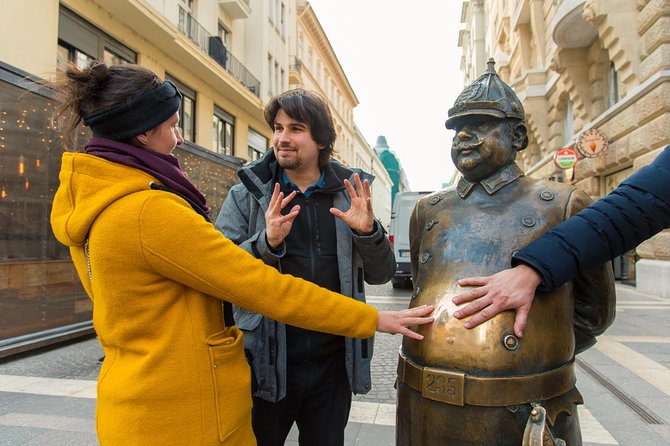
You begin at Elizabeth Square, a useful starting point because its past is unusually varied. It was once a market square, later a Stalin-era public space, and then a bus station. Today it is known as a young, social part of central Pest, with public art and statues. That shift gives your guide a chance to explain how city spaces change with politics, transport, and daily life.
From there, the route moves through major civic and religious sites. You are not simply ticking off buildings. The tour is designed to explain why they were built, what they represented, and how Hungary’s past shaped the city you see now.
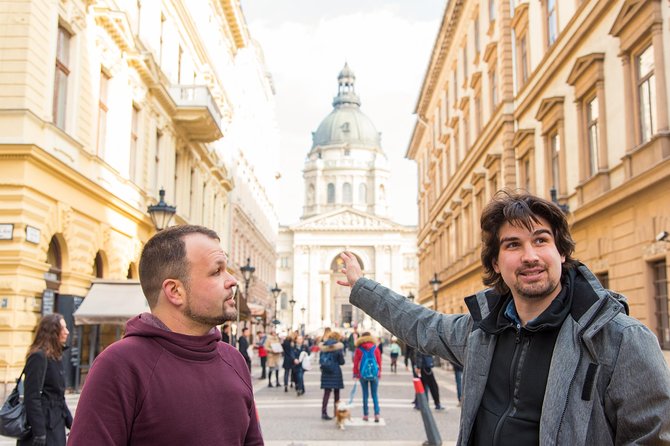
The small group matters. A limit of 10 people gives the historian room to stop, answer questions, and adjust the explanation to the group. It also avoids the problem of trying to hear a guide across a large crowd. Several guides are associated with the experience, including Steven, Andrew, and Greg, and the comments about them point to a calm pace and strong historical storytelling.
Other days travellers book around Budapest:
- Budapest: City Highlights Cruise with Welcome Drink
★ 4.6 · 35,610 reviews - Budapest: Unlimited Prosecco, Beer and Aperol Spritz Cruise
★ 4.8 · 25,310 reviews - Budapest: Széchenyi Spa Day Ticket with Optional Upgrades
★ 4.3 · 23,911 reviews
Elizabeth Square: from market ground to modern meeting place
Elizabeth Square, where you meet at the Kempinski Hotel Corvinus Budapest, gets about 20 minutes. This is not merely a convenient pickup point. Its past gives the tour an early lesson in Budapest’s layers.
The square has served as a market area, a Stalin-era square, and a bus station. Now it is a central gathering place with statues and a youthful social scene. That contrast is useful because it shows how public space can be repurposed as governments, transport systems, and city habits change.
I would pay close attention here to the guide’s opening explanation. It sets up the rest of the afternoon, especially the focus on invasions, wars, political power, and the endurance of Hungarian identity.
There is no admission fee for this stop. The main limitation is that Elizabeth Square is an orientation stop, not a long sightseeing visit. If you want time to sit, photograph every statue, or explore the surrounding streets, you will need to return later.
St. Stephen’s Basilica and the shape of central Pest
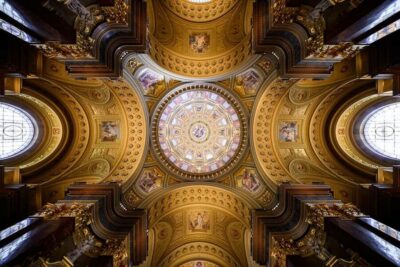
The next stop is St. Stephen’s Basilica, listed for about 20 minutes. It is Budapest’s largest church and one of the defining buildings in central Pest.
The tour may enter if the group is interested. That wording is worth noting: you should not treat an interior visit as a guaranteed, fixed part of the afternoon. The group’s interest helps shape what happens here, and the schedule allows only a short stop.
The Basilica is also the planned ending point, so you may have a chance to look around again after the formal tour ends. If the group follows the full walking route, the tour may instead finish at another central point in Pest close to the starting area.
This stop works well for visitors who want architecture explained in context rather than viewed in silence. It is less suitable if your main goal is a long interior visit or a detailed look at every religious artwork. For that, plan a separate visit.
Heroes’ Square: Budapest’s quickest history lesson
Heroes’ Square receives roughly 30 minutes and is one of the most important stops on the route. It is an ideal place to get a basic timeline of more than 1,100 years of Hungarian history.
The square’s statues and monumental design provide the setting, but the guide supplies the meaning. You will hear how Hungary’s rulers, conflicts, and national ideas shaped the figures represented here. This is where a historian guide can add real value. On your own, you can admire the scale. With a clear explanation, the monument becomes a visual outline of the country’s past.
The stop is also practical for first-time visitors. If you are still trying to understand the relationship between Buda and Pest, the city’s changing rulers, or the impact of wars and invading powers, this is a good place to ask questions.
The drawback is exposure. The tour takes place in the afternoon, and the walk can feel demanding on a hot day. Bring water and wear shoes you can use comfortably for several hours. Refreshments are provided, but I would not treat that as a substitute for planning your own hydration.
A completely different kind of day out:
- Budapest: Nighttime or Daytime Sightseeing Cruise
★ 4.2 · 21,062 reviews - Budapest: 1-Hour Evening Sightseeing Cruise with Drink
★ 4.5 · 8,330 reviews - Budapest Danube Cruise and Dinner Options, Live Music and Dance
★ 4.5 · 7,428 reviews - Budapest: Historic Cruise with Welcome Drink
★ 4.7 · 6,512 reviews
Vajdahunyad Castle and a very Budapest surprise
Vajdahunyad Castle is one of the more unusual stops. It looks medieval, but it was built in 1896. That fact alone makes it worth seeing, especially if you assume every old-looking building in Budapest is genuinely ancient.
The guide explains why and how the castle was created. This is the kind of detail that can change the way you see the monument. Its appearance draws on historic architectural styles, while its date connects it to a major period of Hungarian commemoration and national pride.
The tour allows about 30 minutes here. That is enough for an explanation and a look around, but not a full museum visit or a leisurely exploration of every corner. The appeal is the story behind the building and its setting, not simply the chance to take a castle photograph.
This is also one of the stops that helps keep the tour from feeling like a standard downtown circuit. You get a better sense of how Budapest used historic styles to express identity and celebrate the past.
Andrassy Avenue: Budapest’s grand urban spine
Andrassy Avenue receives another 30 minutes. Budapest considers it one of its proudest streets, and it has been a UNESCO World Heritage site since 2002.
The avenue is important because it ties several parts of the city together. It is not just a pleasant boulevard. It reflects the city’s ambition, planning, architecture, and public life. A historian guide can point out how the avenue fits into the larger development of Pest and why it matters beyond its elegant appearance.
This part of the walk may appeal most to you if you enjoy buildings, urban design, and the story of how a capital presents itself. It is also a chance to connect the earlier stops. The grand civic spaces, national monuments, and transport system all belong to the same effort to shape a modern European city.
The practical issue is pace. Thirty minutes on an avenue sounds relaxed, but you are still moving through a much longer three-hour route. If you want extensive shopping or time inside every building, this tour will not provide it.
Vorosmarty Square and the commercial heart of Pest
Vorosmarty Square gets about 15 minutes. It is an iconic central square, focused on commerce, high-end products, and the heart of historic Pest.
This is a shorter stop, but it adds a useful contrast. Heroes’ Square shows national memory on a monumental scale. Vorosmarty Square shows the city as a place for trade, consumption, meeting, and public life.
The guide can help you see how central Pest balances old architecture with modern commercial activity. It is also a convenient place to note where you are in relation to the rest of the city. Since the tour starts near Elizabeth Square and may finish near the Basilica or another central point, you remain within a practical part of Pest throughout.
Do not expect a shopping break here. Fifteen minutes is enough for orientation and explanation, not for browsing shops or stopping for a long coffee.
The Millennium Underground: a ride with real historical weight
The final listed stop is the Millennium Underground, with about 30 minutes. It is the oldest underground railway on the European continent, and the metro ride gives the tour a change of pace after so much walking.
The included metro ticket is more than a small convenience. It lets the guide use public transport as part of the story, while you experience a working piece of Budapest infrastructure. It also breaks up the route and helps cover more ground in the limited time.
This is one of the strongest practical touches in the tour. A walking route that tried to cover all these places without public transport would either feel rushed or require a much longer afternoon. The underground makes the itinerary possible within roughly three hours.
Still, the metro segment is not a substitute for a full transport-history tour. The focus remains on Budapest’s wider story and the places along the route. You will use the system as part of the journey, then continue with the guide’s explanation.
How much walking should you expect?
You should prepare for a substantial amount of walking. The scheduled times add up to roughly three hours, and the route covers much of central Pest, from Elizabeth Square to Heroes’ Square, Vajdahunyad Castle, Andrassy Avenue, and back toward the city center.
The pace is intended to be easy rather than hurried. Andrew, one of the guides mentioned in the feedback, is specifically associated with keeping the pace comfortable across a large area. That said, an easy pace does not remove the distance.
This tour suits you best if you enjoy walking and prefer seeing a city in sequence. It is less suitable if you need frequent seated breaks, want a very short route, or prefer to remain inside museums and churches.
Wear comfortable shoes. For a warm afternoon, bring water, sun protection, and a light layer. The tour includes refreshments, but the provided information does not specify what they are, so it is sensible to carry anything else you may need.
What the $58.94 price includes
At $58.94 per person, this is not the cheapest way to see central Pest. The value comes from the combination of a historian guide, a maximum group size of 10, refreshments, and metro tickets.
A large group tour may cost less, but you usually give up the chance to ask questions easily or hear every explanation. Here, the small group is the main reason the price can make sense. You are paying for interpretation and a focused route, not simply transportation between monuments.
There are no separate admission fees listed for the stops. The Basilica visit depends on group interest, and the main sights are viewed as part of the walk. You should think of this as a guided city walk with public transport included, not as a package of paid museum entries.
The tour is often booked about 32 days ahead. That suggests you should reserve early if your Budapest schedule is fixed, especially since the group is capped at 10 people.
Who should book this experience?
I would recommend it to a first-time Budapest visitor who wants a clear introduction to Pest and prefers stories over a checklist of photo stops. It is also a good fit if you want to understand how Hungarian history appears in public squares, monuments, streets, and transport.
History fans will get the most from it, especially those interested in changing political powers, war, national identity, architecture, and urban development. The tour also works for anyone who wants a small-group alternative to a large bus excursion.
Families and older participants should judge the walking distance carefully. Most people can participate, and service animals are allowed, but the route covers a broad area and includes extended time on foot. The tour is near public transportation, which helps, but the provided details do not promise an adapted route or special mobility arrangements.
Final verdict: a strong choice for context and connection
Book this tour if you want Pest explained as a connected story rather than a collection of famous buildings. The strongest features are the historian guide, the 10-person limit, the unusual contrast between places such as Elizabeth Square and Vajdahunyad Castle, and the practical use of the Millennium Underground.
Skip it if you want a slow afternoon, guaranteed Basilica entry, or lots of free time at each stop. The route is ambitious, and hot weather can make the distance feel longer.
For most first visits, I think the $58.94 price is fair because it combines a focused guide with metro tickets, refreshments, and a small group. Book at least a few weeks ahead if possible, wear good shoes, and arrive ready to walk.
FAQ
Where does the tour begin?
The tour begins at Kempinski Hotel Corvinus Budapest, at Erzsébet tér 7-8, 1051 Hungary.
What time does the tour start?
The scheduled start time is 2:00 p.m.
How long does the tour last?
The tour lasts approximately three hours.
Where does the tour end?
The listed ending point is St. Stephen’s Basilica at Szent István tér 1. It may also finish at another central Pest location close to the starting point.
How many people can join the tour?
The group has a maximum of 10 participants.
Is the tour offered in English?
Yes. The tour is offered in English.
Are metro tickets included?
Yes. Metro tickets are included, along with the guide and refreshments.
Can I cancel for a full refund?
Yes, if you cancel at least 24 hours before the local start time. Cancellations or changes made less than 24 hours before the start are not refunded or accepted.
Just added around Budapest
- Walk to recent and aged spiritual sanctuaries near Budapest★ 5.0 · 5 reviews
- Budapest: Private Walking Tour with a Local Guide★ 3.6 · 6 reviews
- Budapest: City Bike Tour with Coffee Stop★ 5.0 · 37 reviews
- Budapest: Danube River Views Bike Ride★ 4.8 · 23 reviews
- From Budapest: Guided Tour of Eger with Wine Tasting★ 4.5 · 6 reviews
- Trash Art Museum: Hungary’s First Scrap Metal Exhibition★ 4.3 · 72 reviews
- Budapest: 3-Hour Trabant Sightseeing Tour★ 4.7 · 28 reviews
- True Crime Walking Tour in the Buda Castle district★ 5.0 · 26 reviews
Tours in Budapest, compared.

Unlimited Prosecco, Beer and Aperol Spritz Cruise
Read our review →
Széchenyi Spa Day Ticket with Optional Upgrades
Read our review →

Budapest Danube Cruise and Dinner Options, Live Music and Dance
Read our review →