
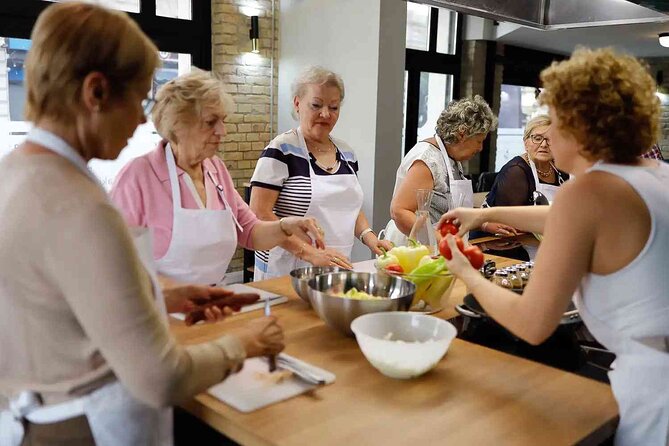
Reviewed · COOKING CLASSES
Hungarian Home Cooking Class with Chef Marti
Hungarian food makes the most sense when you are standing at a kitchen counter with paprika on your fingers. This 2.5-hour class with Chef Marti takes you into a cozy Budapest apartment, where you taste local ingredients, prepare a classic dish, and learn how Hungarian cooking fits into family life.
I like the hands-on format. You do not simply watch someone stir a pot. You help prepare the food, learn small cooking tricks, and receive printed recipes for home. I also like the personal local advice, from restaurant suggestions to tips on where to buy Hungarian products. The main consideration is that the class needs at least four participants to operate, and the standard menu includes meat, dairy, egg, and flour, so you should discuss dietary needs when booking.
Key points to know before booking
- Chef Marti teaches in a real Budapest apartment, not a large commercial kitchen, giving the class a home-style feel.
- You taste Hungarian ingredients as you cook, including several kinds of paprika, sausage, and spicy curd-cheese spread.
- The menu can be adapted, with vegetarian, gluten-free, lactose-free, and nut-free requests accepted when arranged in advance.
- Hotel pickup and drop-off are included, while the listed meeting point is at Király u. 77.
- The group is limited to 10 people, and a small booking can sometimes become a private lesson.
- Your $106.92 pays for more than lunch, including instruction, drinks, ingredients, recipes, transport, and local conversation.
Cooking Hungarian food in Chef Marti’s apartment
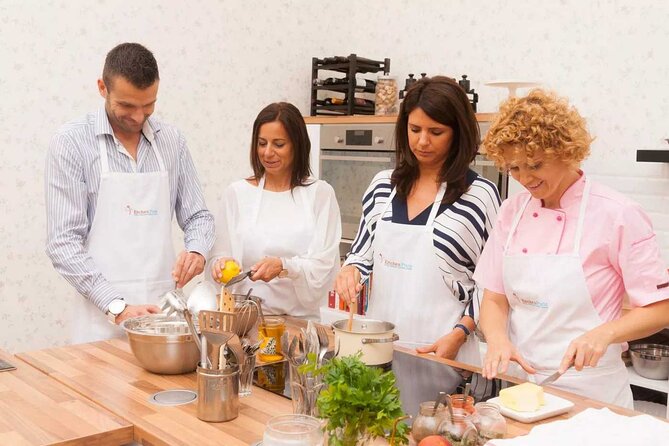
The heart of this experience is the setting. You meet at Budapest’s Király u. 77, or use the included hotel pickup and drop-off, then settle into a private apartment in a historic upper-middle-class building. It is arranged as a cooking studio, with a well-equipped kitchen and a comfortable dining room.
That setting matters. Hungarian food is tied closely to the home, and this class gives you a better sense of that than a restaurant meal alone. You are not only learning how a dish tastes. You are hearing about customs, changing ingredients, and everyday routines from someone who cooks within the local tradition.
Chef Marti leads the session in English. The class is private or small-group in feel, with a maximum of 10 people. If you book as a couple or family and the other places do not fill, the experience may feel especially personal. One couple found themselves in a private class after another booking was canceled, with Marti able to give them step-by-step help throughout the cooking.
The apartment also makes the class comfortable for conversation. You can ask about Budapest restaurants, food shopping, family cooking, and Hungarian habits as you work. That is one of the strongest reasons to choose this experience over a standard sightseeing stop.
Other hands-on cooking sessions in Budapest:
- Budapest All in One Small Group Walking Tour with Strudel Stop
★ 5.0 · 1,277 reviews - Budapest Cooking Class & Market Tour with Local Guide & Wines
★ 5.0 · 553 reviews - Premium Hungarian Home Cooking Experience with Chef Marti
★ 5.0 · 169 reviews
Start with paprika, sausage, and Hungarian bites
Before the main cooking begins, you taste a farmer’s plate of Hungarian bites. The ingredients may include different paprikas, sausage, and a spicy curd-cheese cream. This opening is more useful than it may sound. Paprika is not one single flavor, and tasting several types side by side helps you notice the difference between sweet, smoky, and hot versions.
The curd-cheese spread, known as körözött, is another good introduction. It combines cheese with paprika and other seasonings, and it gives you a quick taste of the tangy, savory side of Hungarian food. You may also sample local ingredients while preparing the main dish, so the meal becomes a gradual tasting session rather than food appearing all at once.
I like this part because it gives you a vocabulary for the cooking ahead. You can ask how a particular paprika is used, why certain ingredients changed over time, or which products are common in Hungarian homes. Marti has also explained how recipes and ingredients have shifted through the years, which adds useful context without turning the class into a lecture.
Choose a main dish with plenty of Hungarian character
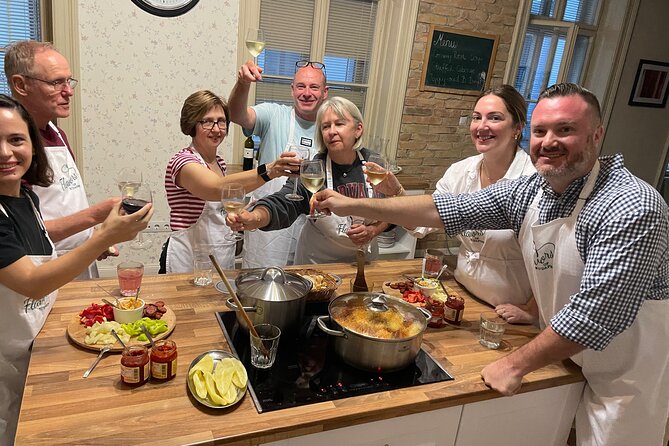
The sample menu includes several well-known dishes, but the exact choice can be adjusted. Possible mains include goulash soup with beef and celery, chicken paprikash with small dumplings, stuffed cabbage, and a savory Hortobágy-style meat crepe.
That flexibility is a real advantage. If you have already eaten goulash at several Budapest restaurants, you can choose something less familiar. One class participant chose chicken paprikash and the accompanying small dumplings, known in the class as a type of spätzle. Another option, the Hortobágy-style savory meat crepe, gives you a chance to try a dish that many first-time visitors may not recognize from restaurant menus.
Goulash soup is the most famous choice, but it is not the only useful introduction. It shows how meat, paprika, vegetables, and broth build a dish with a strong national identity. Chicken paprikash offers a more home-style lesson, with paprika, dairy, and tender chicken served with dumplings. Stuffed cabbage brings in pork and the careful preparation needed to wrap and cook the filling.
Do not assume you will prepare every listed main dish in one 2.5-hour session. The menu presents several choices, and the class is designed around preparing an iconic Hungarian dish with a starter. Ask in advance which dish is planned for your booking, especially if you have a strong preference.
A true hands-on cooking session
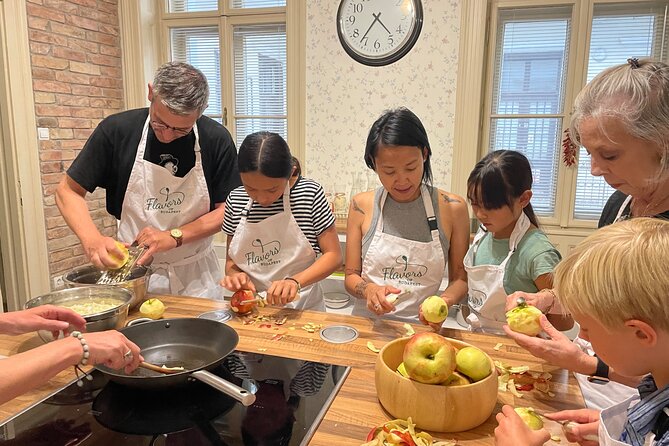
You take part in the work instead of watching from the side. That may include preparing ingredients, following each cooking stage, and helping produce the dumplings or other parts of the selected meal. Marti explains the steps as you go, so you can repeat them in your own kitchen later.
This is especially helpful for visitors who want to bring home a skill, not just a food memory. Printed recipes are provided, and the instructions are intended to be practical enough for cooking with family and friends. One participant who grew up learning Hungarian food from a parent still picked up new methods and recipes here. That is a good sign for experienced cooks as well as beginners.
The class also leaves room for questions. You can ask how much paprika to use, how a recipe has changed, or what makes one preparation different from another. The personal format should suit you if you prefer a slower explanation over a large demonstration with a crowd gathered around a cooking station.
There is one practical point to remember: Hungarian cooking can be generous with butter, dairy, and meat. The standard menu includes ingredients such as beef, pork, chicken, dairy, egg, and flour, depending on the dish. Vegetarian, gluten-free, lactose-free, and nut-free adaptations are available, but you need to state your needs at booking rather than wait until the class begins.
A completely different kind of day out:
- Budapest: City Highlights Cruise with Welcome Drink
★ 4.6 · 35,610 reviews - Budapest: Unlimited Prosecco, Beer and Aperol Spritz Cruise
★ 4.8 · 25,310 reviews - Budapest: Széchenyi Spa Day Ticket with Optional Upgrades
★ 4.3 · 23,911 reviews - Budapest: Nighttime or Daytime Sightseeing Cruise
★ 4.2 · 21,062 reviews
Drinks, stories, and the meal at the end
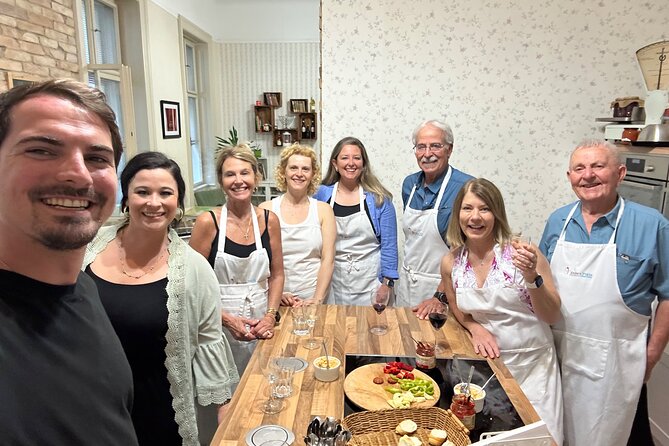
Mineral water, homemade soft drinks, and Hungarian wine are included. The drinks help the class feel like a shared meal rather than a technical lesson. You may begin with wine and snacks, cook together, and then sit down to eat what you prepared.
The dining room is part of the appeal. After working in the kitchen, you can enjoy the food at a relaxed pace and continue talking with Marti. The conversation may cover Hungarian customs, food traditions, personal experiences, and daily life in Budapest. That informal exchange is one of the most valuable parts of the activity because it gives you a local point of view without the rigid schedule of a walking tour.
Marti can also offer suggestions for the rest of your Budapest visit. Past advice has included restaurants, places to see, and shops where you can find particular Hungarian products. If you want recommendations, come prepared with a few questions. This is a good setting to ask about foods you have seen in markets or dishes you want to try later.
Why the private apartment setting works
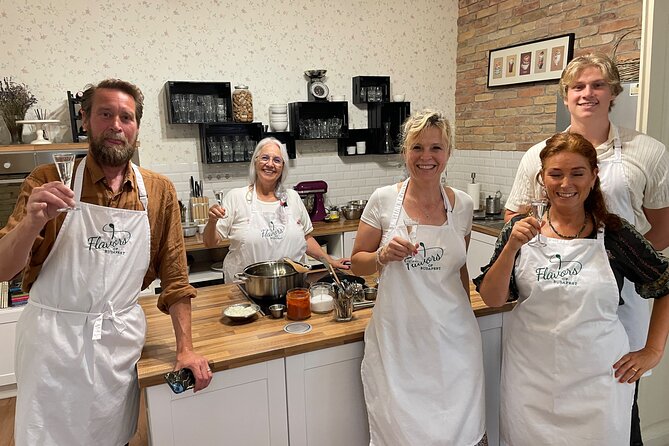
A cooking class in a restaurant kitchen can feel polished, but it may not tell you much about ordinary food at home. This apartment setting offers a closer look at how people cook, eat, and talk in a domestic space.
The building is described as historic and upper-middle-class, giving you a sense of Budapest architecture as you enter. The entrance can be a little confusing because several apartments share the building. Pay close attention to the apartment number and meeting instructions, and use the supplied address carefully.
Once inside, the space is designed for the class, with a professional kitchen and a comfortable dining area. You get the advantages of proper equipment without losing the home-cooking atmosphere. For a family, couple, or small group of friends, that balance can make the session feel more relaxed than a formal culinary school.
The maximum group size is 10, but the experience can be smaller. A small group means more chances to handle the food, ask questions, and receive help with each stage. It also makes the activity a good option if you want something social but do not want a noisy class packed with people.
Is $106.92 a fair price?
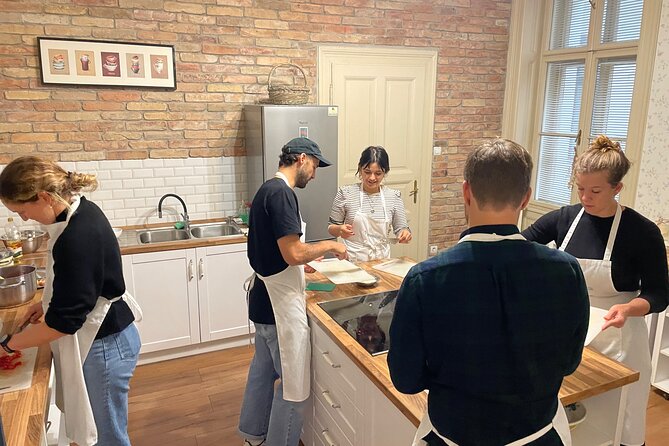
At $106.92 per person, this is not the cheapest meal in Budapest. You can eat well for much less at a local restaurant, and a market lunch will cost less again. The value here comes from the combination of food, instruction, drinks, recipes, local conversation, and transport.
You are paying for about 2.5 hours of focused time with a professional local chef. Ingredients and kitchen equipment are supplied, and the activity includes a starter, a prepared Hungarian dish, wine, homemade soft drinks, and mineral water. Hotel pickup and drop-off add practical value, especially if you are staying outside the immediate Király Street area.
I would consider the price fair if you enjoy cooking or want a deeper connection to Hungarian food. It is less compelling if you only want a quick meal or if your Budapest schedule is tightly packed. The class takes a useful block of time, so plan it as a main activity rather than something to squeeze between two major sights.
The recipes also improve the long-term value. If you cook chicken paprikash, goulash, stuffed cabbage, or a Hortobágy-style crepe at home, the class continues after you leave Budapest. That is harder to measure than the cost of lunch, but it is often what makes a cooking class worth the extra money.
Who will enjoy this class most
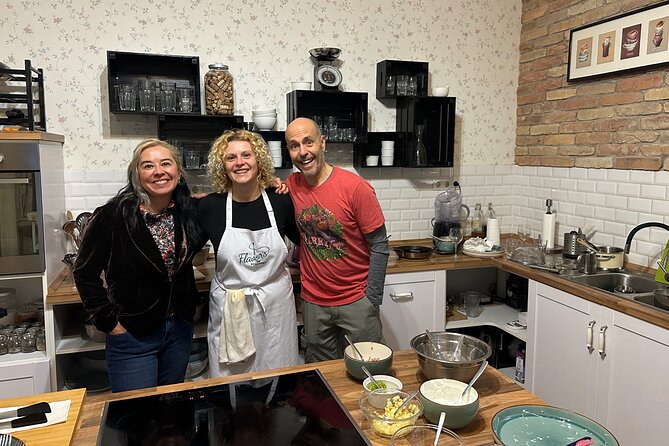
I would recommend it to couples, families, and small groups who like food and conversation. It is family-friendly, and the practical nature of the cooking gives children something to do beyond sitting through a guided talk. The class may also suit you if you are traveling with someone who has already seen Budapest’s main sights and wants a quieter local activity.
It is a strong choice for cooks who want to improve their Hungarian dishes, but you do not need advanced skills. The step-by-step format allows beginners to participate, while experienced cooks can ask about methods and recipe changes.
Choose it if you value personal contact and local advice. Marti’s recommendations can help shape the rest of your stay, and the stories about food customs give you context you will not get from simply ordering paprikash in a restaurant.
You may want to skip it if your group dislikes cooking, wants a large social event, or needs a guaranteed menu without advance discussion. You should also confirm the dietary arrangement early if you avoid several common ingredients.
Timing, meeting details, and cancellation
The experience lasts approximately 2 hours and 30 minutes. It starts at Budapest, Király u. 77, 1077 Hungary, and ends back at the same meeting point. Free hotel pickup and drop-off are included, which can make the start and finish easier, but confirm the pickup details when you book.
The activity is offered in English and is near public transportation. Confirmation is received at booking. At least four participants are required for the class to run, and the maximum is 10 people.
Free cancellation is available up to 24 hours before the start time for a full refund. Cancellations or changes made less than 24 hours before the local start time are not refunded or accepted.
Should you book the Hungarian Home Cooking Class?
Book this class if you want to understand Hungarian food by preparing it yourself. The strongest parts are the small setting, Marti’s personal instruction, the tasting of paprika and other local ingredients, and the recipes you can take home.
The main cautions are the price, the minimum of four participants, and the need to arrange dietary changes in advance. If those points work for you, this is a useful Budapest activity that combines a meal, a lesson, and a friendly conversation with a local. I would schedule it early in your visit so you can use Marti’s restaurant and food-shopping advice during the rest of your stay.
FAQ
Where does the Hungarian cooking class take place?
The class takes place in a cozy private apartment in Budapest. The listed meeting point is Budapest, Király u. 77, 1077 Hungary.
How long does the experience last?
The cooking class lasts approximately 2 hours and 30 minutes.
Is hotel pickup included?
Yes. Free hotel pickup and drop-off are included.
What language is the class offered in?
The activity is offered in English.
What food might I prepare?
Possible dishes include goulash soup, chicken paprikash with small dumplings, stuffed cabbage, and a savory Hortobágy-style meat crepe. The selected menu can be discussed and adjusted.
Are dietary adaptations available?
Yes. Vegetarian, gluten-free, lactose-free, and nut-free options are available when requested. Tell the provider about your needs at the time of booking.
What drinks are included?
The class includes Hungarian wine, homemade soft drinks, and mineral water.
How many people can join, and how many are needed?
The class accepts a maximum of 10 travelers, and at least four participants are required for it to run.
Just added around Budapest
- Walk to recent and aged spiritual sanctuaries near Budapest★ 5.0 · 5 reviews
- Budapest: Private Walking Tour with a Local Guide★ 3.6 · 6 reviews
- Budapest: City Bike Tour with Coffee Stop★ 5.0 · 37 reviews
- From Budapest: Guided Tour of Eger with Wine Tasting★ 4.5 · 6 reviews
- Budapest: Danube River Views Bike Ride★ 4.8 · 23 reviews
- Trash Art Museum: Hungary’s First Scrap Metal Exhibition★ 4.3 · 72 reviews
- True Crime Walking Tour in the Buda Castle district★ 5.0 · 26 reviews
- Budapest: 3-Hour Trabant Sightseeing Tour★ 4.7 · 28 reviews
Cooking Classes, compared.

Budapest All in One Small Group Walking Tour with Strudel Stop
Read our review →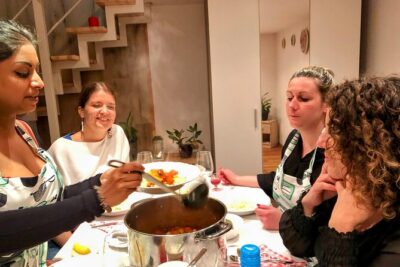
Budapest Cooking Class & Market Tour with Local Guide & Wines
Read our review →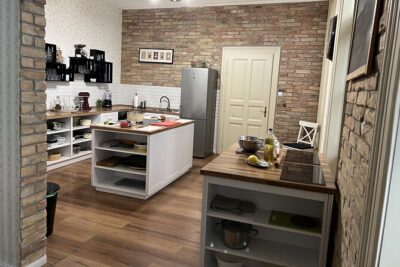
Premium Hungarian Home Cooking Experience with Chef Marti
Read our review →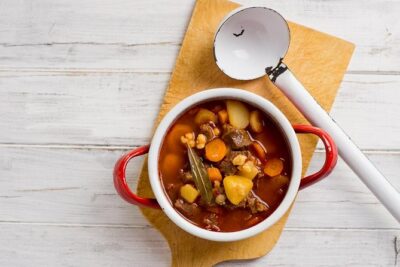
Hungarian Cooking and optional Local Market Tour
Read our review →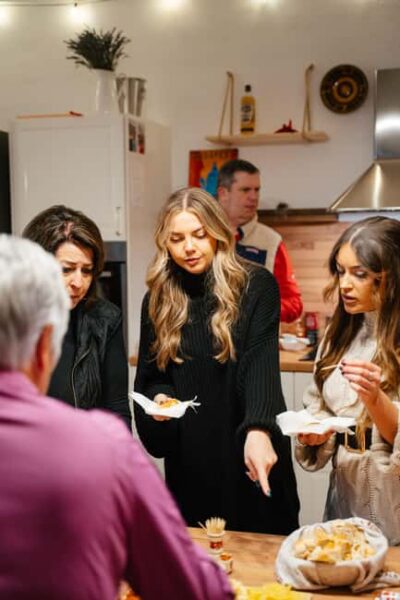


Hungarian Strudel Making Class: Stretch & Fill Two Ways
Read our review →
Private Budapest All In One Walking Tour with Strudel Stop
Read our review →Browse the lists this tour appears in