
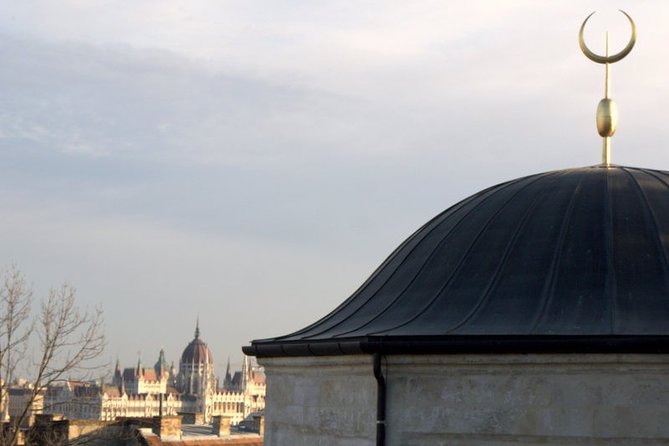
Reviewed · WALKING TOURS
Walk and Cook Budapest
Budapest’s story makes more sense when you can taste it. This small-group experience links the city’s Ottoman, Jewish, and Austro-Hungarian chapters to a hands-on meal, so you do not simply look at monuments and move on. You walk for about 1.5 hours, then cook and sit down to dinner.
I like the small maximum of 10 people, which should make it easier to ask questions and take part in the cooking. I also like the clear connection between place and plate, from Ottoman influence to dishes such as stuffed peppers, goulash with sauerkraut, and poppy-seed dumplings.
The main drawback is the fixed structure. You cover three important stops and cook within roughly five hours, so this is not a leisurely, open-ended city walk. The $131.06 price is also a serious outlay, though the guided tour and full dinner add value.
- Gul Baba’s Tomb begins the historical thread, with Budapest’s Ottoman past as the opening chapter.
- The Parliament Building gives you a look at the city’s Austro-Hungarian era and its grand architectural ambition.
- The Great Synagogue brings Jewish Budapest and the Second World War into the conversation.
- The cooking session turns history into dinner, with Hungarian dishes shaped by outside influences.
- Kata and Karolina are named as guides, and the group is capped at 10 people.
- The menu can include a full main course and dessert, with dishes ranging from roast goose to plum dumplings.
Three Budapest chapters before dinner
This is not just a food class with a short sightseeing add-on. The walking portion is built around the forces that shaped Hungarian cooking and city life: Ottoman rule, Jewish culture, and the Austro-Hungarian period.
You will visit three major points: Gul Baba’s Tomb, the Hungarian Parliament Building, and the Great Synagogue. The order gives the tour a useful arc. It starts with an Ottoman connection, moves toward the grand public face of nineteenth-century Budapest, then turns to the Jewish community and the painful events of the Second World War.
That context matters once you reach the kitchen. Hungarian food is not presented as something sealed off from the rest of Europe. Instead, you learn how the country’s past connections helped shape what ends up on the table.
The walk lasts about 1.5 hours. After that, you head to the kitchen for the cooking section and dinner. Expect the entire experience to take about five hours, so leave a good part of your day free.
Gul Baba’s Tomb and the Ottoman chapter
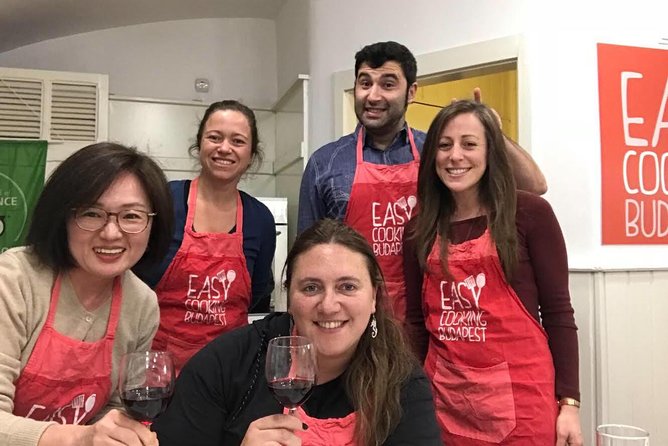
Gul Baba’s Tomb, also written as Gul Baba Turbeje, opens the tour with the Ottoman period. It is a more unusual starting point than the usual Budapest checklist, and that is part of its appeal.
The stop gives your guide a natural way to explain what the Ottoman Empire left behind. You are not beginning with a grand square or a famous panorama. You are beginning with a specific reminder that Budapest’s past includes periods of foreign rule and cultural exchange.
This also sets up the food discussion. The cooking portion is meant to show the influence of nations and communities that had connections with Hungary. The tour does not treat Hungarian cuisine as a single, untouched tradition. It presents food as something shaped over time by politics, migration, contact, and changing borders.
Because only limited timing details are provided for each stop, do not expect a long visit at every site. The strength here is the story connecting the locations, not an in-depth architectural examination of one monument.
Other guided walks around Budapest:
- Budapest: Buda Castle Walk with Saint Stephen’s Hall
★ 4.5 · 3,012 reviews - Big Bus Budapest Hop-On Hop-Off Bus and Walking Tour
★ 3.5 · 2,206 reviews - Budapest: Buda Castle District Walking Tour
★ 4.6 · 2,108 reviews
Parliament and the Austro-Hungarian city
The Hungarian Parliament Building represents another period altogether. Its grand scale and formal design help explain the ambition of Budapest during the Austro-Hungarian era.
Your guide uses the building to discuss what was constructed during that period, giving you a clearer sense of how the city took on its monumental appearance. This is useful if you have seen Parliament only as a photogenic riverside building. The stop places it within the political and architectural growth of Budapest.
The tour description does not promise entry inside Parliament, so plan on this being a guided stop connected to the building and its history rather than a guaranteed interior visit. That distinction matters if you are specifically looking for an indoor Parliament tour.
Still, it is a strong stop for a short walking experience. You get a major symbol of Budapest, a lesson in the Austro-Hungarian period, and another piece of the historical chain before heading to the kitchen.
The Great Synagogue and Jewish Budapest
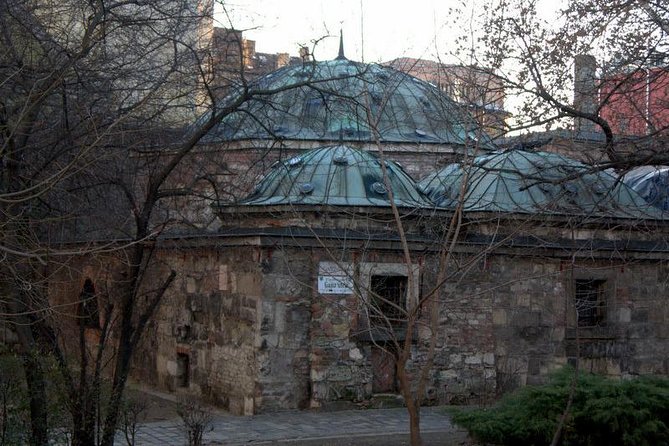
The Great Synagogue, or Nagy Zsinagoga, brings Jewish Budapest into focus. The guide also discusses what happened to Jewish people in Budapest during the Second World War, adding a difficult but necessary part of the city’s story.
This is one of the most important parts of the walk because it keeps the experience from turning history into decoration. Budapest’s buildings are beautiful, but they also carry memories of conflict, discrimination, and loss. A good guide needs to handle that subject with care and clarity.
The supplied information does not say that synagogue admission is included, so you should not assume an interior visit. The stop may focus on the building and its place in the city’s story. If seeing the inside is a priority, check the details before booking.
Even with that limitation, the synagogue fits the tour’s main idea. You see a landmark, hear about the people connected to it, and then continue toward a meal shaped by several cultural influences.
What the 1.5-hour walk is really for
The walking section is best understood as preparation for the kitchen. It is not designed to cover every major sight in Budapest or provide a full city orientation.
You will move between three stops and hear about several periods. That gives you a useful framework, but it also means the guide must keep the pace moving. If you prefer long photo breaks or detailed museum-style talks, this may feel brisk.
I like the way the walk makes the cooking feel less isolated. You are not simply told to prepare a Hungarian dish. You first hear why Hungarian food developed as it did, then take those ideas into the kitchen.
The experience is also a practical choice for a first or second day in Budapest, since the stops can help you place the city’s history before you spend more time exploring on your own. Because the meeting and ending point are both in Budapest, you return to the meeting point at the end rather than finishing at a separate neighborhood.
A completely different kind of day out:
- Budapest: City Highlights Cruise with Welcome Drink
★ 4.6 · 35,610 reviews - Budapest: Unlimited Prosecco, Beer and Aperol Spritz Cruise
★ 4.8 · 25,310 reviews - Budapest: Széchenyi Spa Day Ticket with Optional Upgrades
★ 4.3 · 23,911 reviews - Budapest: Nighttime or Daytime Sightseeing Cruise
★ 4.2 · 21,062 reviews
The kitchen: from history to hands-on cooking
After the walk, the group heads to the kitchen to prepare Hungarian dishes. The format is hands-on, not a demonstration followed by a meal that appears without your help.
The small group matters here. With a maximum of 10 people, you should have a better chance to participate than you would in a large class. You can also ask questions about ingredients, techniques, and the stories behind the dishes.
The information provided does not specify the exact kitchen setup, cooking stations, recipes chosen on your date, or how much time you spend on each task. Keep that in mind. The listed menu is a sample, not a guarantee that you will cook every dish named below.
The cooking theme is the real point. Each dish is connected to the nations and communities that had contact with Hungary. That makes the meal a continuation of the walk, not a separate activity bolted onto it.
If you enjoy food classes because you want to do something with your hands, this is a better fit than a standard restaurant meal. If you mainly want to eat and relax, the active cooking portion may feel like work, though the experience does finish with a sit-down dinner.
The possible menus and what you might eat
The sample dishes give you a good idea of the range. One possible main course is töltött paprika, or stuffed peppers, followed by mákos guba, a poppy-seed dessert. The menu also lists roast goose with onion potatoes and braised cabbage, followed by fánk, a special donut.
Another possible pairing is székelygulyás, a goulash-style dish with sauerkraut, followed by szilvásgombóc, or plum dumplings.
These choices show that the meal is not limited to one famous Hungarian dish. You might get a hearty stew, a roast, or stuffed vegetables. Desserts bring poppy seeds, fried dough, or fruit-filled dumplings into the picture.
The menu also suits a full dinner rather than a small tasting. You get a main course and dessert, with the group sitting down together after the cooking. The information does not state that drinks, dietary substitutions, or a vegetarian option are included, so ask about those needs before booking.
For food-focused visitors, this is where the price begins to make more sense. You are paying for a city walk, historical interpretation, cooking instruction, ingredients, and a complete meal. It is not a cheap way to eat in Budapest, but it offers more than a restaurant bill.
Why the small group changes the experience
A cap of 10 people is one of the strongest practical features. A cooking class becomes frustrating when too many people gather around one work surface or when the guide cannot answer individual questions.
With a group this size, you can expect a more personal format, though the exact level of individual attention depends on the guide and the kitchen. You are also likely to share the dinner table with the same people who walked with you, which gives the experience a natural social rhythm.
Kata and Karolina are named in connection with the experience. A personal note from a past participant specifically thanked both guides for the time they gave during a Budapest visit, including a holiday-season outing. That suggests the guiding can feel warm and personal, but it does not guarantee that both will lead every date.
The small group is especially useful if you want to ask about Hungarian history without holding up a large tour. It also helps during the cooking stage, when clear instructions and room to work make a real difference.
Is $131.06 a fair price?
At $131.06 per person, this is not a budget walking tour. You should compare it with what you would pay for a separate guided walk, cooking class, and full dinner.
The value depends on how much you want all three parts. If you only want to see Parliament and the Great Synagogue, a regular city walk will cost less. If you only want a Hungarian meal, a restaurant is the simpler choice. But combining a 1.5-hour historical walk with hands-on cooking and dinner gives you a fuller half-day.
The maximum group size also supports the price. A private tour would cost more, while a large cooking class may offer less personal contact. This sits between the two.
I would book it for a visitor who values context and participation more than the lowest possible cost. I would skip it if your schedule is tight, you dislike structured group activities, or you want a long, detailed visit inside each landmark.
Timing, meeting details, and cancellation
The experience lasts about five hours and is offered in English. It starts and ends at the meeting point in Budapest, so you do not need to arrange a separate return from the kitchen.
The tour is near public transportation, which helps with getting to the start. The exact meeting point should be checked when your booking is confirmed. Confirmation is sent within 48 hours, subject to availability.
Free cancellation is available if you cancel at least 24 hours before the start time. Changes or cancellations made inside that 24-hour window are not accepted for a refund. The activity also requires a minimum number of participants, so if it is canceled for that reason, you are offered another date or experience, or a full refund.
Who should book this Budapest experience?
I would recommend it to you if you want to connect Budapest’s sights with its food, prefer small groups, and enjoy doing rather than simply watching. It is also a good match for visitors who want an English-language experience that mixes history, cooking, and a sit-down meal.
It suits couples, solo visitors, and small groups who are comfortable spending five hours together. The named guides, Kata and Karolina, add a personal touch to the description, and the 10-person limit should keep the atmosphere manageable.
Families with children may want to ask about the cooking tasks and timing before booking. The historical discussion includes the Second World War and the experience is not designed as a children’s sightseeing program.
People with dietary restrictions should also confirm what can be changed. No allergy information or alternative menu is provided, so do not assume substitutions are available.
Should you book it?
Book this if you want Budapest explained through both its buildings and its food. The best feature is the connection between the walking route and the cooking session: Gul Baba’s Tomb introduces Ottoman influence, Parliament points to the Austro-Hungarian period, and the Great Synagogue brings Jewish Budapest and wartime history into view before dinner.
The price is high for a walk, but fairer when you count the small group, cooking instruction, and full meal. You should pass if you want a low-cost overview, guaranteed interior access to the landmarks, or complete control over your schedule.
For the right visitor, this is a thoughtful half-day: three meaningful stops, a manageable group, and a Hungarian dinner you help prepare yourself.
FAQ
How long is the Walk and Cook Budapest experience?
The experience lasts approximately five hours. The walking portion takes about 1.5 hours, followed by the cooking session and sit-down dinner.
What language is the tour offered in?
The experience is offered in English.
How many people can join the group?
The activity has a maximum of 10 travelers.
Which Budapest sights are included?
The route includes Gul Baba’s Tomb, the Hungarian Parliament Building, and the Great Synagogue.
Is dinner included?
The experience includes a full dinner after the cooking session. The sample menus include a main course and dessert.
What dishes might be prepared?
Possible dishes include stuffed peppers, roast goose with onion potatoes and braised cabbage, or goulash with sauerkraut. Possible desserts include poppy-seed dumplings, a special donut, or plum dumplings.
Can I cancel for a full refund?
Yes. You can cancel at least 24 hours before the experience start time for a full refund. Cancellations or changes made less than 24 hours before the start time are not accepted for a refund.
Just added around Budapest
- Walk to recent and aged spiritual sanctuaries near Budapest★ 5.0 · 5 reviews
- Budapest: Private Walking Tour with a Local Guide★ 3.6 · 6 reviews
- Budapest: City Bike Tour with Coffee Stop★ 5.0 · 37 reviews
- Budapest: Danube River Views Bike Ride★ 4.8 · 23 reviews
- From Budapest: Guided Tour of Eger with Wine Tasting★ 4.5 · 6 reviews
- Trash Art Museum: Hungary’s First Scrap Metal Exhibition★ 4.3 · 72 reviews
- True Crime Walking Tour in the Buda Castle district★ 5.0 · 26 reviews
- Budapest: 3-Hour Trabant Sightseeing Tour★ 4.7 · 28 reviews
Walking Tours, compared.
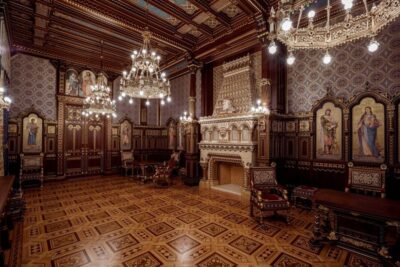
3-Hour Orientation Walking Tour of Buda and Pest
Read our review →
Budapest Historical Sightseeing – Free Walking Tour
Read our review →
Budapest All in One Small Group Walking Tour with Strudel Stop
Read our review →
BloodThirsty Hungary: Walking tour & Dark Historical Stories
Read our review →
Browse the lists this tour appears in