Reviewed · TOURS IN BUDAPEST
Budapest: Virtual Reality Tour in 8 Languages
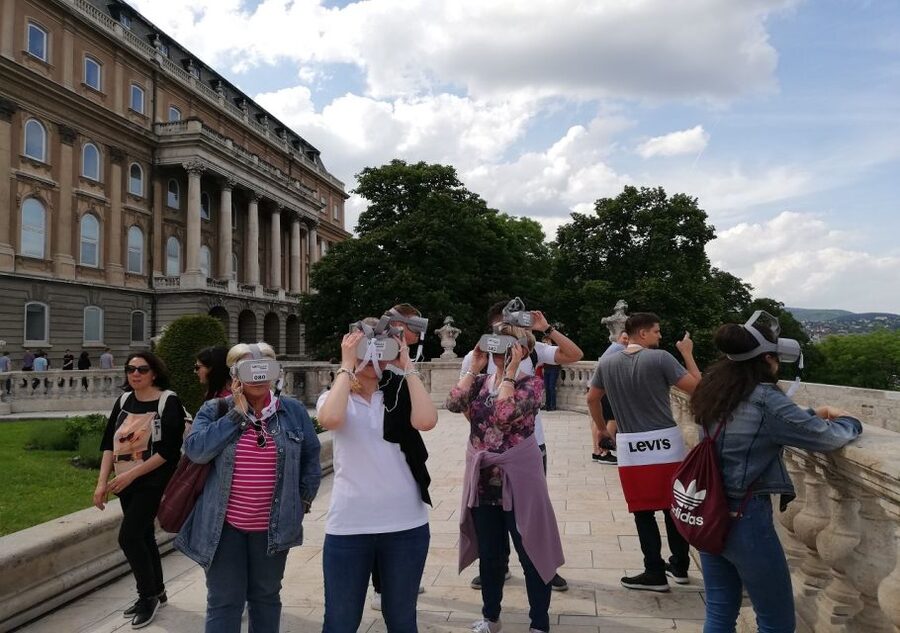
Budapest’s Buda Castle District becomes a moving history lesson on this virtual reality walking tour. At six stops, you put on a headset and watch the castle rise, battles unfold, World War II tear through the city, and the 1956 Hungarian Revolution begin. The technology gives you more than another view of old walls.
I like the clear link between each VR scene and the spot beneath your feet. I also like the practical language choice: your live guide speaks English or Hungarian, while the audio program is available in eight languages. The main catch is that this is still a light hike, with some outdoor walking and equipment that may not suit people with migraines, epilepsy, heart problems, mobility limits, or a fear of heights.
Key points at a glance
- Six VR stops in Buda Castle District: Each stop connects a modern street corner with a different period of Budapest’s past.
- Medieval, wartime, and modern history: See the castle under construction, major battles, World War II destruction, and the 1956 Revolution.
- Eight audio languages: Choose English, Chinese, German, Hungarian, Spanish, Russian, Italian, or French.
- A live guide for the walking route: The guide leads between stops and helps you manage the equipment and streets.
- A virtual bird’s-eye view: The headset gives you a wide look over Budapest that ordinary street level cannot provide.
- Central starting point: Meet near Chain Bridge and Clark Ádám Square, then finish at the same place.
Starting beside Chain Bridge
The tour begins at Lánchíd u. 23 on the Buda side, close to Chain Bridge and Clark Ádám Square. Look for the VR Tour flags facing the street, and arrive 15 minutes before departure. That extra time matters because you need to meet the guide, receive the equipment, and provide a passport, ID card, or €200 deposit for the headset.
Your live guide leads in English or Hungarian. The audio guide adds more choice, with eight languages: English, Chinese, German, Hungarian, Spanish, Russian, Italian, and French. This setup is useful if your preferred language is not available from the person leading the walk.
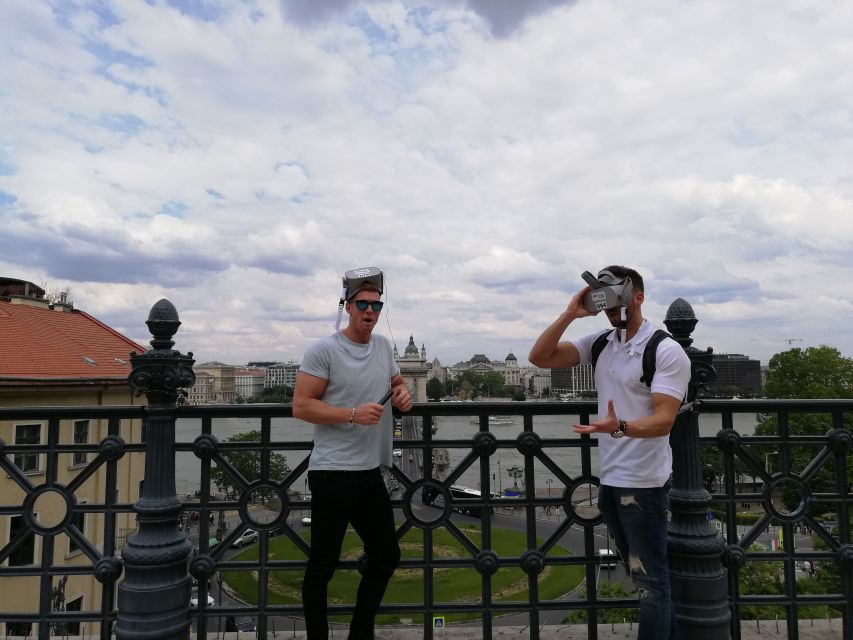
You receive VR equipment and a sterile headset. A hygienic mask is available on request. The group then heads into the Buda Castle District on foot, so wear shoes that you can comfortably use for a light hike.
Other days travellers book around Budapest:
- Budapest: City Highlights Cruise with Welcome Drink
★ 4.6 · 35,610 reviews - Budapest: Unlimited Prosecco, Beer and Aperol Spritz Cruise
★ 4.8 · 25,310 reviews - Budapest: Széchenyi Spa Day Ticket with Optional Upgrades
★ 4.3 · 23,911 reviews
Six stops that put the past under your feet
The strength of this experience is its location-based format. You are not sitting in a theater watching a long historical film. You walk through the district, stop at selected points, and use the headset to see a version of the past tied to the place around you.
The exact order of the historical scenes may depend on the route and timing, but the tour covers several major chapters of Budapest’s story.
Watching Buda Castle take shape
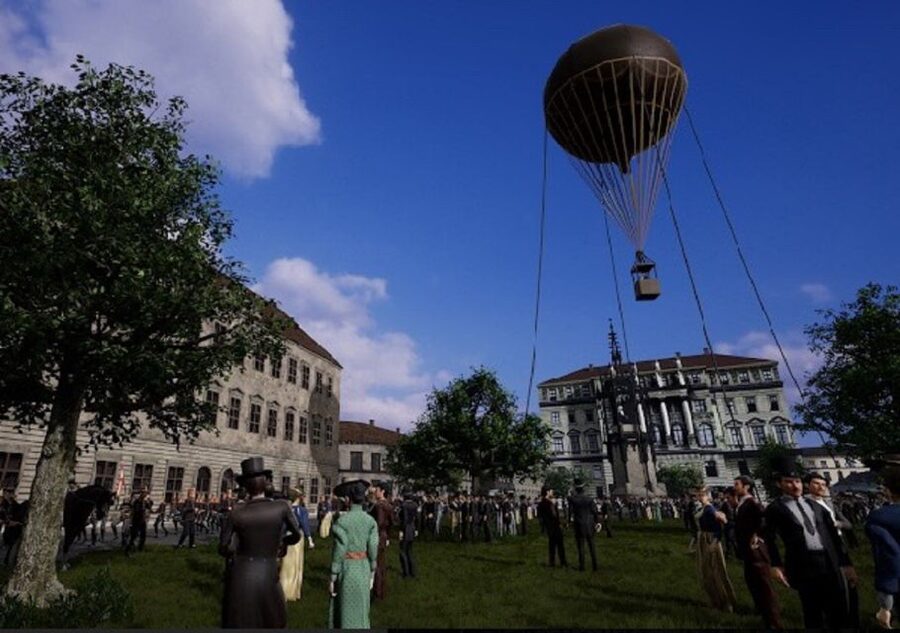
One VR sequence takes you back to the Middle Ages, when the castle was being built. Old masonry can be hard to picture from surviving walls alone. Virtual reality supplies the missing parts, showing how the site may have looked while construction was underway.
This is especially useful if you have already walked through the Castle District and found it difficult to imagine the original medieval setting. The display gives scale and motion to a place that can otherwise feel like a collection of restored buildings.
The limitation is simple: you are watching a reconstruction created for the tour, not examining an archaeological site. Treat it as a visual aid rather than a final answer to every question about medieval Budapest.
Seeing the Royal Palace in a wider frame
The Royal Palace and Buda Castle are among the tour’s main sights. From street level, you can admire their size, but the headset adds another point of view. One highlight is a virtual bird’s-eye look over Budapest, allowing you to take in the city as a whole rather than one courtyard or façade at a time.
This wider view helps explain why the hill matters. The Castle District is not just a group of grand buildings. Its height and position shaped how people saw, defended, and controlled the city.
If heights make you uncomfortable, pay attention to the tour’s restrictions. The experience is not suitable for people afraid of heights, and the virtual viewpoint may be part of the reason.
A completely different kind of day out:
- Budapest: Nighttime or Daytime Sightseeing Cruise
★ 4.2 · 21,062 reviews - Budapest: 1-Hour Evening Sightseeing Cruise with Drink
★ 4.5 · 8,330 reviews - Budapest Danube Cruise and Dinner Options, Live Music and Dance
★ 4.5 · 7,428 reviews - Budapest: Historic Cruise with Welcome Drink
★ 4.7 · 6,512 reviews
Watching battles unfold
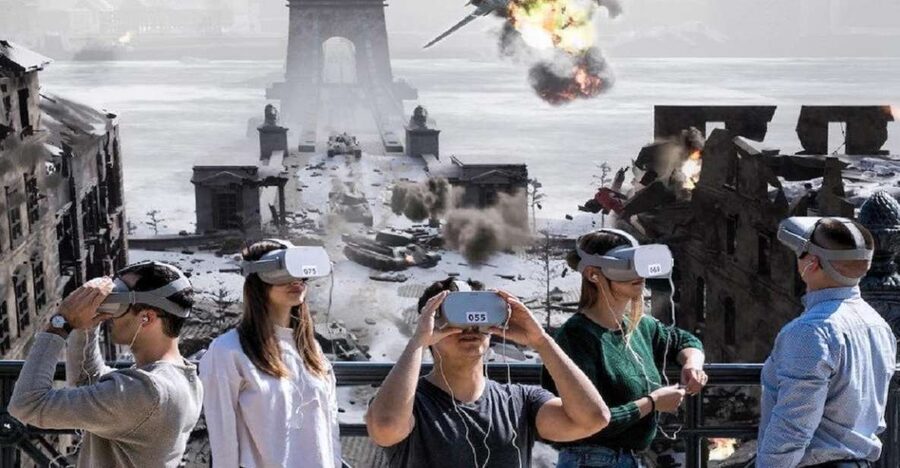
The VR scenes also show battles that shaped Budapest. Instead of hearing only dates and names, you see action placed around the historic district. The effect is strongest when the modern street in front of you is quiet while the headset shows soldiers, movement, and conflict in the same setting.
This can make military history easier to follow, particularly if you do not normally enjoy long explanations. The audio guide helps explain what is happening and why the event matters in Hungarian history.
The headset also requires concentration. You will be looking at a digital scene while standing outdoors, so you need to listen to the guide, follow instructions, and stay aware of your footing. This is one reason comfortable shoes and a steady pace matter.
Understanding World War II destruction
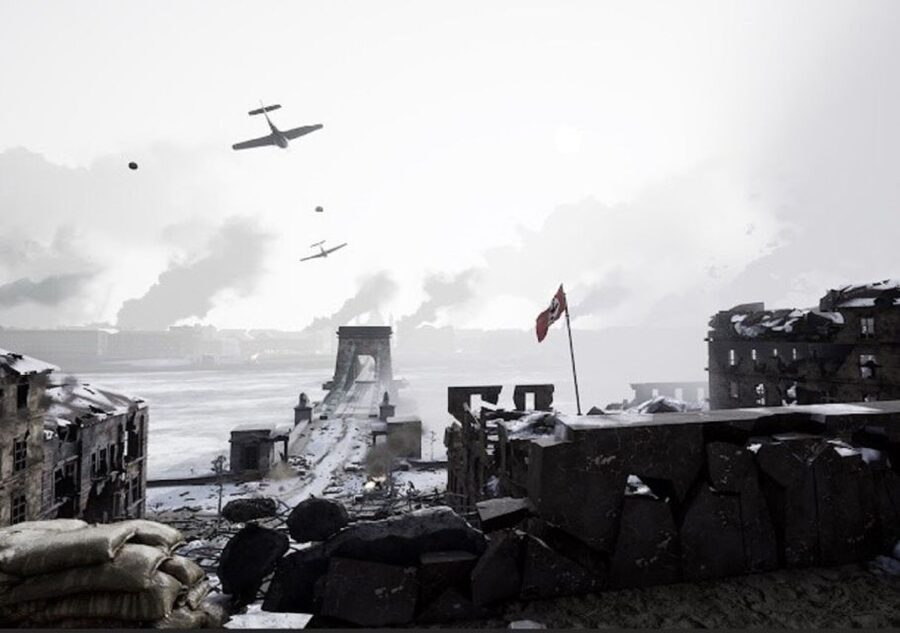
A later sequence shows the devastation caused during World War II. The contrast is sharp: you see the present-day district around you, then watch it suffer damage through the headset. The scene gives you a clearer sense of the destruction than a surviving wall or short museum caption can provide.
This section may be the most sobering part of the tour. The experience is designed to make major events visual, but wartime destruction is not light entertainment. If you prefer a quiet museum visit with time to read and reflect, this fast-moving format may feel less suitable.
Still, the scene gives useful context to the restored buildings around the Castle District. It reminds you that the present appearance of Buda Castle does not tell the whole story.
Reliving the 1956 Hungarian Revolution
The tour also covers the Hungarian Revolution of 1956. The headset shows the uprising as it breaks out, while the audio commentary explains its place in Hungary’s modern past.
For someone new to Hungarian history, this is a valuable inclusion. The tour does not stop with kings and medieval battles. It continues into the 20th century, when political conflict and public protest changed daily life in the country.
You should expect an overview rather than a full political history. The format has about six stops and a stated duration of 1.5 hours, so each chapter must remain focused. The guide’s role is to connect the images to the district and give you enough background to understand what you are seeing.
Connecting the scenes with the walk
The walking sections between the VR stops are not filler. They give your eyes a break from the headset and let the guide point out the streets, buildings, and views around you. The guide leads the route and helps you get from one stop to the next.
This rhythm works well for people who want a sightseeing walk with a stronger visual element. You are not asked to stand in one room for the entire activity. At the same time, the route includes a light hike, so it is not a good choice if you need a fully level or seated experience.
What the guide and audio program add
The live guide provides the practical help that a headset alone cannot. You need someone to organize the route, explain where to stand, and keep the group moving through the Castle District. The guide also supplies cultural context as you walk between the digital scenes.
The audio program handles the detailed narration during the VR displays. You can choose from eight languages, which makes this tour more flexible for international visitors. English and Hungarian are the live guide languages, while Chinese, German, Spanish, Russian, Italian, and French are also available through the audio guide.
I would choose the language that lets you follow historical details without effort. VR scenes can be visually busy, and trying to translate while watching battles or reconstruction footage can reduce the effect. A familiar audio language lets you focus on the story and the place.
Is $39 a fair price?
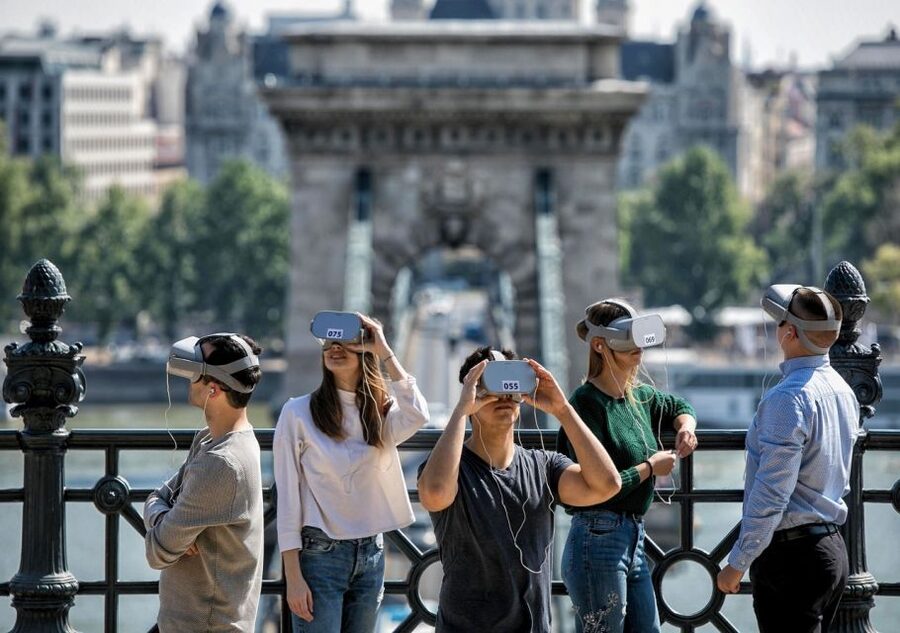
At $39 per person, this tour costs more than a basic walk around the Castle District, but it offers something a standard stroll cannot. You are paying for a guide, headset, sterile equipment, six digital displays, and a structured explanation of several periods of Hungarian history.
The value depends on what you want from Budapest. If you enjoy technology, visual storytelling, or history that comes alive through reconstruction, the price is reasonable. The virtual bird’s-eye view and the scenes of medieval construction could be worth the added cost on their own if you prefer seeing how a place changed over time.
If your main goal is photography, architecture, or a slow visit to the Royal Palace, you may get better value from exploring at your own pace. The headset becomes the focus here, and you will spend part of the tour looking through a screen rather than directly at the city.
The 4.6 rating from 32 reviews supports the idea that the format works well for many people. The strongest praise centers on the quality of the VR, the unusual way of learning Hungarian history, and the feeling of being placed in the middle of a battlefield. Those are the areas where this tour earns its price.
Timing, comfort, and equipment
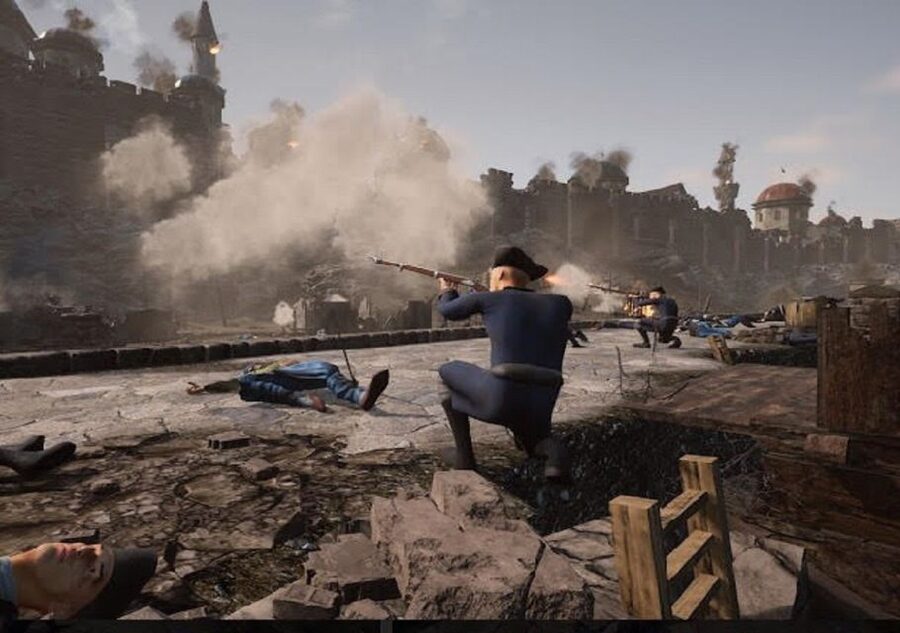
The advertised duration is 1.5 hours, with starting times shown when you check availability. The supplied description also refers to a roughly two-hour walking experience, so allow some flexibility rather than scheduling a tight connection immediately afterward.
Bring comfortable shoes and something to drink during hot summer tours. Budapest can feel warm while you are walking uphill or standing at outdoor stops, and the headset adds another layer of equipment around your face.
You need to bring a passport, ID card, or €200 as a headset deposit. This is easy to overlook, so keep one accepted form of identification with you. A hygienic mask is available if you request one, and the headset is described as sterile.
The tour is not recommended for people who suffer from migraines. It is also not suitable for people with epilepsy, heart problems, mobility impairments, or a fear of heights. These restrictions are important, not fine print to ignore. VR can affect people differently, and the walking route adds its own physical demands.
Who will enjoy this most?
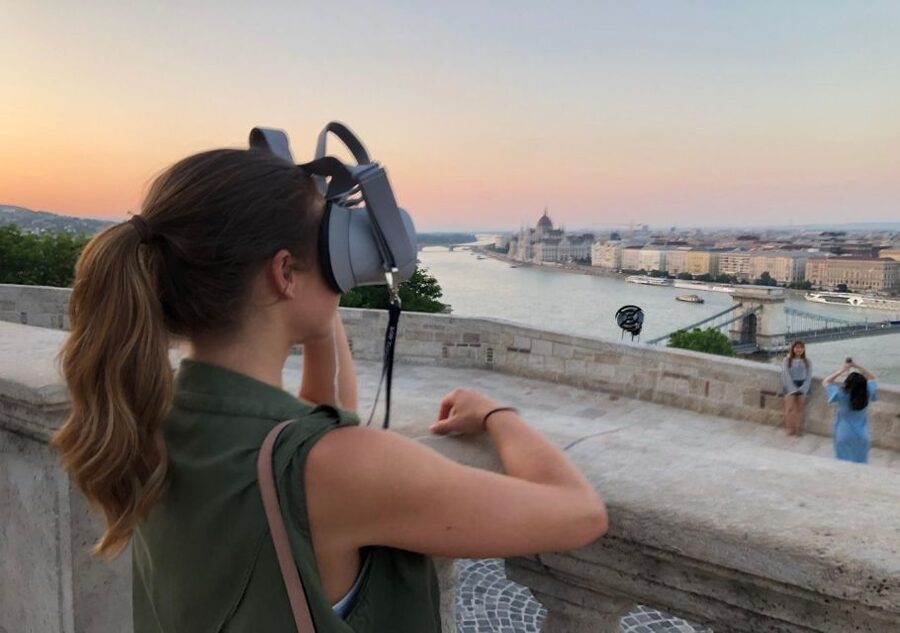
I would choose this tour for first-time visitors who want an introduction to Budapest’s past without spending hours reading museum panels. It also suits families and mixed-age groups when the participants can manage the walk and the VR equipment.
History fans will appreciate the range. You move from medieval castle construction to battles, World War II, and the 1956 Revolution rather than receiving a narrow story about royalty alone. The approach is also useful for anyone who finds dates and political events easier to remember after seeing them in motion.
The tour is less suitable for people who dislike headsets, motion-based displays, or guided pacing. If you want uninterrupted views of Budapest, the equipment may get in the way. The same is true if you have a strong reaction to virtual height, violent scenes, or fast visual changes.
Should you book the Buda Castle VR tour?
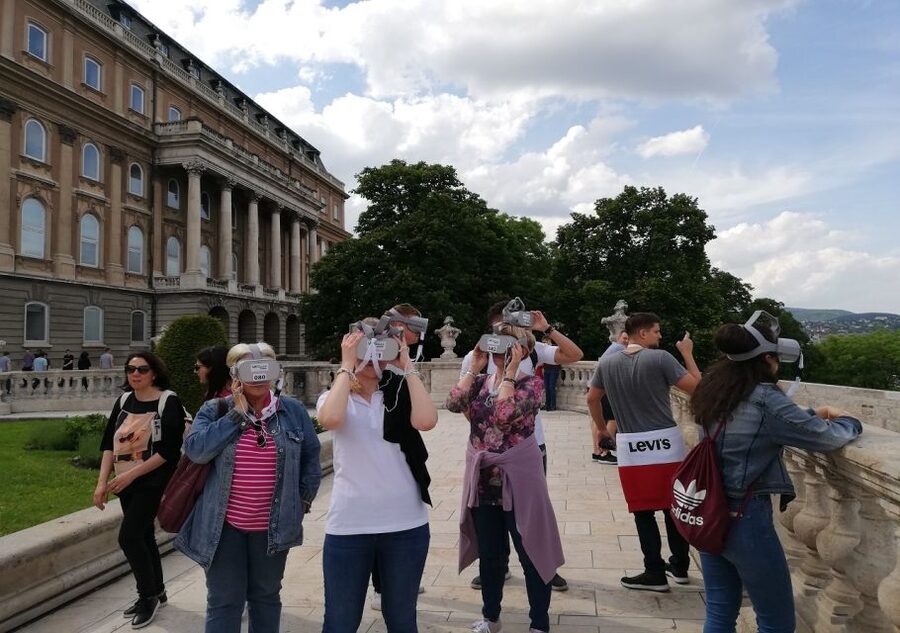
Book it if you want to see Budapest’s history rather than simply hear a list of facts. The six VR stops give you a clear reason to walk through the Castle District, and the combination of live guidance, audio narration, and reconstructed scenes makes the past easier to picture.
Skip it if you need a fully accessible route, have a condition affected by VR, or would rather spend your time inside museums and historic buildings. For everyone else, $39 buys a focused 1.5-hour introduction with a clever use of place and technology. Arrive early, bring ID, wear good shoes, and choose your audio language before the first scene begins.
FAQ
Where does the Budapest VR tour begin?
The tour begins at Budapest, Lánchíd u. 23, 1013 Hungary, on the Buda side near Chain Bridge and Clark Ádám Square. Look for the VR Tour flags facing the street.
Where does the tour end?
The activity ends back at the starting meeting point.
How long does the tour last?
The stated duration is 1.5 hours. The tour description also refers to a roughly two-hour experience, so allow extra time around the scheduled duration.
Which languages are available?
The live guide speaks English or Hungarian. The audio guide is available in English, Chinese, German, Hungarian, Spanish, Russian, Italian, and French.
What do I need to bring?
Bring comfortable shoes, a passport or ID card, and something to drink during hot summer tours. You also need a passport, ID, or €200 as a deposit for the VR headset.
Can I cancel the booking?
You can cancel up to 24 hours before the tour for a full refund. Reserve now and pay later is also available.
Just added around Budapest
- Walk to recent and aged spiritual sanctuaries near Budapest★ 5.0 · 5 reviews
- Budapest: Private Walking Tour with a Local Guide★ 3.6 · 6 reviews
- Budapest: City Bike Tour with Coffee Stop★ 5.0 · 37 reviews
- Budapest: Danube River Views Bike Ride★ 4.8 · 23 reviews
- From Budapest: Guided Tour of Eger with Wine Tasting★ 4.5 · 6 reviews
- Trash Art Museum: Hungary’s First Scrap Metal Exhibition★ 4.3 · 72 reviews
- True Crime Walking Tour in the Buda Castle district★ 5.0 · 26 reviews
- Budapest: 3-Hour Trabant Sightseeing Tour★ 4.7 · 28 reviews
Tours in Budapest, compared.

Unlimited Prosecco, Beer and Aperol Spritz Cruise
Read our review →
Széchenyi Spa Day Ticket with Optional Upgrades
Read our review →


Budapest Danube Cruise and Dinner Options, Live Music and Dance
Read our review →