
Reviewed · DANUBE BEND DAY TRIPS
Hungary: Szentendre Retro Design Center Entry Ticket
The most striking part of Szentendre’s Retro Design Center is the chance to climb into the past rather than simply look at it. You can sit in a pink Cabriolet Wartburg, poke around a Trabant, and step aboard a famous Ikarus bus. It feels less like a formal car museum and more like a family attic with four wheels.
I like the hands-on displays, especially the vehicles and furnished apartment. I also like the Polish Market diorama and the old television commercials, which add small details to the larger story of 1970s life. The main drawback is distance: Szentendre is outside Budapest, so this one-hour visit works best as part of a longer day in town.
Key points to know before you go
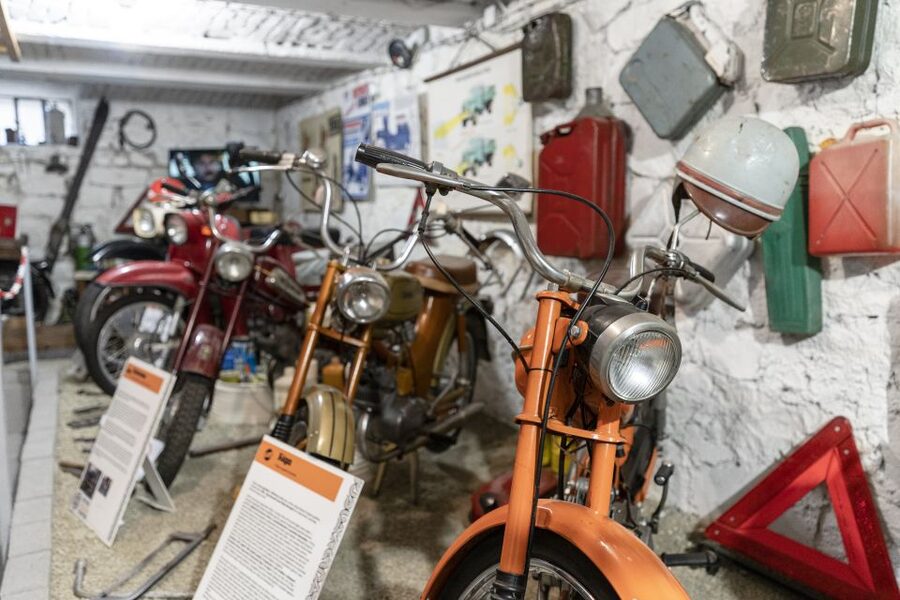
- Thirty period vehicles: See Trabants, Moskvitch cars, Zhighuli models, a hippie Barkas Furgon van, and the celebrated Ikarus bus.
- Photo-friendly exhibits: You can sit in selected cars and buses, including a pink Cabriolet Wartburg.
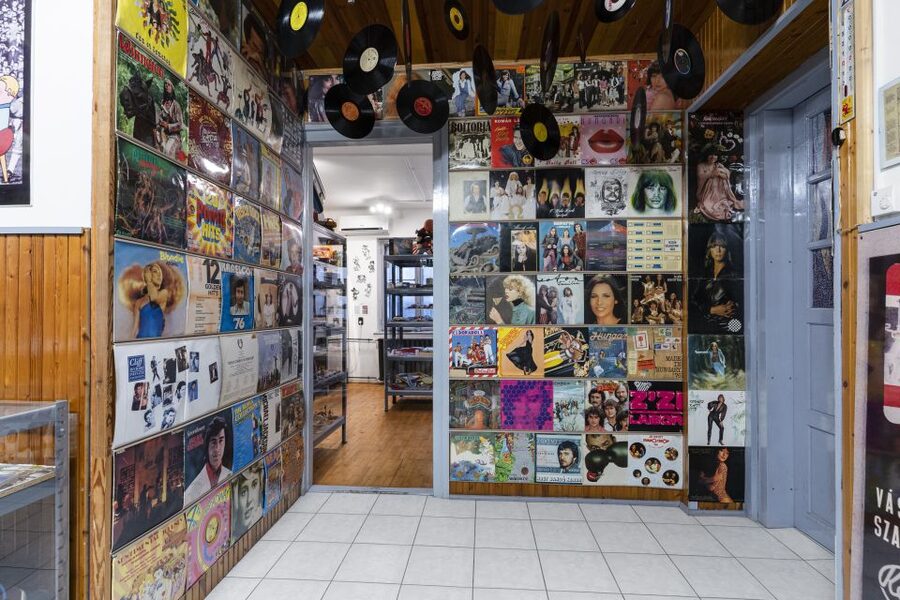
- A full 1970s setting: Explore a furnished apartment, kitchen, toys, radios, televisions, appliances, and walls covered with LPs.
- Small but packed: Nearly 1,000 square meters of displays can keep you busy for about one hour, or longer if you read everything.
- Useful language support: Written information is available in English, German, and Russian. The host or greeter speaks English.
- Best paired with Szentendre: The museum is outside Budapest, and the town makes the trip more worthwhile than visiting only for the museum.
A time capsule of Eastern European daily life
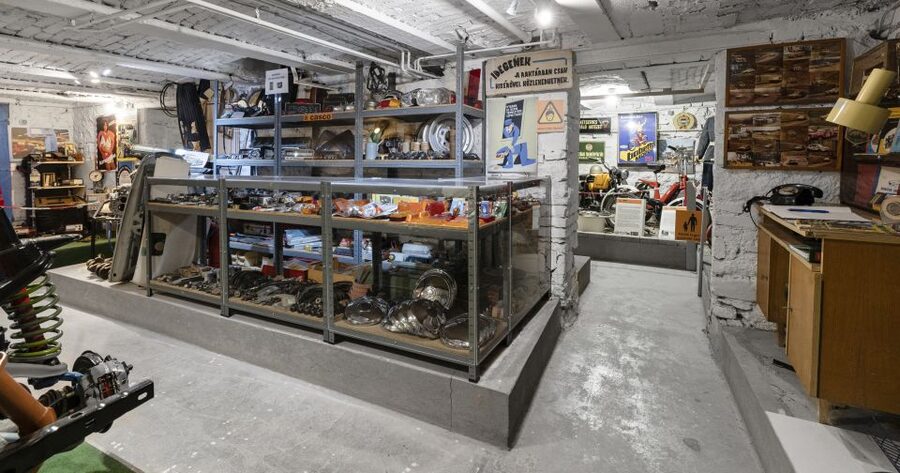
Szentendre Retro Design Center presents the 1970s as ordinary people knew them: through cars, kitchen appliances, children’s toys, television sets, radios, and holiday scenes. That approach gives the museum its charm. You are not only looking at rare objects. You are seeing the things that filled homes, streets, and weekend outings.
The collection focuses on Eastern Europe during the communist era. The displays offer a glimpse of what daily life could look like in Hungary and neighboring countries, with particular attention to Soviet-influenced consumer goods and popular culture.
I find this more useful than a room full of isolated antiques. A Trabant tells you something about transport. A television set tells you something about entertainment and advertising. A kitchen filled with period appliances hints at the routines of the people who used them.
The museum covers almost 1,000 square meters, but the visit remains manageable. You can see the main exhibits in about an hour. If you enjoy reading display text or taking photographs, plan for an hour to an hour and a half.
More of the communist years around Hungary:
- Budapest: Budapest Retro Interactive Museum Ticket
★ 4.4 · 373 reviews - Budapest: Communist History Tour with House of Terror Option
★ 4.8 · 182 reviews - Budapest: 3-Hour Walking Tour About Communism (Small Group)
★ 4.7 · 70 reviews
Start with the cars, from Trabant to Ikarus
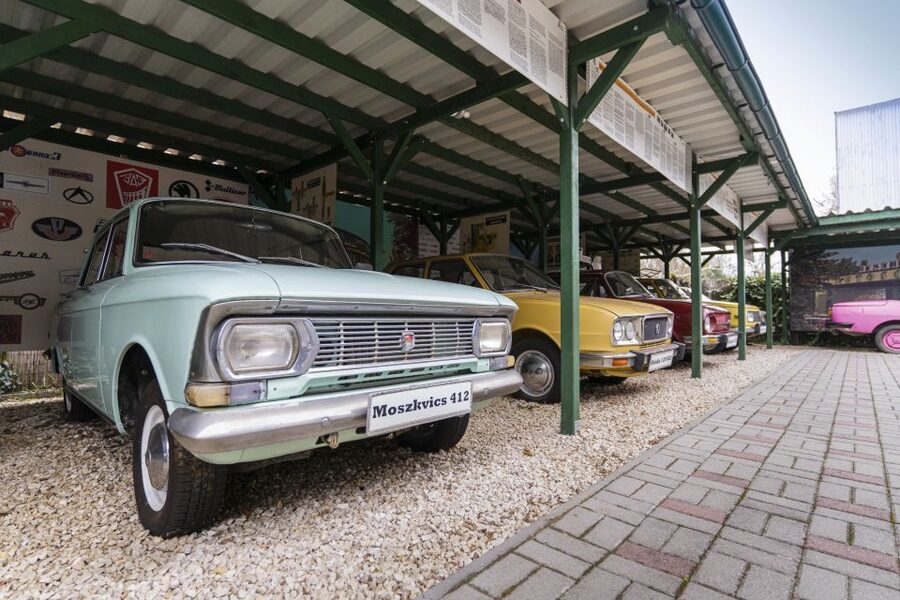
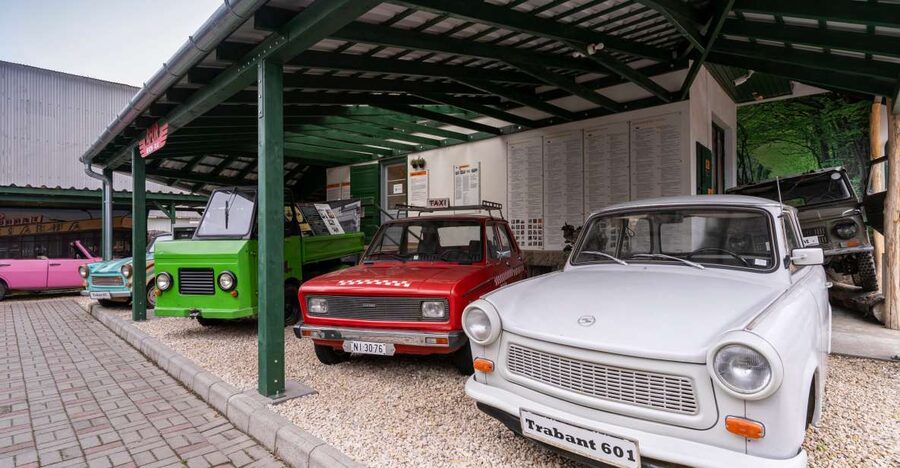
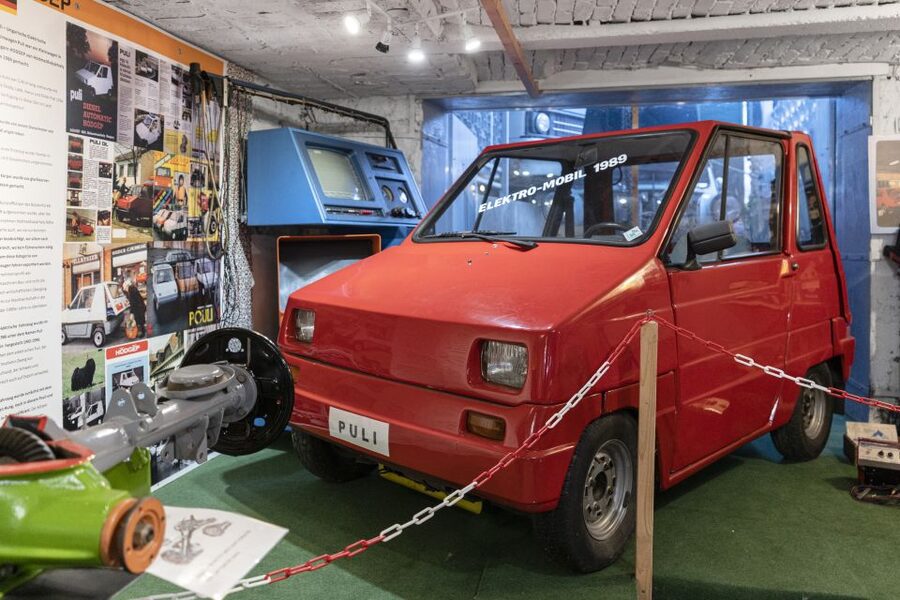
The vehicle collection is the museum’s main draw. Around 30 vintage cars and commercial vehicles are displayed, including Trabants, Moskvitch models, Zhighuli cars, and other vehicles associated with Eastern Europe.
These cars matter because they were part of normal life, not just collector culture. The Trabant, with its distinctive shape and modest construction, has become a symbol of life behind the Iron Curtain. The Moskvitch and Zhighuli models show the range of cars people encountered across the region.
You are not limited to viewing them from behind a barrier. You can sit in selected vehicles and take pictures. The pink Cabriolet Wartburg is the obvious favorite for playful photographs, while the Trabant offers a more typical look at everyday Eastern Bloc motoring.
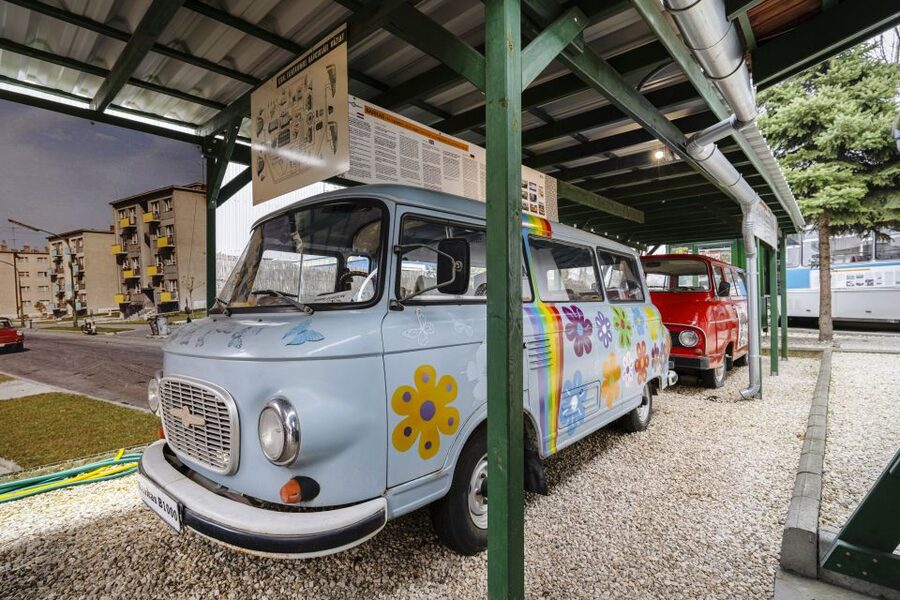
The collection also includes a hippie-style Barkas Furgon van. That display adds a lighter touch and helps show how the same basic vehicle could be connected with work, travel, or youth culture.
The Ikarus bus deserves extra time. Ikarus was a major Hungarian bus manufacturer, and its buses were a familiar sight in cities across the region. Seeing one inside the museum gives the collection a strong local connection. It is also one of the largest and most memorable objects in the building.
The cars are not presented as polished luxury items. Their appeal comes from their practical, sometimes awkward design and the memories they bring back. If you enjoy engineering or classic cars, you may want more technical information than the museum provides. If you want a direct sense of how these vehicles looked and felt, the displays work well.
Enter a furnished 1970s apartment
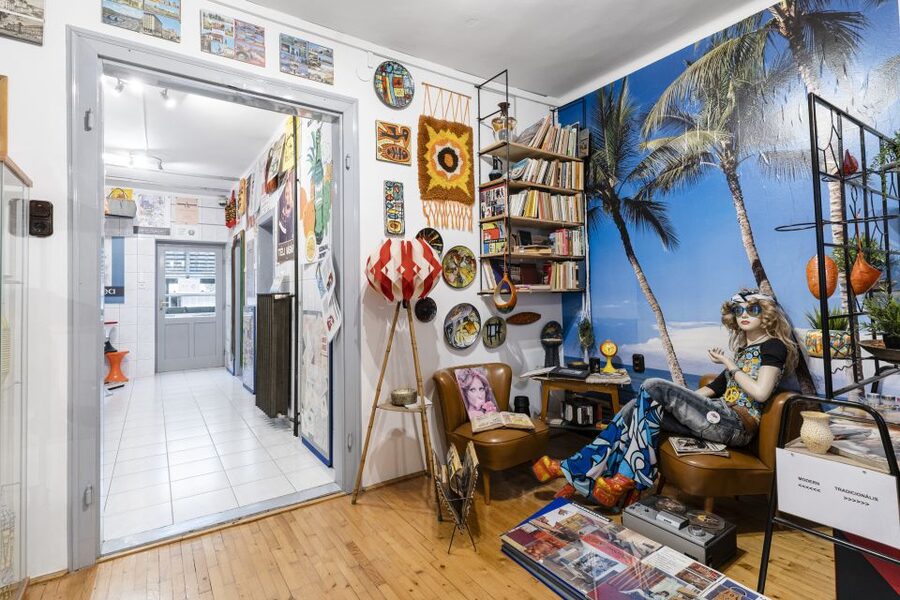
After the vehicles, the furnished apartment gives the museum its everyday human scale. You can look through a living room and kitchen arranged in the style of the 1970s.
This section helps connect the cars to home life. The period was not only about public slogans and state industries. It was also about watching television, preparing meals, listening to records, raising children, and making do with the objects available.
The apartment display is especially useful if you did not grow up in Eastern Europe. A single appliance may not explain much on its own, but a whole room shows how the pieces fit together. The colors, furniture, electronics, and household goods create a setting you can understand quickly.
You may find yourself spending more time here than expected. The display rewards a slow look at shelves and surfaces. It is also a good part of the visit for anyone less interested in cars.
Toys, televisions, and the sound of the period
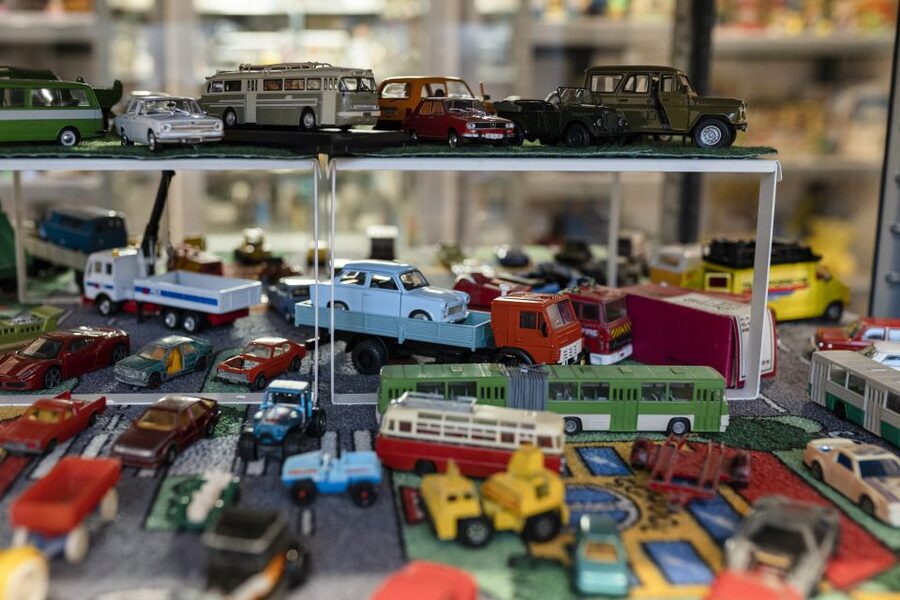
The toy collection adds warmth to the museum. Communist-era toys can seem simple compared with modern products, yet they say a lot about childhood, manufacturing, and family life at the time.
The televisions and radios are equally important. Walls covered with 1970s LPs bring music into the story, while the old appliances show how technology entered the home. These objects are familiar enough to understand, but different enough to prompt questions about how people used them.
One particularly enjoyable detail is the television footage and advertising. The screens show period commercials, creating a stronger sense of the era than a silent object display could provide. This is a small feature, but it gives the museum movement and sound.
If you remember the 1970s or 1980s, these objects may trigger personal memories. If you do not, the written information helps explain the context. The museum’s appeal is not limited to people with childhood connections to the period.
Other trips up the Danube Bend from Hungary:
- From Budapest: Danube Bend & Szentendre Tour with Lunch
★ 4.1 · 824 reviews - From Budapest: Danube Bend Day Trip in English
★ 4.2 · 499 reviews - From Budapest: Full-Day Danube Bend Tour with Lunch
★ 4.2 · 442 reviews - From Budapest: Szentendre Half-Day Tour
★ 4.2 · 338 reviews
The Polish Market diorama and camping scene
Two smaller displays help widen the picture: the Polish Market diorama and the camping scene.
The Polish Market display focuses on a recognizable part of life in the region, where goods, shopping, and informal exchange could carry their own social meaning. Dioramas can sometimes feel decorative, but this one gives you a compact view of a public setting rather than another room of household objects.
The camping scene shifts the mood toward leisure. It shows how people spent time away from home and how recreation fitted into ordinary life. Together, these displays keep the museum from becoming only a collection of cars and appliances.
They are also helpful for children. A young visitor may not care much about a radio or kitchen gadget, but a small scene with people, vehicles, and outdoor equipment is easier to follow.
The welcome and the visit itself
The arrival has a playful touch. A friendly hippie girl greets you as you enter, setting the tone before you reach the collection. The staff member at the desk has also been described as kind and helpful, which matters in a small museum where a warm welcome shapes the whole visit.
This is not a large institution with a long formal tour structure. The experience is relaxed and self-guided, with written text to help you understand the exhibits. The host or greeter speaks English, and the written material is available in English, German, or Russian.
One timing detail deserves attention. The museum may remain open later in the day, but the guided tour is limited to the morning according to the available visitor information. If a guided explanation is important to you, check the exact schedule before buying. Otherwise, the exhibits and text guide allow you to explore independently.
The advertised visit lasts one hour. That is a fair estimate for a focused look, especially if you are combining the museum with other sights in Szentendre. I would allow up to 90 minutes if you like to read, photograph the vehicles, and study the apartment and smaller scenes.
Is $11 a fair price?
At $11 per person, the ticket is reasonably priced for a compact museum with hands-on vehicle displays. The value is strongest if you enjoy cars, social history, design, photography, or objects from the 1970s and 1980s.
You are paying for a focused experience, not an entire day of entertainment. The museum is small enough to see in an hour, so visitors expecting a huge transport collection may find the admission less compelling. On the other hand, the combination of 30 vehicles, household displays, toys, television footage, a furnished apartment, and a bus gives you plenty to examine for the price.
The cost also makes sense when you treat the museum as one stop on a Szentendre outing. Szentendre is a small town outside Budapest, and the museum can add an unusual historical angle to a day that might otherwise focus only on streets, shops, and galleries.
Parking is not included, so account for that separately if you are driving. The available information does not include a parking fee or parking arrangement, so check locally before setting out.
Why the location changes your planning
The museum is not in central Budapest. It is in Szentendre, a separate town outside the capital. That means the museum is not a quick central-city stop you can squeeze between two Budapest attractions.
The extra distance is also part of the appeal. Szentendre provides a change of pace and makes the visit feel like a small day trip. If you already plan to spend time there, adding the Retro Design Center is sensible. If you are considering a long journey only for one hour inside the museum, the value becomes less clear.
I would plan the museum around the rest of your day rather than build an entire Budapest schedule around it. The one-hour visit gives you flexibility, and a longer stay in town helps justify the travel time.
Who will enjoy this most?
I would recommend the museum to several types of visitors:
- People who remember the 1970s or 1980s: The cars, toys, television advertisements, and household goods can bring back specific memories.
- History-minded visitors: The museum gives a grounded look at ordinary life in Eastern Europe, away from grand political monuments.
- Car enthusiasts: The Trabants, Moskvitch cars, Zhighuli models, Wartburg, Barkas van, and Ikarus bus provide plenty of photo subjects.
- Families: Children can climb into selected vehicles and look at toys, while adults read the historical notes.
- Photographers: The pink Cabriolet Wartburg, bus, period rooms, and colorful objects create easy photo opportunities.
- Szentendre day trippers: The museum adds a clear purpose to a visit outside Budapest.
I would be more cautious if your schedule in Hungary is very tight or if you have little interest in recent social history. The museum is short and specialized. Its strength is focus, not scale.
Practical booking advice
The ticket includes admission only. Parking is not included. The activity is listed with free cancellation up to 24 hours before the visit, and you can reserve now and pay later, which may help if your Szentendre plans depend on the weather or your Budapest schedule.
The host or greeter is available in English. Check the start times carefully, particularly if you want a guided tour, since the guided option is reported to run in the morning even though the museum may open later.
For a first visit, allow one hour at minimum. Add extra time if you want photographs in the vehicles, read the text in detail, or pause at the apartment and market diorama. The experience is short enough for a family or a post-lunch stop, but not so brief that it feels like a quick corridor display.
Should you book Szentendre Retro Design Center?
Book it if you want a personal, object-based look at 1970s Eastern Europe. The vehicle collection and hands-on photo opportunities are the strongest reasons to go, while the apartment, toys, television commercials, and Polish Market diorama add the daily-life detail that makes the visit more than a car show.
Skip it if you want a large museum, a long guided program, or an attraction in central Budapest. For most people, the best plan is to combine it with a day in Szentendre. At $11 and roughly one hour, it is a sensible add-on for anyone curious about the cars, homes, and small routines of communist-era Central Europe.
FAQ
How long does a visit to the Retro Design Center take?
The stated duration is one hour. You may spend up to an hour and a half if you read the displays carefully and take photographs.
What vehicles can I see inside?
The collection includes about 30 vintage vehicles, including Trabants, Moskvitch cars, Zhighuli models, a pink Cabriolet Wartburg, a hippie Barkas Furgon van, and an Ikarus bus.
Can I sit inside the vehicles?
Yes. The experience includes the chance to sit in selected vehicles, including the pink Cabriolet Wartburg, a Trabant, and the Ikarus bus, and take photographs.
What languages are available?
The host or greeter speaks English. Written text is available in English, German, or Russian.
Is the museum in Budapest?
No. The Retro Design Center is in Szentendre, a town outside Budapest in Central Hungary.
Is parking included with the ticket?
No. Parking is not included in the admission ticket.
Just added around Hungary
- Walk to recent and aged spiritual sanctuaries near Budapest★ 5.0 · 5 reviews
- Budapest: Private Walking Tour with a Local Guide★ 3.6 · 6 reviews
- Budapest: City Bike Tour with Coffee Stop★ 5.0 · 37 reviews
- Budapest: Danube River Views Bike Ride★ 4.8 · 23 reviews
- From Budapest: Guided Tour of Eger with Wine Tasting★ 4.5 · 6 reviews
- Trash Art Museum: Hungary’s First Scrap Metal Exhibition★ 4.3 · 72 reviews
- Guided wine tasting at Rókusfalvy Estate★ 4.6 · 6 reviews
- Sailing at Lake Balaton★ 5.0 · 21 reviews
Danube Bend Day Trips, compared.

Szentendre Daytrip (Artists’ Village) small group
Read our review →
Private Guided Tour to Szentendre & Visegrád Castle (Danube Bend)
Read our review →
One Day Wonder Hike – The Essence of the Danube Bend
Read our review →Browse the lists this tour appears in