Reviewed · TOURS IN BUDAPEST
Private Art Nouveau Budapest Tour
Budapest’s Art Nouveau is easy to miss if you stick to the grandest postcard sights. This private walk brings the city’s fanciest details into focus: wavy façades, colored roof tiles, stained glass, and odd little design choices that make each building feel personal rather than monumental. You’ll see several major landmarks, then pause for coffee and cake in an Art Nouveau setting.
I like the private format, since your guide can adjust the route and sometimes arrange access to interiors that are not obvious from the street. I also like the specialist angle. Guides including Suzy, Peter Horvath, and Joel have been praised for lively explanations and strong art-history backgrounds.
The main caution is service reliability. One June 2024 booking reported that the guide did not appear and that a refund was still pending. Confirm the meeting details shortly before the tour, and remember that the route can change with the starting point or guide.
Key points to know before booking
- Ödön Lechner’s Museum of Applied Arts is the ideal starting point for Hungary’s own Art Nouveau style.
- Gresham Palace brings together luxury, architecture, and a glimpse of Budapest’s grand commercial past.
- Liberty Square lets you compare several buildings from the same period in one compact area.
- The Hungarian State Treasury is especially rewarding for its roof, which is hard to see from street level.
- Coffee, a soft drink, and cake are included at the House of Hungarian Art Nouveau.
- A private group of up to 25 people gives you flexibility, but the value depends greatly on group size.
Why Budapest rewards an Art Nouveau tour
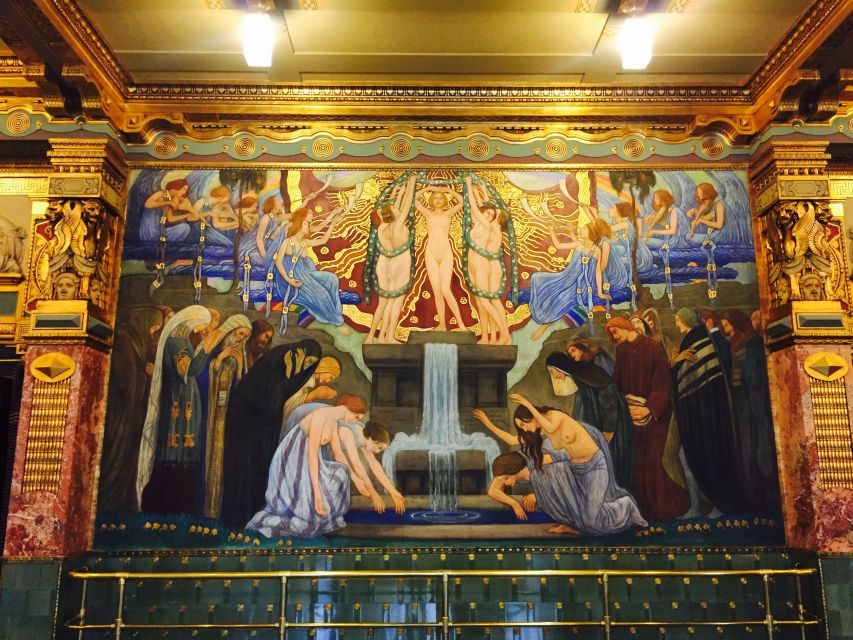
Budapest’s Art Nouveau period was short but remarkably busy. In roughly two decades, local architects drew from several European currents, including Viennese Secession, German Jugendstil, and French and Belgian Art Nouveau. Hungarian designers then pushed beyond borrowed fashion and developed a style of their own.
That national style is one of the best reasons to take this tour. You are not simply looking at curved windows and colorful walls. You are learning how Budapest’s architects turned a European movement into something distinctly Hungarian.
The buildings often mix folk-inspired patterns with modern materials and playful shapes. Roofs can be more expressive than façades, and the best details may sit well above eye level. A guide helps you notice what you would otherwise walk past, especially on a busy central street.
I would recommend this experience most strongly if you already have time for the city’s familiar landmarks and want a more focused look at Budapest. It is also a good choice for anyone interested in architecture, design, decorative arts, or city history.
Other private tours around Budapest:
- Private Budapest TukTuk Tour: Custom Route, Hotel Pickup
★ 5.0 · 1,307 reviews - Budapest Essentials Private Tour Highlights and Hidden Gems
★ 5.0 · 861 reviews - Budapest Private Tuk Tuk Half-Day Tour
★ 5.0 · 606 reviews
Starting at the Museum of Applied Arts
The suggested starting point is the Museum of Applied Arts, designed by Ödön Lechner. He is often called the Hungarian Gaudí, a useful nickname if you need a quick sense of his inventiveness, though the building deserves more than a comparison with another architect.
The museum is a lesson in Lechner’s approach. Expect rounded forms, bright ceramic decoration, and an elaborate roofline. The roof is especially important because Hungarian Art Nouveau often gives as much attention to the top of a building as to its front entrance.
The exact visit inside can depend on current conditions and the guide’s arrangements, so you should not assume every interior space will be open. Even from outside, though, the museum gives you a strong introduction to the movement’s Hungarian branch.
This is also where the tour’s art-history focus earns its keep. A guide can explain how the building fits into the wider European style while pointing out what makes it local. Without that context, the details may look decorative but disconnected.
From here, the plan usually continues with a pleasant walk and a short tram ride toward the central area. That small amount of public transport matters. You see a little more of everyday Budapest rather than spending the whole four hours moving only between tourist sights.
The central streets and Váci Street details
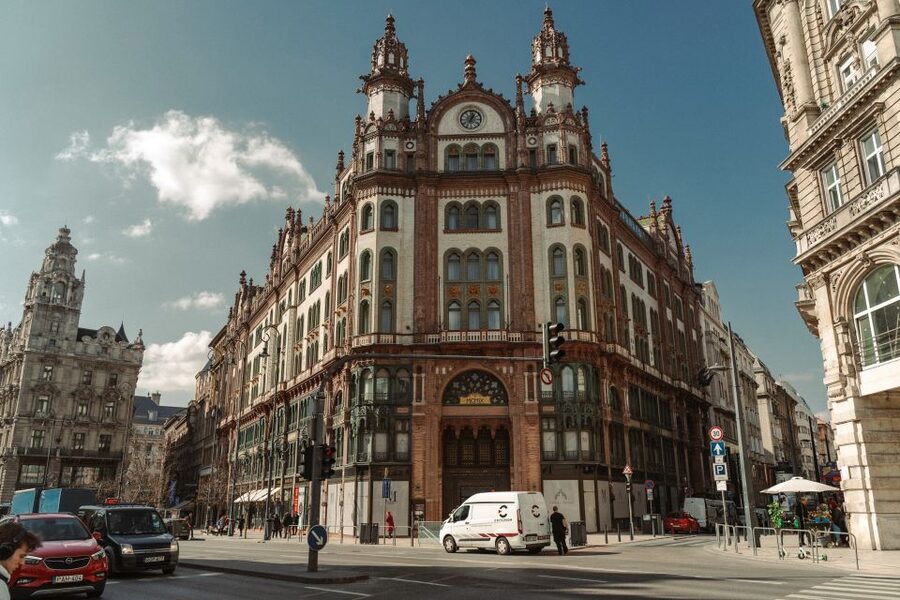
The route then reaches the center, including modern buildings in and around Váci Street that show how Art Nouveau worked in a commercial setting. This is not just a parade of palaces. You may see how the style appeared in shopfronts, apartment buildings, and urban façades designed for daily use.
The central location is convenient, but it can also be busy. Keep your attention on the upper floors and rooflines, where some of the most interesting shapes appear. Comfortable shoes are a must, since the tour involves walking as well as the tram ride.
The private format helps here. If you have a particular interest in metalwork, ceramics, stained glass, or architectural history, you can ask your guide to spend more time on those features. A fixed group tour may have to move on, while a private guide has more room to respond to your questions.
Do not expect every stop to look like a fantasy palace. Art Nouveau can be subtle, especially where a building has been altered or surrounded by later construction. That contrast is useful, since it shows how the style became part of the normal city rather than remaining limited to grand showcase buildings.
Inside the world of Gresham Palace
Gresham Palace is one of the tour’s headline stops. Its setting near the Danube and the Chain Bridge makes it easy to combine with other central sightseeing, but the building deserves its own attention.
The palace is associated with luxury, commerce, and the polished public face of Budapest during the period. Here, the Art Nouveau mood is less about rustic Hungarian motifs and more about fine surfaces, flowing lines, and an atmosphere of old-world wealth.
The tour description says you can enter to enjoy the luxurious atmosphere of the past and present. Access can depend on the day and on what the guide is able to arrange, so treat interior entry as a valuable possibility rather than a guarantee.
This is one point where a private guide can make a real difference. A quick photograph from outside tells you very little about how the building works as a whole. A guide can connect the façade to the grand interior spaces and explain why Gresham Palace matters in Budapest’s architectural story.
If you are taking photographs, look beyond the obvious front view. Rounded forms, decorative ironwork, and the relationship between the building and its surroundings are part of the appeal. You will get more from the visit if you pause to study the details instead of rushing toward the next address.
A completely different kind of day out:
- Budapest: City Highlights Cruise with Welcome Drink
★ 4.6 · 35,610 reviews - Budapest: Unlimited Prosecco, Beer and Aperol Spritz Cruise
★ 4.8 · 25,310 reviews - Budapest: Széchenyi Spa Day Ticket with Optional Upgrades
★ 4.3 · 23,911 reviews - Budapest: Nighttime or Daytime Sightseeing Cruise
★ 4.2 · 21,062 reviews
Coffee and cake at the House of Hungarian Art Nouveau
The coffee stop takes place at the House of Hungarian Art Nouveau on Liberty Square. This is not a random refreshment break added to fill time. The café is connected with a private collection from the period, giving you a chance to keep looking at Art Nouveau while you sit down.
Your booking includes a coffee or soft drink and a cake. That is a modest inclusion, but a useful one during a four-hour walk. It gives you time to rest your feet, ask questions, and sort out the different styles you have seen.
The café setting is also a good fit for the subject. Art Nouveau was designed as a broad decorative movement, not only as a way to shape façades. Furniture, glass, ceramics, graphics, and interior decoration all belonged to the same world.
Do not expect the included drink and cake to turn this into a food tour. The refreshment is there to support the architectural experience. If your main interest is Budapest’s cafés, you may want a separate visit to other famous coffeehouses.
Liberty Square and its matching period buildings
Liberty Square gives you one of the clearest visual lessons of the tour. Several buildings around the square date from the same broad period, so you can compare different approaches without crossing half the city.
This is where the movement’s variety becomes clear. One façade may favor restrained lines, another may use more decoration, and a third may show the influence of Vienna or another European center. The guide’s job is to help you see these differences rather than placing every building under one loose label.
The square is also practical for a walking tour because it gives you room to step back and examine the architecture. On narrower streets, it can be difficult to see a full façade. Here, the broader view lets you compare roof shapes, windows, and surface patterns.
I would allow yourself time to look upward. Budapest rewards people who check the upper levels, and Art Nouveau rewards them even more. Decorative features often appear where a passerby might never look, especially around rooflines and upper windows.
The Hungarian State Treasury and its remarkable roof
The Hungarian State Treasury, also called the Hungarian National Treasury in the tour description, is the final major architectural highlight. Its roof is the star.
From street level, much of that roof is hidden. The tour is designed to bring you close enough to appreciate details that are otherwise invisible, which makes this stop more than another grand building on a list.
The roof shows why Hungarian Art Nouveau cannot be judged only from the pavement. Colored tiles and complex patterns turn the top of the building into a decorative display. You may not get the complete view that an aerial photograph offers, but the closer look helps explain how much thought went into surfaces above the normal sightline.
This is an especially good stop for anyone who thinks architecture is mainly about façades. In Budapest, the roof can carry the strongest local identity. The State Treasury makes that point plainly.
What the private guide adds
The experience is led by a private guide and can be conducted in English, Spanish, French, Italian, or Portuguese. The guide meets you at your hotel, apartment, or another agreed location in the city.
Because the tour is customized, the order can change according to where you begin. The best-known route starts at the Museum of Applied Arts, but your meeting point may produce a different sequence.
Several guides have received particularly strong personal praise. Suzy has been described as passionate about Art Nouveau and Budapest history. Peter Horvath has been praised for stories, anecdotes, and descriptions delivered with real enthusiasm. Joel has been singled out for bringing architecture and history to life and for showing places that are not always accessible to ordinary sightseers.
Those names are useful when booking, but guide availability can change. If a particular guide matters to you, ask whether that person can lead your tour before you pay.
The strongest guide stories also show why this format works best for people who like conversation. You are not just following a flag through a fixed list of buildings. You can ask why one architect used certain materials, how a building fits the wider movement, or what changed during Budapest’s rapid growth.
Four hours, group size, and the $377 price
The listed price is $377 for a private group of up to 25 people, with a four-hour duration. For two people, that is a major expense. For a larger family or group of friends, the per-person cost drops quickly.
At the full group limit, the price can make practical sense if you want a private specialist guide and a customized route. For a couple, the value depends on how much you care about Art Nouveau and how much personal attention you want.
The tour includes hotel pickup, the guide, and a coffee or soft drink with cake. It does not list public transport as included. One past booking paid for an all-day metro ticket but used the metro only once, so I would avoid buying a transit pass just for this tour unless you need it for other plans.
The route includes walking and a short tram ride. Four hours is enough for a strong introduction, but it is not enough to examine every Art Nouveau building in Budapest. If the guide adds special interiors or an extended stop, the experience can run longer. One booking lasted five and a half hours after a later start was arranged around a guided visit at the Music Academy.
That kind of flexibility can be excellent, but it also means the tour may not run like a perfectly timed clock. If you have a train, dinner reservation, or evening performance, leave a generous buffer.
Who should book this Budapest walk
I would choose this tour if you want architecture explained rather than merely photographed. It suits people who enjoy details, comparisons, and stories about how a city developed.
It is also a good fit for a family or friend group with different interests. The café stop provides a break, the tram ride varies the pace, and the private format lets the guide adapt the amount of detail.
You may want to skip it if you have only one day in Budapest and have not yet seen the city’s essential historic sights. The tour is specialized. It will not replace a general city orientation.
You should also think about your walking comfort. Comfortable shoes are specifically advised, and the route includes a substantial walk. The guide can customize the route, but the experience is still built around seeing buildings on foot.
The biggest practical issue is the no-show report. It is only one serious service failure in the available booking record, while other customers received enthusiastic praise for their guides. Still, confirm the pickup time and location in advance, and contact the provider promptly if the guide is late.
Should you book it?
Book this private Art Nouveau tour if Budapest’s buildings interest you beyond their famous names. The Museum of Applied Arts, Gresham Palace, Liberty Square, and the State Treasury form a strong route, and the coffee stop adds a welcome pause.
The tour offers its best value to a group that can share the $377 price and to anyone who can request a guide with strong art-history experience. Ask about guide availability, clarify the meeting point, and do not assume public transport is included.
If you want the city’s decorative side, unusual rooflines, and lesser-noticed details, this is a rewarding choice. If you need a broad first-day overview or a guaranteed clockwork schedule, choose a more general tour instead.
FAQ
Where does the tour start?
The guide meets you at your hotel, apartment, or another previously arranged place in Budapest. The route can vary depending on the meeting point.
How long does the tour last?
The scheduled duration is four hours. It may last longer if the guide adds special stops or interior visits.
What languages are available?
The tour is offered in English, Spanish, French, Italian, and Portuguese.
Is the tour private?
Yes. It is a private group experience for up to 25 people.
What is included in the price?
The package includes a private guide, hotel pickup, and a coffee or soft drink with a cake.
Is public transportation included?
The tour information does not list public transportation as an inclusion. The suggested route includes a short tram ride, so confirm transport details with the provider.
Which major buildings are visited?
The route may include the Museum of Applied Arts, Gresham Palace, the Hungarian State Treasury, buildings around Liberty Square, and other Art Nouveau sites in central Budapest.
Is the coffee stop included?
Yes. A coffee or soft drink and a cake are included at the House of Hungarian Art Nouveau.
What should I bring?
Bring comfortable shoes because the experience includes walking.
Can I cancel for a full refund?
You can cancel up to 24 hours in advance for a full refund. The booking option also allows you to reserve now and pay later.
Just added around Budapest
- Walk to recent and aged spiritual sanctuaries near Budapest★ 5.0 · 5 reviews
- Budapest: Private Walking Tour with a Local Guide★ 3.6 · 6 reviews
- Budapest: City Bike Tour with Coffee Stop★ 5.0 · 37 reviews
- Budapest: Danube River Views Bike Ride★ 4.8 · 23 reviews
- From Budapest: Guided Tour of Eger with Wine Tasting★ 4.5 · 6 reviews
- Trash Art Museum: Hungary’s First Scrap Metal Exhibition★ 4.3 · 72 reviews
- True Crime Walking Tour in the Buda Castle district★ 5.0 · 26 reviews
- Budapest: 3-Hour Trabant Sightseeing Tour★ 4.7 · 28 reviews
Tours in Budapest, compared.
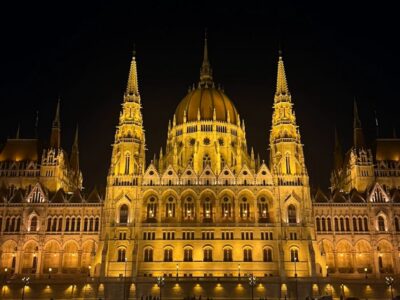
Unlimited Prosecco, Beer and Aperol Spritz Cruise
Read our review →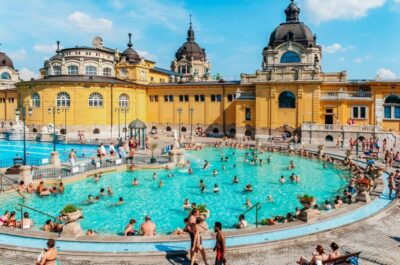
Széchenyi Spa Day Ticket with Optional Upgrades
Read our review →


Budapest Danube Cruise and Dinner Options, Live Music and Dance
Read our review →