Reviewed · TOURS IN BUDAPEST
Art Nouveau Treasures of Budapest – Exclusive Private Tour
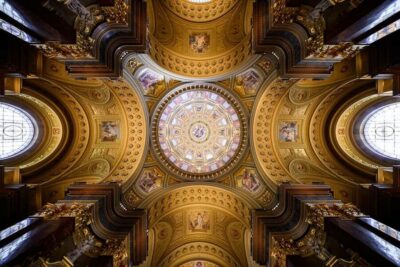
Budapest keeps some of its best Art Nouveau behind ordinary doors. This private walk brings you to colorful façades, ornate interiors, and a century-old apartment where you can see a real Miksa Róth stained-glass window. Guide Miklós adds the useful part: he explains how Hungarian artists turned folk patterns, ceramics, and modern design into their own Secessionist style.
I like the small private group, capped at five, and the flexible starting time. I also like the access to interiors that you might miss alone, including the apartment connected with Miksa Róth’s work. The main drawback is that this is a walking tour with public transport, not a private vehicle, and the route may take closer to three hours once stops and transfers are counted.
Key details before you book
- See Budapest’s Hungarian Secession style: Focus on Ödön Lechner’s daring tile work, folk motifs, and unusual architectural details.
- Enter places you may miss alone: The tour includes interior access at selected buildings and a private apartment with a Miksa Róth stained-glass window.
- Walk across two landmark bridges: The route includes scenic views toward Gellért Hill and the Hungarian Royal Palace.
- Keep the group personal: Only your party joins, with space for up to five people.
- Plan for an active outing: Expect 2 hours 30 minutes to 3 hours on foot, using public transportation as needed.
- Budget for guide time, not admission fees: The price is $261.67 per group, while public transport and food are extra.
Why Budapest Art Nouveau deserves a closer look
Budapest is often sold through its Parliament, castle, and thermal baths. Those sights deserve your time, but the city’s Art Nouveau buildings show another side of Hungary. Here, architecture is not just imported European fashion. It often borrows from Hungarian folk art, native plants, animals, and old craft traditions.
That is the central idea behind this tour. You are not simply walking past pretty buildings and taking photos. You are learning to spot the details that make Hungarian Secession different from the curved lines of Paris or Brussels. Ceramic roofs, bright tiles, stylized flowers, and folk-inspired patterns become clues.
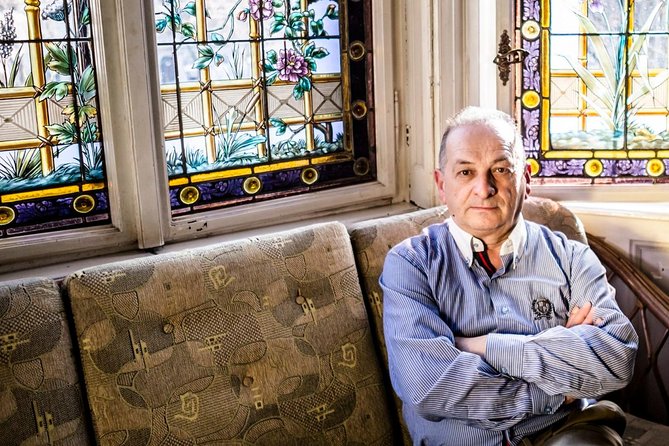
Miklós, the guide, is an art historian and the person who gives the outing its shape. His approach, based on the available feedback, is especially strong when he connects design with Budapest’s past. One useful tip is to tell him before the walk how strongly you want to focus on architecture rather than broader city history. One person who had a particular interest in Art Nouveau wanted more design analysis and less general background. That is a fair request, and a private tour gives you room to make it.
The route also has a local, slightly unusual quality. It does not stay inside a polished museum. You see public façades, hotel and bath interiors, an old palace district building, and a private apartment. That mix is a major reason to choose this experience.
Other private tours around Budapest:
- Private Budapest TukTuk Tour: Custom Route, Hotel Pickup
★ 5.0 · 1,307 reviews - Budapest Essentials Private Tour Highlights and Hidden Gems
★ 5.0 · 861 reviews - Budapest Private Tuk Tuk Half-Day Tour
★ 5.0 · 606 reviews
Starting at Central Market Hall
The advertised starting point is Central Market Hall, in Budapest’s 9th district. Hotel pickup is also available, or you can arrange another central meeting point with the guide. Confirm the exact location and time when booking, especially if you prefer pickup.
Central Market Hall is a practical place to begin because it is easy to reach and immediately puts you in one of Budapest’s active central districts. The first section of the tour lasts about 20 minutes. Admission to the market is not included, so the visit is best understood as a meeting point and part of the walking route rather than a long food-focused stop.
The market can be crowded, and this is not the place to expect a full guided food tour. Food and drinks are not included unless specifically stated. If you want to shop or eat there, allow extra time before or after the experience.
From here, the route moves toward the Danube and across one of Budapest’s attractive bridges. The walk gives you a chance to see the city from the river and approach Gellért Hill from below. You also cross Budapest’s first stone bridge later in the route, with views toward the Hungarian Royal Palace. These crossings add more than scenery. They help you understand how Budapest’s districts fit together.
Gellért Bath, where architecture meets daily life
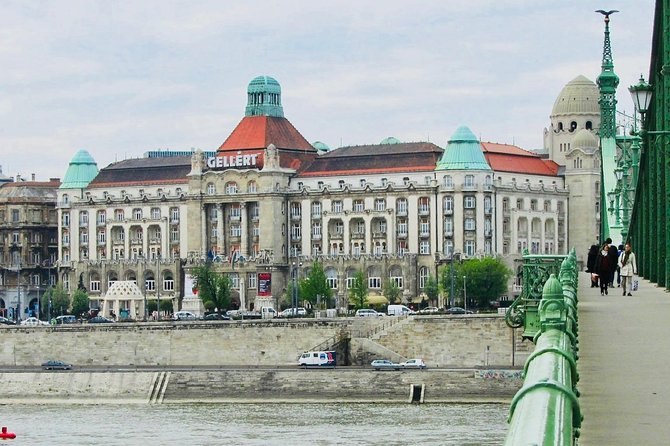
The next major stop is St. Gellért Thermal Bath and Swimming Pool, beside Hotel Gellért on the western bank of the Danube. The stop lasts about 20 minutes, and admission is listed as free for the tour.
Gellért is useful here because it is both a functioning bath complex and an architectural work. Its Secessionist character is not confined to a façade. Decorative surfaces, repeated patterns, and grand public spaces show how Art Nouveau entered everyday urban life, especially in a city famous for thermal bathing.
You should not confuse this visit with a bathing session. The tour does not include time to use the pools, and no admission for a separate bath visit is part of the package. If you want to bathe, plan that for another time and check the bath’s own arrangements.
The stop is short, so listen for the details that help you read the building. Ask Miklós which features are original, which motifs are Hungarian, and how the building’s function shaped its decoration. A good guide can make a 20-minute exterior or interior look much more meaningful than a quick photograph.
Crossing the Danube toward the Postal Savings Bank
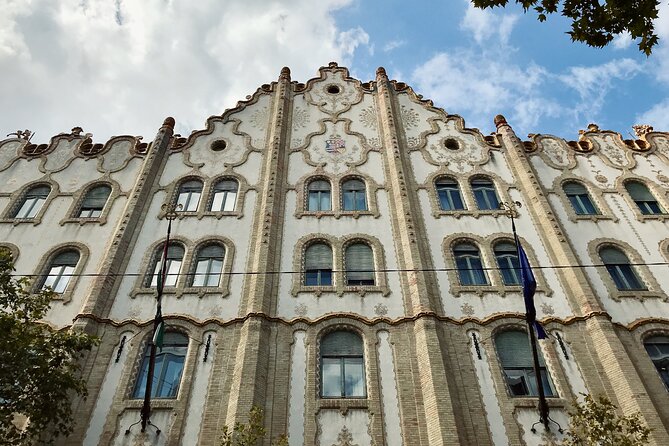
After Gellért Bath, the route crosses the river again. The walk includes views of the Hungarian Royal Palace, giving you a break from close architectural study and a chance to orient yourself in Budapest.
This is also where the tour’s use of public transportation matters. There is no private vehicle included. You may walk between several stops and use local public transport where needed, so wear comfortable shoes and bring a valid transport ticket. The guide does not include that ticket in the price.
The route is not a straight museum corridor. Budapest’s hills, bridges, riverfront, and changing neighborhoods are part of the experience. That makes it more varied than a single-district architecture walk, but it also means you should not expect every minute to be spent looking at façades.
A completely different kind of day out:
- Budapest: City Highlights Cruise with Welcome Drink
★ 4.6 · 35,610 reviews - Budapest: Unlimited Prosecco, Beer and Aperol Spritz Cruise
★ 4.8 · 25,310 reviews - Budapest: Széchenyi Spa Day Ticket with Optional Upgrades
★ 4.3 · 23,911 reviews - Budapest: Nighttime or Daytime Sightseeing Cruise
★ 4.2 · 21,062 reviews
Ödön Lechner’s Postal Savings Bank
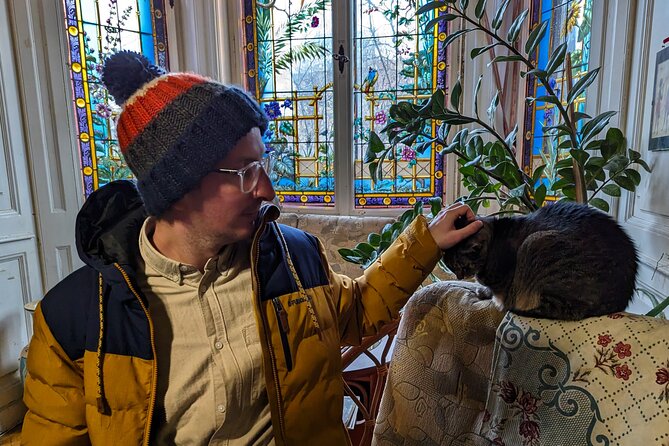
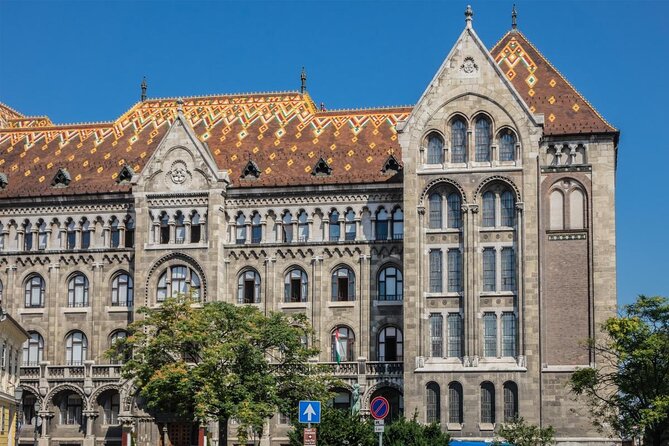
The Postal Savings Bank on Hold Street is the architectural centerpiece. Ödön Lechner designed it in 1901, and its exterior is one of the clearest examples of Hungarian Secession in the city.
Lechner’s work is easy to recognize once you know what to look for. The building uses colorful ceramic tiles and folk-inspired motifs rather than relying only on pale stone and sweeping curves. Its roofline and decorative surfaces create a lively effect, but the real interest lies in the combination of modern structure and national identity.
This is the sort of stop where a guide earns the fee. From the street, you can see the bold colors, yet the meaning of the patterns is easier to understand with explanation. Ask about Lechner’s place in Hungarian architecture and how folk art became part of a modern city building.
The itinerary also lists a stop called Nemzeti Bank before the Postal Savings Bank, with the same description of Lechner’s building. That appears to reflect an overlap in the route details rather than two clearly separate architecture stops. Confirm the exact sequence with the provider, since the walking order can change to suit the group.
Do not expect a long paid entrance here. The stop is listed as free, and the focus is on viewing and discussing the building rather than taking a full indoor tour.
Gutenberg Square and a Miksa Róth connection
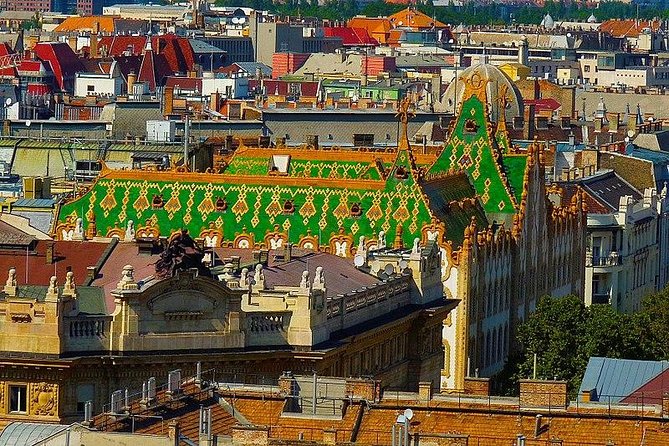
Gutenberg Square brings the tour into the Palace district of the 8th district. The building here is described as a historic Art Deco structure with a notable stairway and leaded glass by Miksa Róth. The stop lasts about 15 minutes.
This is a good reminder that the experience is not limited to famous public monuments. Budapest’s architectural character often appears in entrances, staircases, and residential buildings. You may walk past such details without noticing them unless someone points them out.
Miksa Róth is especially important to this tour. He was a major Hungarian stained-glass artist, and his work appears in important public buildings, including the Parliament. The Gutenberg Square stop lets you see how glass and architecture work together in a more intimate setting.
The available information calls the building Art Deco, while the larger tour centers on Art Nouveau and Secession. That blend is worth keeping in mind. Architectural styles overlap, and Budapest’s buildings do not always fit neatly into one label. If you care about design history, ask where the guide draws the line between the styles.
The private apartment and its stained glass
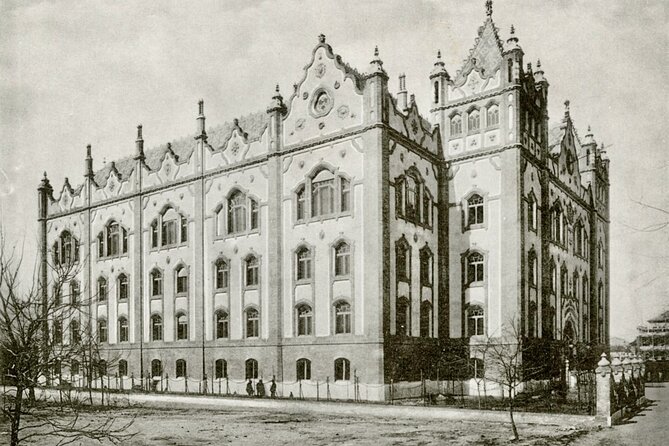
The tour ends in a century-old private apartment in the Rákóczi tér area. This is the most distinctive part of the route because you receive access to a real residential interior rather than another public façade.
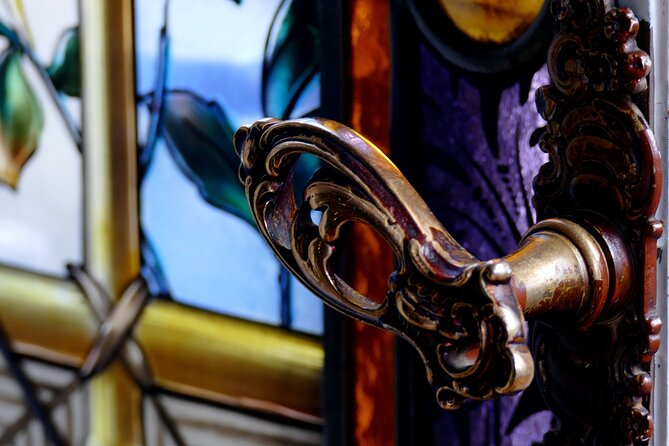
The main object is an invaluable stained-glass window by Miksa Róth. The visit gives you the chance to see his work at close range in an apartment setting, where the scale and placement feel different from a grand civic building. It also shows what Art Nouveau meant in private life, not just in banks, baths, and public institutions.
This final stop explains why the tour can appeal to serious design fans. Budapest has many Art Nouveau buildings, but access to private interiors is limited. The apartment gives you a more personal sense of the period and lets the guide discuss how decorative art shaped domestic spaces.
The apartment is private, so treat this as a special access visit rather than a standard museum admission. The exact arrangement may change, and the itinerary notes that minor alterations can be made to keep the tour running smoothly. If the stained glass is your main reason for booking, ask the provider to confirm that this stop is included on your chosen date.
What the price means for your group
The price is $261.67 per group of up to five people. For two people, that is a fairly large spend per person. For four or five people, the cost becomes more reasonable, especially because the rate covers a private professional guide rather than a seat on a large group walk.
You are paying for three things: a guide with art history training, a flexible route, and access to places that are not simply open viewing areas. The private apartment is the feature that gives the experience a value beyond a standard city stroll.
Still, this is not an all-inclusive outing. You pay separately for public transportation, food, and drinks. There is no private car. The tour is best value if you care about design and want to ask questions, not if you simply want a fast list of Budapest highlights.
The flexible start time helps if your schedule is tight. You can request a custom starting time, and hotel pickup can be arranged in Budapest. Keep in mind that the average booking lead time is about 63 days, so reserve early if you are visiting during a busy period.
Who will enjoy this walk most
I would choose this tour if you have a strong interest in Art Nouveau, Secession, stained glass, or architecture. It also suits repeat visitors who have already seen Budapest’s headline sights and want a more focused look at the city.
The private format works well for couples, families, and small groups of friends. You can ask for more discussion of design, more context about Hungarian history, or a slower look at details. Most people can take part, and service animals are allowed. The route is near public transportation, but it still involves walking and bridge crossings.
I would not book it if you want an easy ride between landmarks, a full thermal-bath visit, or a food tour at Central Market Hall. The outing is about close observation, city walking, and conversation with the guide.
The duration is listed as roughly 2 hours 30 minutes to 3 hours. One useful planning point is that the route may feel short to an expert Art Nouveau fan, especially if you want to see more buildings. A past suggestion was to use the full three hours and offer an extension. You can ask about adding time or extra sites, but do not assume an extension is included.
Practical tips for a better experience
Wear shoes suited to pavement and bridge crossings. The tour is designed to be done on foot with public transportation, and the route connects several parts of Budapest.
Bring a public transportation ticket or arrange how you will pay for local transit. That cost is not included. You may also want water, since food and drinks are not part of the tour.
Tell Miklós what you want before you start. If you already know Art Nouveau, ask for more attention to materials, motifs, and design theory. If the style is new to you, ask for a simple explanation of the difference between Hungarian Secession, Art Nouveau, and Art Deco.
The route may change slightly to suit your group or keep the timing practical. That flexibility is useful, but it means the exact order of stops is not guaranteed. Free cancellation is available when you cancel at least 24 hours before the local start time. Changes made later are not accepted for a refund.
Should you book Art Nouveau Treasures of Budapest?
Book it if you want Budapest through its decorative details rather than only its major monuments. The strongest features are the private format, Miklós’s art history guidance, Ödön Lechner’s Postal Savings Bank, Gellért Bath, and the final apartment with Miksa Róth stained glass.
Think twice if you dislike walking, need private transportation, or want a longer list of buildings. The route may not satisfy an advanced enthusiast who expects a full-day architecture survey, though you can ask about extra time.
For a group of four or five people, the price makes more sense. For two, the decision depends on how much you value specialist guidance and unusual interior access. If that sounds like your kind of Budapest, this is a focused and personal way to see the city’s Secessionist side.
FAQ
Where does the tour start?
The standard meeting point is Central Market Hall in Budapest, at 1093 Hungary.
Can the guide pick me up at my hotel?
Yes. Hotel pickup in Budapest can be arranged, or you can agree on another central meeting point.
Where does the tour finish?
The tour finishes in a century-old private apartment in the Rákóczi tér area of Budapest.
How long does the experience last?
The expected duration is about 2 hours 30 minutes to 3 hours.
How many people can join the private tour?
The price covers a private group of up to five people. Only your group participates.
Is the start time flexible?
Yes. A custom start time can be requested.
Is transportation included?
Private transportation is not included. The tour is designed for walking with public transportation, and public transportation tickets are extra.
Is food included?
No. Food and drinks are not included unless specifically stated.
Is admission included at the stops?
Admission is listed as not included at Central Market Hall and free at St. Gellért Thermal Bath, the Postal Savings Bank, and Gutenberg Square.
What is the cancellation policy?
You can receive a full refund if you cancel at least 24 hours before the experience starts. Cancellations or changes made less than 24 hours before the start time are not refunded.
Just added around Budapest
- Walk to recent and aged spiritual sanctuaries near Budapest★ 5.0 · 5 reviews
- Budapest: Private Walking Tour with a Local Guide★ 3.6 · 6 reviews
- Budapest: City Bike Tour with Coffee Stop★ 5.0 · 37 reviews
- Budapest: Danube River Views Bike Ride★ 4.8 · 23 reviews
- From Budapest: Guided Tour of Eger with Wine Tasting★ 4.5 · 6 reviews
- Trash Art Museum: Hungary’s First Scrap Metal Exhibition★ 4.3 · 72 reviews
- True Crime Walking Tour in the Buda Castle district★ 5.0 · 26 reviews
- Budapest: 3-Hour Trabant Sightseeing Tour★ 4.7 · 28 reviews
Tours in Budapest, compared.


Unlimited Prosecco, Beer and Aperol Spritz Cruise
Read our review →
Széchenyi Spa Day Ticket with Optional Upgrades
Read our review →


Budapest Danube Cruise and Dinner Options, Live Music and Dance
Read our review →