
Reviewed · FOOD TOURS
Budapest Essential Walk&Food tasting
Budapest Essential Walk&Food Tasting packs a surprising amount into one afternoon: grand boulevards, the first underground railway on mainland Europe, thermal baths, Parliament, the Danube memorial, Castle Hill, and a pastry stop. You move by foot and public transport, so Budapest unfolds as a working city rather than a string of isolated sights.
I especially like the private format, which lets guide Gabor adjust the pace and spend more time on questions. I also like the combination of major landmarks and a simple local food break, with poppy-seed strudel and coffee at the Strudel House. The main consideration is pace: three to four hours is a lot of ground, and most stops are outside visits rather than full museum or building tours.
Key points at a glance

- A wide Budapest overview: Cover the Opera area, Heroes’ Square, City Park, Parliament, Castle Hill, and Chain Bridge in one outing.
- Historic public transport: Ride the Millennium Underground and Metro 2 beneath the Danube.
- A private guide named Gabor: The small format allows a more personal conversation and flexible pacing.
- Food with a local touch: Pause for coffee and strudel, including the poppy-seed version praised by past customers.
- Strong history and politics content: Hear about King Stephen, Ferenc Puskás, the Soviet statue, the American Embassy, Parliament, and recent political issues.
- Good overall feedback: The experience has a 4.9 rating from 15 reviews, with 100 percent recommending it.
One afternoon, much of Budapest
I see this tour as a first-day orientation with food attached. It does not try to give you a deep visit inside every sight. Instead, it links the city’s main districts and gives you the stories needed to understand what you will see later on your own.
The route crosses both sides of the Danube and uses Budapest’s metro system. That matters because you are not spending the whole afternoon walking between distant districts. You get a sense of the city’s scale, and the train rides become part of the experience.
The tour runs about three to four hours and is private to your group. The listed price is $90.11 per person. That is not a bargain if you only want a quick stroll around one neighborhood, but it can be fair value if you want a guide, public transport connections, broad historical context, and a food tasting in one package.
More eating your way around Budapest:
- Budapest: Guided Foodie Walking Tour with Food and Drinks
★ 4.9 · 453 reviews - Budapest Food Tour: Market to Tavern with 14+ Tasters & Wines
★ 5.0 · 434 reviews - Budapest Culinary & Wine Walk
★ 5.0 · 397 reviews
Starting at Deák Ferenc Square
Meet at the stairs of the Lutheran Church on Deák Ferenc Square. This is a practical starting point in central Budapest, and the route quickly moves toward Erzsébet Square and the Opera House.
The opening walk gives Gabor room to explain the city’s grand central areas and the opulent buildings around them. The Opera is viewed from outside, so you should not book this expecting an interior performance-space visit. The value here is in learning how the building fits into Budapest’s city center and how its architecture reflects the city’s ambitions.
This first section lasts about 20 minutes. It is short, but useful for getting your bearings before the route becomes more varied.
Riding the Millennium Underground to Heroes’ Square
One of the tour’s best details is the ride on the Millennium Underground. Opened in 1896, it is widely recognized as continental Europe’s first underground railway. Riding it gives you a direct link between Budapest’s imperial-era confidence and its modern transport system.
You continue to Heroes’ Square and City Park, where the scale changes. The square’s monuments provide an introduction to Hungarian rulers and national history, while nearby City Park gives the walk some open space after the dense center.
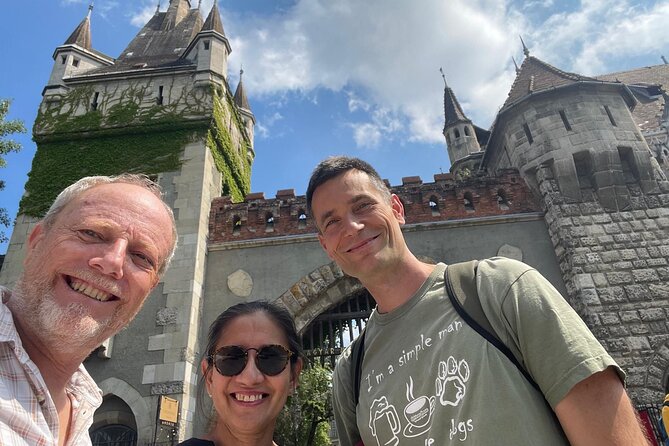
The stop also includes Vajdahunyad Castle. Despite its castle-like appearance, its architectural design draws from several Hungarian and European styles. Gabor uses it to explain the building’s unusual mix of forms rather than treating it as just another pretty backdrop.
Allow about 30 minutes here. Since the itinerary lists free admission and focuses on outdoor viewing, plan on seeing the square and castle from the outside.
Szechenyi Baths from the outside
Budapest’s thermal-bath culture is one of the city’s defining features, and the tour pauses at Széchenyi Baths. Gabor explains the history of the city’s most visited thermal bath and, if conditions allow, may take a look at the outdoor pools through a side entrance.
This is a useful preview if you are considering a separate bath visit. You will get the story and a sense of the setting, but this is not a bathing session. Do not bring this tour in place of a reserved thermal-bath visit if soaking is one of your main Budapest goals.
The stop is about 20 minutes. Afterward, you return toward the center by underground train, heading for St. Stephen’s Basilica.
Other guided walks around Budapest:
- Budapest: Buda Castle Walk with Saint Stephen’s Hall
★ 4.5 · 3,012 reviews - Big Bus Budapest Hop-On Hop-Off Bus and Walking Tour
★ 3.5 · 2,206 reviews - Budapest: Buda Castle District Walking Tour
★ 4.6 · 2,108 reviews - Budapest City Landmarks Walking Tour in 2 Hours
★ 5.0 · 2,048 reviews
St. Stephen’s Basilica and Hungary’s first king
At St. Stephen’s Basilica, the focus shifts from architecture to the birth of Catholic Hungary. Gabor explains King Stephen, the country’s state founder, and the role of religion in early Hungarian statehood.
The stop also brings in later Hungarian figures, including football legend Ferenc Puskás. That mix is helpful because it keeps the story from becoming a list of medieval kings. You get a little of the national identity that still shapes how Hungary presents itself.
The scheduled visit lasts about 15 minutes. Again, this is an outside introduction rather than an extended interior tour. If you want to see the basilica inside, you should set aside separate time.
Strudel, coffee, and a useful pause
The food portion is modest but well placed. You stop at the Strudel House for coffee and strudel before continuing toward the government district.
A poppy-seed strudel was singled out as a highlight by one couple, and it is an especially fitting choice in Budapest, where poppy-seed pastries are a familiar part of local baking. The pause also gives your feet a break and breaks up the history talk.
I like that the food is tied to the route rather than treated as a separate tasting menu. Still, keep your expectations in check: the supplied details support one strudel-and-coffee stop, not a full meal or a long list of tastings. If you need lunch, eat before the tour or plan another meal afterward.
Szabadság tér and the difficult twentieth century
From the Strudel House, the walk heads into Budapest’s bank district and Szabadság tér. This square is one of the most politically charged stops on the route.
Here you discuss the last remaining Soviet monument in the city, the American Embassy, and the memorial connected with the German occupation. These sights bring up the competing memories that shape modern Hungary. This is not just a pretty square, and the tour is stronger for making room for difficult subjects.
The stop lasts about 20 minutes. Gabor’s background in European history, along with his interest in topics beyond Europe, was praised in the feedback provided. That suggests this section may suit you if you prefer context and discussion over a quick photo stop.
Parliament and the Shoes on the Danube
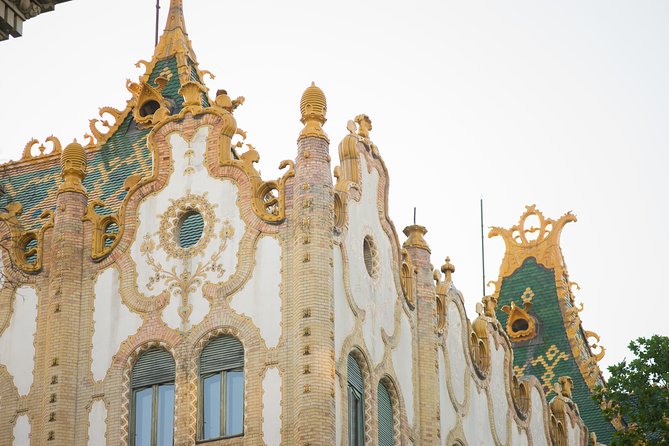
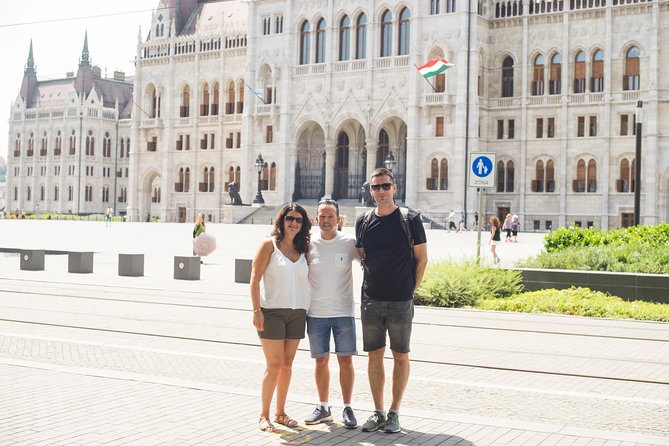
Kossuth tér brings you to the Hungarian Parliament Building, one of Budapest’s most recognizable sights. The tour discusses its architecture, its political role, and past and recent political issues.
You also visit the Shoes on the Danube Promenade nearby. The memorial’s simple form gives the site its force, and it calls for a quieter pause than some of the earlier stops. The combination of Parliament and the memorial shows two sides of the same riverfront: national power on one side, personal loss on the other.
The Parliament section lasts about 20 minutes. You should expect exterior viewing and explanation, not an interior Parliament tour. If entering the building matters to you, arrange that separately.
Crossing beneath the Danube to Castle Hill
After Parliament, you take Metro 2, the red line, beneath the Danube. This is another smart use of Budapest’s transport system. Instead of making a long surface transfer, you reach the Buda side and begin the climb around Castle Hill.
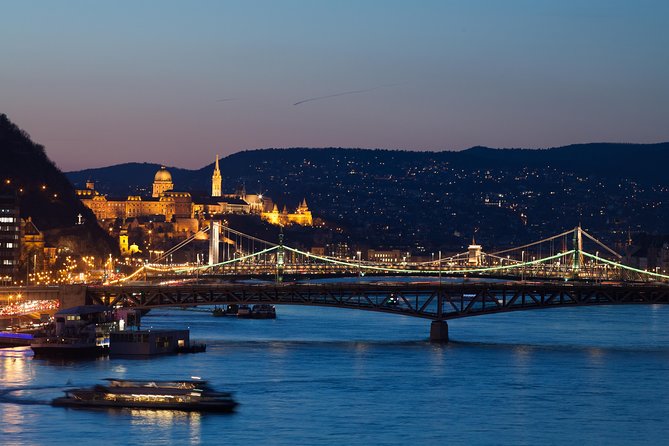
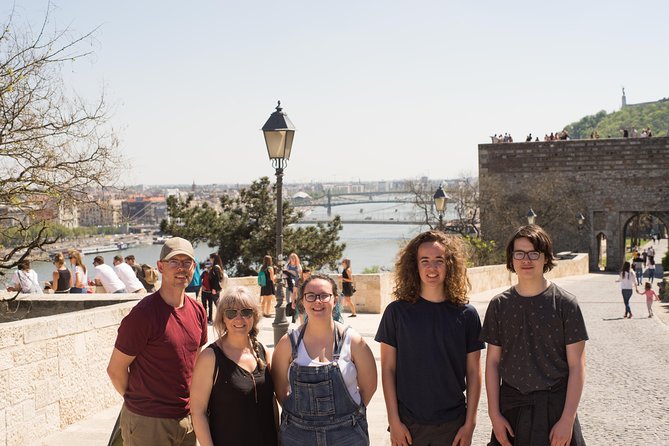
The next stop is Fisherman’s Bastion, where you get a broad view across the city. The terraces are among Budapest’s best places for seeing the Danube, Parliament, and the Pest side from above. The elevated position also helps you understand how sharply the two halves of the city differ.
The tour then continues through the Royal Palace area. This is where the afternoon feels most historic and scenic, but it also includes some walking on slopes and uneven streets. Wear comfortable shoes, especially if rain is possible.
Walking down past the Funicular to Chain Bridge
The route continues down Castle Hill along the Funicular. You hear stories about the Széchenyi Chain Bridge, Budapest’s first permanent bridge across the Danube, including the familiar stories connected with its stone lions.
The bridge is an appropriate final subject because it represents the connection between Buda and Pest. After spending the afternoon moving between the two sides by metro, you finish with the city’s best-known physical link between them.
The supplied meeting details contain a small point to clarify. The route lists Széchenyi Chain Bridge as the end point, while the operational note says the walk finishes at Holy Trinity Square near Matthias Church in the Castle District. Confirm the exact finishing spot with Budapest Tour Guy before setting your onward plans, especially if you have a timed dinner or evening booking.
What the private format adds
The private setup is important here. This is not a fixed lecture delivered to a large group. Only your group participates, so you can ask about architecture, Hungarian politics, Catholic history, public transport, or whatever catches your attention.
Gabor received especially strong praise for staying with the planned route in heavy rain and strong wind, even when only two people had booked. That points to a guide who takes the appointment seriously. It also shows why weather matters: much of this experience takes place outdoors.
One couple said Gabor extended the outing close to 6 PM after beginning around 2 PM and brought them back to their hotel. That is a specific experience, not a guaranteed hotel transfer or fixed extension, so I would not assume it is included. Still, it suggests there may be some flexibility when the schedule and group allow it.
Price, timing, and practical trade-offs
At $90.11 per person, this tour makes the most sense for people who want a broad introduction without arranging several separate walks and transport connections. You are paying for private guiding, historical explanation, a structured route, metro rides, and the strudel-and-coffee pause.
The value is weaker if you already know Budapest well, dislike public transport, or want long interior visits. Several stops are brief, and admission tickets are listed as free because the program centers on outdoor viewing.
The tour is scheduled daily from 3 PM to 9 PM during the stated operating period, though the experience itself lasts about three to four hours. Confirmation arrives at booking, and service animals are allowed. It is near public transportation, and most people can take part, but the amount of walking and Castle Hill terrain still make good shoes sensible.
Free cancellation is available up to 24 hours before the start time. Changes or cancellations inside that window are not accepted for a refund. Poor weather can cancel the experience, with a different date or full refund offered, and the same applies if the minimum number of participants is not reached.
Who should book this walk
I would choose this for a first or second day in Budapest, especially if you want to learn how the city fits together before exploring individual sights on your own. It suits couples, families, and small private groups who prefer questions and conversation to a large scheduled tour.
It is also a good match for history-minded people. The route moves from medieval statehood to Soviet memory, the German occupation, Parliament, Hungarian football, and current politics. That range gives the afternoon more substance than a landmark checklist.
I would think twice if your priority is bathing at Széchenyi, touring Parliament inside, entering the Opera, or spending a long time at one museum. This tour introduces those areas but does not replace dedicated visits.
Should you book Budapest Essential Walk&Food Tasting?
Book it if you want a private, energetic overview that mixes Budapest’s famous sights with public transport, political history, Castle Hill views, and a genuine pastry break. The strongest reasons are Gabor’s reported flexibility, the broad route, and the chance to see how Buda and Pest connect.
Skip it if you want a slow food tour or a series of interior admissions. At $90.11 per person, the price is easiest to justify when you use the tour as a city orientation and make good use of the guide’s time. Confirm the final meeting point, wear walking shoes, and allow a little flexibility for weather and conversation.
FAQ
How long does the Budapest Essential Walk&Food Tasting last?
The experience lasts approximately three to four hours.
Where does the tour start?
The listed starting point is the stairs of the Lutheran Church at Deák Ferenc tér 4 in Budapest.
What food is included?
The route includes a break at the Strudel House for coffee and strudel. Poppy-seed strudel is specifically mentioned.
Is the tour private?
Yes. Only your group participates in the activity.
Does the tour enter the main attractions?
The route mainly focuses on outdoor visits and explanations. It may offer a glimpse of the outdoor pools at Széchenyi Baths through a side entrance if possible, but no full interior visits are specified.
What happens if bad weather cancels the tour?
If poor weather causes cancellation, you are offered a different date or a full refund.
Just added around Budapest
- Walk to recent and aged spiritual sanctuaries near Budapest★ 5.0 · 5 reviews
- Budapest: Private Walking Tour with a Local Guide★ 3.6 · 6 reviews
- Budapest: City Bike Tour with Coffee Stop★ 5.0 · 37 reviews
- Budapest: Danube River Views Bike Ride★ 4.8 · 23 reviews
- From Budapest: Guided Tour of Eger with Wine Tasting★ 4.5 · 6 reviews
- Trash Art Museum: Hungary’s First Scrap Metal Exhibition★ 4.3 · 72 reviews
- True Crime Walking Tour in the Buda Castle district★ 5.0 · 26 reviews
- Budapest: 3-Hour Trabant Sightseeing Tour★ 4.7 · 28 reviews
Food Tours, compared.
Guided Foodie Walking Tour with Food and Drinks
Read our review →
Budapest Food Tour: Market to Tavern with 14+ Tasters & Wines
Read our review →


Budapest Food Tasting Tour with Nelli & her local guides
Read our review →
The Award-Winning Private Food Tour of Budapest: 6 or 10 Tastings
Read our review →
Browse the lists this tour appears in