
Reviewed · WALKING TOURS
Budapest Art Nouveau Walking Tour
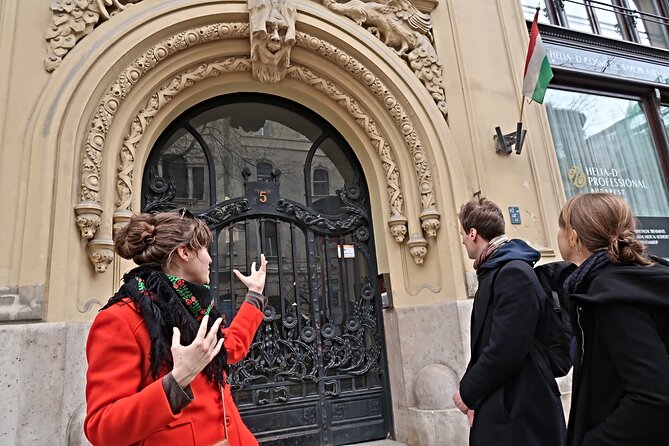
Budapest’s Art Nouveau is not just pretty decoration. It is a bold local style of colored tiles, curving lines, folk-inspired details, and playful roofs. This walk brings that style into focus through Gresham Palace, Thonet House, and Ödön Lechner’s Royal Postal Savings Bank. I like the clear architectural theme, and I like having a historian guide explain why the buildings look the way they do instead of simply pointing at handsome facades.
The main consideration is cost. At $126.16 per person, this is a serious spend for three hours, especially since public transport, food, drinks, and possible synagogue admission are extra. The small group and specialist subject help justify the price, but this is best for travelers who care deeply about architecture rather than those seeking a general introduction to Budapest.
Key points to know before you book
- Ödön Lechner is the central figure: You’ll learn about Hungary’s best-known Art Nouveau architect, often compared with Gaudí.
- Four focused stops: The route covers Gresham Palace, the Royal Postal Savings Bank, Thonet House, and Kazinczy Street Synagogue.
- Small-group format: The tour is presented as a small group, with the maximum listed as eight people and the highlights describing a limit of six.
- Some transport is involved: You’ll walk between sights but may need public transport, with passes paid for separately.
- The synagogue visit is conditional: Interior access is usually included except on Saturdays, but admission can cost extra if the site is open on your tour day.
- Allow three hours and wear good shoes: The walking is moderate, with morning and afternoon departures available.
Why Budapest is such a good city for Art Nouveau
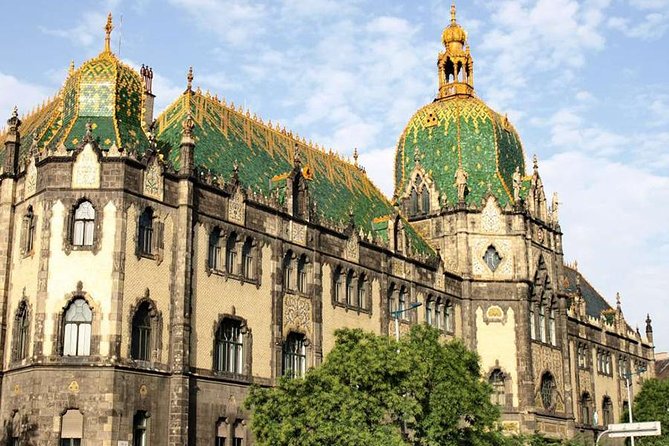
Budapest is a rewarding place to study Art Nouveau because the style appears across the city in several forms. Some buildings use flowing floral decoration. Others rely on bright ceramic tiles, unusual rooflines, or carefully planned interiors. The movement did not produce one single look here. It gave architects room to experiment.
This tour focuses on Hungarian Art Nouveau rather than treating the city as a backdrop for a general sightseeing walk. That distinction matters. You’ll hear about design choices, materials, and the people behind them. A good guide can help you see that the tiles on a facade are not merely colorful decoration. They may be tied to Hungarian craft traditions, new manufacturing methods, or a deliberate attempt to create a national style.
I also like the fact that the route includes both grand public architecture and a religious building. Gresham Palace shows luxury and commercial ambition. The Postal Savings Bank reflects government and finance. Thonet House demonstrates the impact of ceramic production. Kazinczy Street Synagogue brings Art Nouveau into a religious setting.
The result should feel more like an architecture lesson taken outdoors than a standard city walk. That makes it especially useful if you have already seen Budapest’s main landmarks and want to understand the city’s buildings at a closer level.
Other guided walks around Budapest:
- Budapest: Buda Castle Walk with Saint Stephen’s Hall
★ 4.5 · 3,012 reviews - Big Bus Budapest Hop-On Hop-Off Bus and Walking Tour
★ 3.5 · 2,206 reviews - Budapest: Buda Castle District Walking Tour
★ 4.6 · 2,108 reviews
Starting at Madal Cafe on Alkotmány Street
The walk begins at Madal Cafe, at Alkotmány u. 4. This is near public transport, which is practical if you are staying elsewhere in Budapest, but make a clear meeting plan before you arrive. One piece of direct feedback about the tour points to the meeting place being busy and easy to miss. Arrive early, keep your phone available, and look carefully for your guide and group.
The morning or afternoon choice gives you some control over your day. A morning departure leaves the rest of the day open for museums or the central market. An afternoon departure may fit better after a slow start or a morning visit to another district. The tour lasts about three hours, so it is long enough to feel substantial without taking over the entire day.
The group size deserves a close look. The experience is described as a small-group tour, with one section giving a maximum of six and the general participation details listing a maximum of eight. Either way, this is much more intimate than a large city coach tour. You should have a better chance to ask questions and hear explanations, though the exact group size may vary.
Gresham Palace: a grand opening lesson
The first stop is Gresham Palace, where you spend about 20 minutes examining the facade and interior design. The building began as office space and luxury apartments and is now Budapest’s most luxurious hotel. That change in use gives the stop an extra layer: you are looking at a building that was designed for status, commerce, and private living, then adapted for high-end hospitality.
Gresham Palace is a useful introduction because it shows how Art Nouveau could work on a large urban building. Look for the relationship between the overall facade and the smaller decorative elements. The guide can help you separate structure from ornament and explain how the design creates a unified appearance.
The interior is an important part of this stop, though the time is short. Twenty minutes will let you appreciate the design but will not turn the visit into a full architectural study. Since this is a hotel today, access and viewing conditions can depend on what areas are open. Treat the stop as a guided look rather than a promise of unrestricted exploration.
I like starting here because the building gives you an immediate sense of scale. You begin with a palace-like structure, then move toward more specific examples of tiles, materials, and national design.
The Royal Postal Savings Bank and Ödön Lechner’s ideas
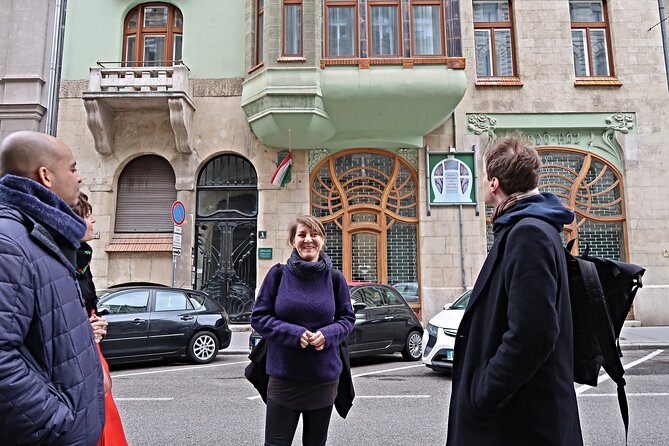
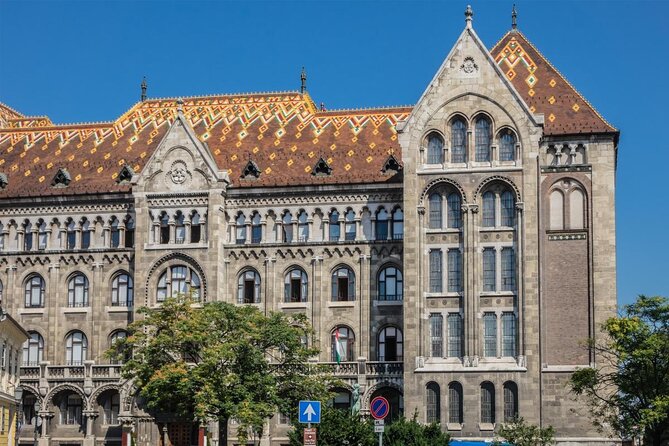
Next comes the Royal Postal Savings Bank, also called Postatakarek Bank. This is the architectural heart of the walk for many people because it was designed by Ödön Lechner, Hungary’s best-known Art Nouveau architect. You’ll spend about 20 minutes examining the flamboyant exterior and discussing the entrance hall.
Lechner is often compared with Gaudí, but the comparison should not make you expect a copy of Barcelona. The useful point is that both architects pushed beyond ordinary historic styles and developed highly personal approaches. In Budapest, Lechner’s work is closely tied to Hungarian motifs and the use of ceramics.
Pay attention to the roof and facade details. The building’s decorative treatment is not an afterthought. It is part of the building’s identity, and the guide’s explanation should help you understand how the design works as a complete composition.
The entrance hall is another reason this stop has value. Exterior photographs can show you color and shape, but an interior discussion reveals how the architect carried the design language indoors. At this point in the walk, you should have a clearer sense of Art Nouveau as a system of connected choices rather than a collection of random flourishes.
The tour’s focus on Lechner is a strong advantage. If you are interested in Hungarian architecture, his name gives the walk a clear thread. If you are mainly interested in famous Budapest monuments, this stop may require more attention than a quick photo opportunity.
A completely different kind of day out:
- Budapest: City Highlights Cruise with Welcome Drink
★ 4.6 · 35,610 reviews - Budapest: Unlimited Prosecco, Beer and Aperol Spritz Cruise
★ 4.8 · 25,310 reviews - Budapest: Széchenyi Spa Day Ticket with Optional Upgrades
★ 4.3 · 23,911 reviews - Budapest: Nighttime or Daytime Sightseeing Cruise
★ 4.2 · 21,062 reviews
Thonet House and the importance of Zsolnay tiles
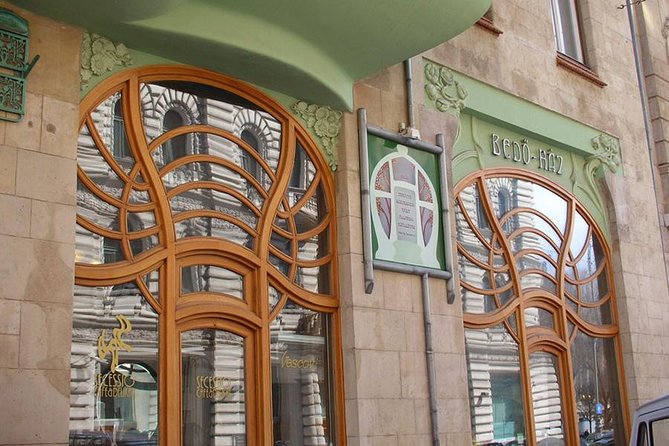
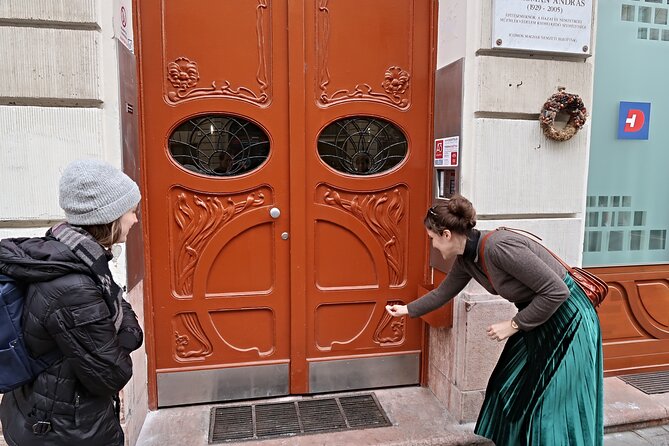
Thonet House offers a closer look at one of the signatures of Hungarian Art Nouveau: decorated ceramic tile facades. The building is linked to the Zsolnay porcelain and ceramics factory in Pécs, a city in southern Hungary. You’ll spend about 20 minutes considering how those tiles shaped the appearance of the building.
This is where the tour moves from famous architects to materials. Ceramic changes how a facade handles color, shine, weather, and texture. It can make a building look more playful, but it also gives the architect a practical way to protect and decorate the exterior.
The Zsolnay connection adds useful context. Rather than treating Budapest’s Art Nouveau as an isolated local fashion, the guide can show how industrial innovation made new design effects possible. The tiles helped architects move beyond plain stone and plaster.
I would listen carefully here for the explanation of why tile was so important in Hungary. A short stop can cover only so much, but this subject helps tie together the buildings you have already seen. Gresham Palace may impress you with its grand scale, while Thonet House lets you study the surface more closely.
Kazinczy Street Synagogue and a different Art Nouveau setting
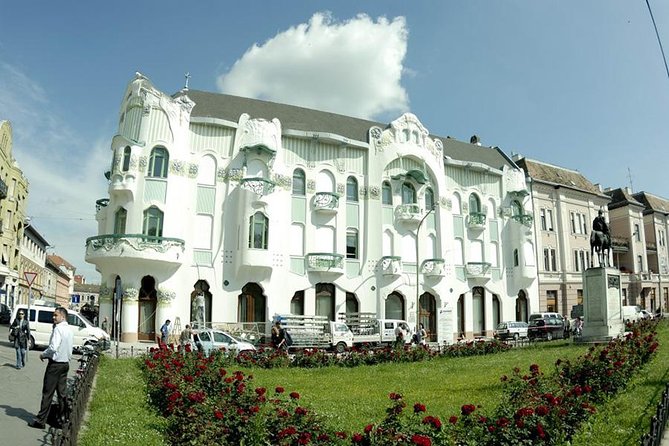
The walk concludes at the Orthodox Kazinczy Street Synagogue, at Kazinczy u. 29-31. The building is decorated in Art Nouveau style, making it a particularly interesting final stop. Here, the movement appears in a religious setting rather than a palace, bank, or commercial building.
Except on Saturdays, the tour includes a visit to the synagogue’s interior when access is available. However, admission is not included if the site is open on the day of your tour, so you should budget for that possibility. The supplied details do not give the admission price, so do not assume the tour fee covers it.
The interior visit can give the walk a stronger finish because it allows you to compare exterior decoration with an interior designed for worship. You’ll also end in the Kazinczy Street area, rather than returning to the starting point. That is useful if you plan to continue exploring the neighborhood afterward.
Saturday is the key scheduling issue. If seeing the synagogue interior matters to you, avoid that day or confirm the conditions before booking. If the exterior and the guide’s explanation are enough, the tour can still work, but the experience will be different.
What the three hours are really worth
The price is $126.16 per person, which places this firmly in the premium walking-tour category. You are not paying for admission to a long list of attractions. You are paying mainly for specialist guidance, a small group, and a carefully chosen architectural subject.
That can be good value if you enjoy asking questions and want more than a surface look at Budapest. A historian guide can point out details you would probably miss alone and explain how architects, materials, and national identity shaped the buildings. The 4.9 rating from 17 submitted ratings, along with a 100 percent recommendation figure, supports the idea that the guide-led format is the main strength.
The price is harder to justify if you want a broad overview of Budapest or prefer to explore at your own pace. You will need to pay separately for public transport passes, food and drinks, and possible synagogue admission. These are not large parts of the experience, but they add to the total.
The small group improves the value. A guide can respond to your interests, and one direct piece of feedback praised the guide’s willingness to take the group toward subjects that interested them. That flexibility is more useful in a group of six or eight than in a crowd.
Walking, transport, and practical planning
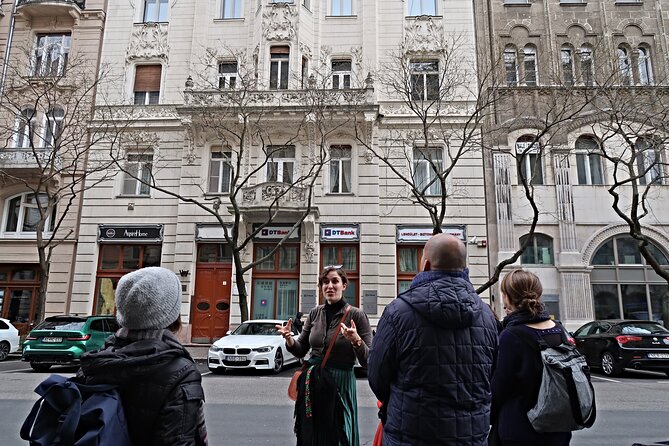
Expect a moderate amount of walking. Comfortable shoes are a sensible choice, especially since the tour moves between several central buildings and may include public transport. The tour is not presented as a strenuous hike, but you should still be ready to stay on your feet for much of three hours.
Public transport passes are not included. The tour description does not specify exactly which services or how many rides are used, so keep a valid pass or fare money available. This is a minor inconvenience, but it is worth knowing before you arrive.
The route ends at the synagogue, not at Madal Cafe. Plan your next activity from Kazinczy Street. The one-way structure is convenient if you want to continue sightseeing, eat nearby, or explore more of the area, but it is less convenient if you need to return to your hotel near the starting point.
Confirmation is provided when you book. Most people can participate, and the activity is near public transport. The main physical demand is the walking rather than difficult terrain or a special fitness requirement.
Who will enjoy this tour most
I would choose this tour if you already have some interest in architecture, decorative arts, urban history, or Budapest’s less obvious sights. It is also a good fit if you prefer a guide who can explain why a building matters rather than simply naming it.
The tour suits solo visitors and couples who value conversation in a small group. It can also work for friends with a shared interest in design. Group discounts are available, so larger parties should check the booking terms before assuming that the standard per-person price is final.
I would think twice if you are looking for interiors throughout the entire walk. The itinerary includes interior design discussion at Gresham Palace and the Postal Savings Bank, plus a possible synagogue interior visit, but much of the experience is still viewed from the street.
The same is true if your main goal is a cheap introduction to Budapest. At $126.16, this is not a budget walk. Its value comes from the subject and the guide, not from the number of included admissions.
Should you book the Budapest Art Nouveau Walking Tour?
Book it if you want a focused, small-group study of Budapest’s decorative architecture and you appreciate expert explanation. The route has a strong sequence: grand Gresham Palace, Lechner’s expressive Postal Savings Bank, tile-rich Thonet House, and an Art Nouveau synagogue. The guide’s role is central, and the strongest praise is directed toward the depth of the architectural and historical explanations.
Skip it if you want a general city tour, a fully included price, or a flexible route with no extra transport and admission costs. Before booking, confirm the group-size details, ask about the synagogue interior if that matters to you, and avoid Saturday if you want the usual interior visit.
For the right audience, this is a thoughtful way to see Budapest through its buildings. You leave with more than a set of facade photographs. You begin to recognize the materials, shapes, and ideas that made Hungarian Art Nouveau its own distinct style.
FAQ
How long does the Budapest Art Nouveau Walking Tour last?
The tour lasts approximately three hours.
Where does the tour begin?
It begins at Madal Cafe, Alkotmány u. 4, 1054 Budapest, Hungary.
Where does the tour end?
The tour ends at the Budapest Orthodox Synagogue at Kazinczy u. 29-31, 1075 Budapest.
Which buildings are visited?
The stops are Gresham Palace, the Royal Postal Savings Bank, Thonet House, and the Orthodox Kazinczy Street Synagogue.
Is public transportation included?
No. Public transportation passes are not included, so you pay for them separately.
Is the synagogue admission included?
Admission is not included if the Orthodox Synagogue on Kazinczy Street is open on the day of the tour. The interior visit is available except on Saturdays, subject to access.
Can I cancel the tour?
Yes. You can cancel up to 24 hours before the start time for a full refund. Changes or cancellations made less than 24 hours before the start time are not accepted for a refund.
Just added around Budapest
- Walk to recent and aged spiritual sanctuaries near Budapest★ 5.0 · 5 reviews
- Budapest: Private Walking Tour with a Local Guide★ 3.6 · 6 reviews
- Budapest: City Bike Tour with Coffee Stop★ 5.0 · 37 reviews
- Budapest: Danube River Views Bike Ride★ 4.8 · 23 reviews
- From Budapest: Guided Tour of Eger with Wine Tasting★ 4.5 · 6 reviews
- Trash Art Museum: Hungary’s First Scrap Metal Exhibition★ 4.3 · 72 reviews
- True Crime Walking Tour in the Buda Castle district★ 5.0 · 26 reviews
- Budapest: 3-Hour Trabant Sightseeing Tour★ 4.7 · 28 reviews
Walking Tours, compared.
3-Hour Orientation Walking Tour of Buda and Pest
Read our review →
Budapest Historical Sightseeing – Free Walking Tour
Read our review →
Budapest All in One Small Group Walking Tour with Strudel Stop
Read our review →
BloodThirsty Hungary: Walking tour & Dark Historical Stories
Read our review →
Browse the lists this tour appears in