
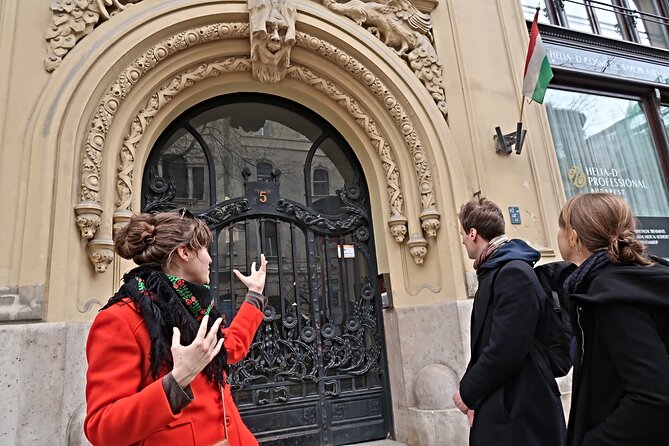
Reviewed · WALKING TOURS
Budapest Art Nouveau Walking Tour
Budapest’s Art Nouveau is not shy. It curls, glitters, and reaches across entire facades, mixing Hungarian folk ideas with Asian motifs and brilliant Zsolnay ceramics. This three-hour walk gives you a focused look at that unusual style, led by an art and architecture historian rather than a general city guide.
I especially like the chance to enter the Gresham Palace entrance hall and the Hungarian State Treasury, since Budapest’s Art Nouveau is often best understood indoors. I also like the tour’s attention to small places, including a flower shop, bank interiors, and the Bedő House museum and coffee house. The main consideration is that some interiors depend on the day, and entry fees for two possible stops are extra.
- Ödön Lechner’s Hungarian Secession: Study the flamboyant Postal Bank and the ideas of Hungary’s most important Art Nouveau architect.
- Gresham Palace interior: See how decorative ironwork, glass, tiles, and flowing lines continue beyond the famous facade.
- Zsolnay porcelain details: Look for the colorful ceramic work that gives many Hungarian buildings their distinctive finish.
- Asian design references: Learn why Hungarian architects used eastern motifs and how this fit the wider European taste for Orientalism.
- A flexible route: Depending on opening days, the walk may include the State Treasury, Kazinczy Street Synagogue, or other Art Nouveau buildings.
- Small-group attention: Private and small-group formats make this a good pick if you want to ask detailed architecture questions.
Why Budapest’s Art Nouveau Feels So Hungarian
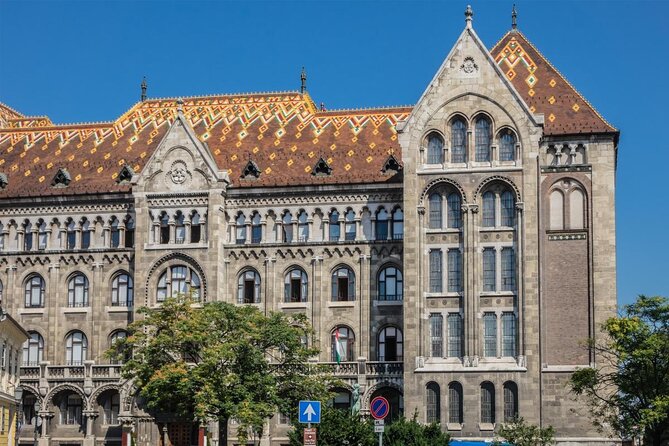
At the turn of the 20th century, Budapest was a confident capital within the Austro-Hungarian world. New banks, apartments, shops, and public buildings expressed money, modernity, and a desire for a national style.
Across Europe, Art Nouveau favored curved lines, plant forms, unusual materials, and close cooperation between architects and craftspeople. Hungary developed its own version, often called Hungarian Secession. Its leading figure was Ödön Lechner, whose work brought together Hungarian decorative traditions, porcelain, and eastern-looking motifs.
That mix is what makes this walk worthwhile. You are not simply checking off attractive facades. You are learning to spot recurring ideas: ceramic roof tiles, colored ornament, folk references, stylized flowers, and shapes that seem to ignore the strict lines of older architecture.
Your guide helps turn decoration into evidence. A good explanation can show why a bank used costly ceramic details, why a facade looked toward Asia, or how Budapest’s wealthy institutions used design to project status.
The Postal Bank and Ödön Lechner’s Bold Ideas
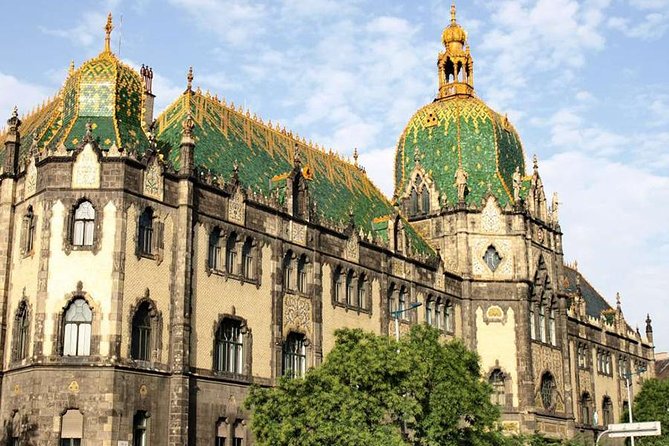
The Palace of the Royal Post, also called the Postal Bank, is the architectural headline. Designed by Ödön Lechner, it is one of the clearest examples of his energetic approach.
The building is famous for its decorated roofline and colorful ceramic surfaces. Lechner used Zsolnay porcelain not as a small finishing touch, but as a major part of the building’s identity. The result is playful and striking, with forms that feel more like crafted objects than standard commercial architecture.
Your guide will help you read the building in layers. First, look at the overall silhouette. Then notice the repeating patterns, the roof decoration, and the way ceramic elements catch the eye. The building’s importance comes from this combination of engineering, national pride, and decorative excess.
This is also where the guide’s art-history background matters most. Without context, you might simply call the building unusual. With context, you can see how Lechner was searching for a distinctly Hungarian design language while still working within the international Art Nouveau movement.
The exterior is the main event, but the route may also include the Hungarian State Treasury. Its interiors offer another useful lesson in how public institutions embraced ornament. Opening access can vary, so the exact visit may depend on the day.
Other guided walks around Budapest:
- Budapest: Buda Castle Walk with Saint Stephen’s Hall
★ 4.5 · 3,012 reviews - Big Bus Budapest Hop-On Hop-Off Bus and Walking Tour
★ 3.5 · 2,206 reviews - Budapest: Buda Castle District Walking Tour
★ 4.6 · 2,108 reviews
Gresham Palace, Where the Details Continue Indoors
Gresham Palace is one of Budapest’s most famous Art Nouveau buildings, and for good reason. The exterior is elegant and highly decorated, but the entrance hall gives you a better sense of how the style worked as a complete environment.
Look for the relationship between the facade and the interior. Art Nouveau was not limited to a building’s front. Designers carried the same language into gates, floors, ironwork, glass, and decorative surfaces.
You should expect a relatively short interior visit rather than a full tour of every part of the palace. Still, that glimpse is valuable. Budapest has many grand exteriors that you can photograph from the pavement, but entering a major building lets you understand the scale and craftsmanship more clearly.
Gresham Palace also helps balance the more flamboyant Lechner buildings. Its design feels polished and cosmopolitan, reflecting Budapest’s place in the wealthy urban world of the early 1900s. If your interest is architectural detail, this will likely be one of the strongest stops.
Bedő House and the Smaller Art Nouveau Stops
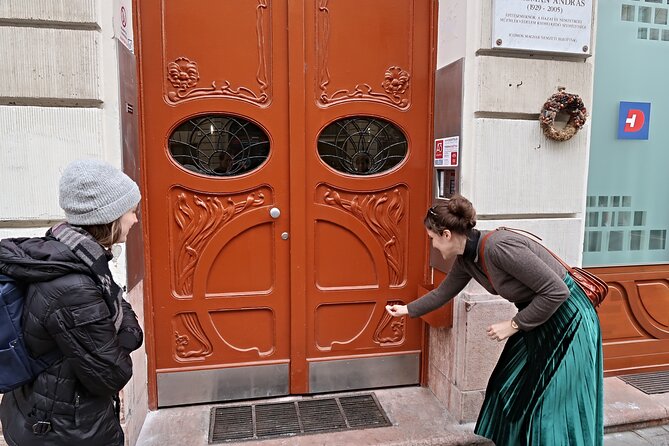
The Bedő House offers a more intimate scale. Rather than looking only at major civic buildings, you get a chance to see how Art Nouveau appeared in a smaller setting.
The stop includes the House of Hungarian Art Nouveau, a small museum and coffee house. An admission charge of 1,000 HUF per person, about $3.50, may apply. It is a modest extra cost, but you should know about it when comparing the tour price.
A smaller museum can be especially useful after the large facades. It gives you time to focus on objects, ceramics, and decorative details instead of trying to take in an entire building from across the street. You might find this part most rewarding if you enjoy applied arts, furniture, interior design, and craft.
The route can also include a flower shop with its original interior, a department store, several bank offices, Rózsavölgyi utca, and Paris Passage. These locations show that Art Nouveau was part of daily commercial life, not just a style reserved for grand monuments.
The smaller stops are also where the walking format pays off. You move through the city at street level, seeing how the architecture fits into ordinary blocks and busy central streets. The tradeoff is that some sites may be viewed quickly or from the outside if access is not available.
Zsolnay Ceramics and the Color of the Facades
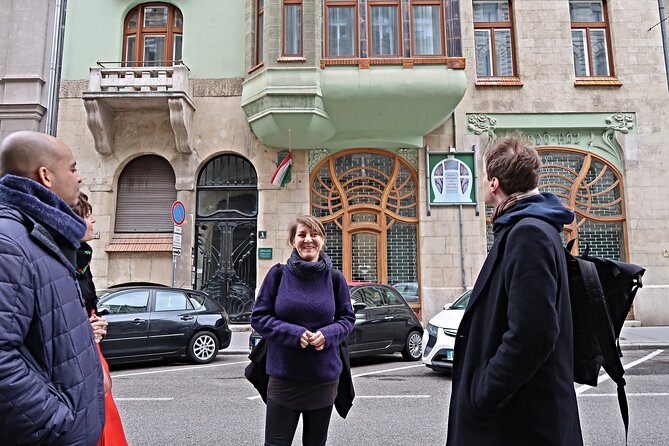
Zsolnay porcelain is one of the clearest signatures of Hungarian Art Nouveau. The factory was based in Pécs, in southern Hungary, and its ceramics became a favorite material for ambitious buildings.
On this walk, your guide may point out Zsolnay work in facades and show ceramics connected with the period. The material was practical as well as decorative. It could handle weather while giving architects colors and textures that ordinary plaster or stone could not provide.
The use of porcelain tells you something about the period’s design culture. Architects wanted buildings to look modern, but they also wanted surfaces with the care and variation of handmade work. A ceramic tile could make a bank or public office feel more distinctive and prestigious.
I recommend slowing down at these stops and looking upward. Ceramic details can sit high on a roofline or around an entrance, where they are easy to miss. The guide can point out what is original, what is decorative, and how the material fits the larger design.
The tour is particularly strong for people who enjoy the link between architecture and craft. If you only want major landmarks and broad city history, the focus on tiles, motifs, and interiors may feel more specialized.
A completely different kind of day out:
- Budapest: City Highlights Cruise with Welcome Drink
★ 4.6 · 35,610 reviews - Budapest: Unlimited Prosecco, Beer and Aperol Spritz Cruise
★ 4.8 · 25,310 reviews - Budapest: Széchenyi Spa Day Ticket with Optional Upgrades
★ 4.3 · 23,911 reviews - Budapest: Nighttime or Daytime Sightseeing Cruise
★ 4.2 · 21,062 reviews
Asian Motifs and Hungary’s Search for Identity
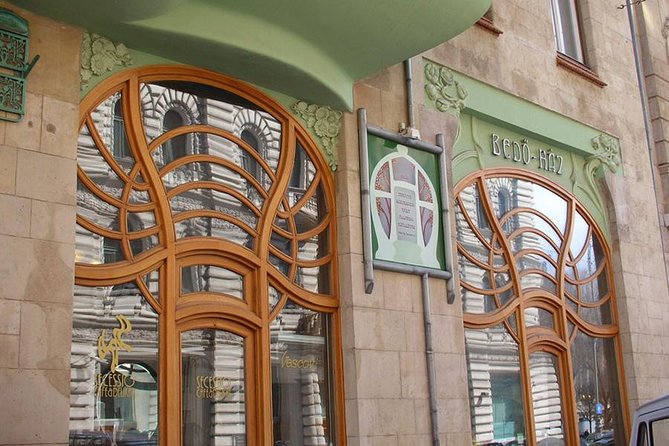
One of the most interesting subjects on the walk is the use of Asian motifs. Hungarian designers drew on eastern-looking shapes and decorations partly because of ideas about the ancient origins of the Hungarian people.
That explanation needs care. It reflects the beliefs and cultural ambitions of the period, not a simple historical fact. Your guide also places the Hungarian examples within the wider European taste for Orientalism, when artists and architects across the continent borrowed or reinterpreted Asian forms.
This context makes the buildings more than pretty backdrops. You begin to see how architecture can express identity, politics, fashion, and a city’s wish to look modern all at once.
The motifs may appear in tile patterns, ornament, roof details, or interior decoration. They are not always obvious at first glance. This is one reason a specialist guide adds value: the guide gives you a vocabulary for things you might otherwise walk past.
Kazinczy Street Orthodox Synagogue
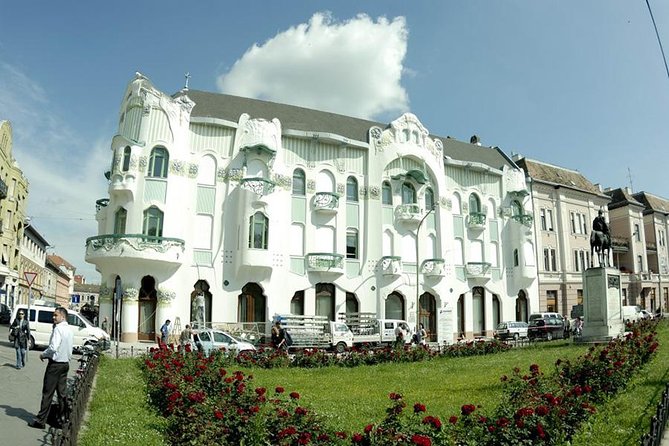
The tour can finish at the Orthodox Synagogue on Kazinczy Street, an especially interesting Art Nouveau interior. It brings together religious architecture, decorative art, and the cultural life of Budapest’s Jewish community.
The synagogue is closed on Saturdays, so do not assume this stop will be available every day. When it is open, an additional admission fee of 2,000 HUF per person, about $7, may apply.
This stop can change the tone of the walk. Earlier buildings show Art Nouveau in banks, palaces, shops, and public offices. Here, the same design period appears in a religious setting, where ornament carries a different meaning.
If the synagogue is unavailable, the route can be adapted. Possible alternatives include the Gellért Bath Hotel, the Museum of Applied Arts, and the Geology Museum. These are not identical substitutes, but they give the guide ways to keep the architectural focus intact.
How the Three Hours Feel on Foot
The tour lasts three hours, a useful length for a specialist walk. You have enough time to compare several buildings without giving up an entire day of sightseeing.
The precise starting point depends on the option you choose. If you prefer a central meeting point rather than pickup from your hotel or holiday flat, the group can meet at Madal Café at Alkotmány utca 4.
You should wear comfortable shoes. The route is a walking tour, and public transport tickets are not included. Tram or metro tickets may be needed depending on the route and the selected starting arrangement.
Private and small-group formats are available. A private tour is the better choice if you want to ask detailed questions about specific architects or materials. A small group may offer a lower-cost way to get specialist guidance while keeping the walk more personal than a large coach tour.
The experience is offered in English with a live guide. Anna is one guide associated with the experience, and a verified booking praised her friendly manner and strong command of Budapest’s art and history. Another review specifically noted a guide’s excellent German, but the advertised tour language is English, so confirm language needs before booking.
Is $123 a Fair Price?
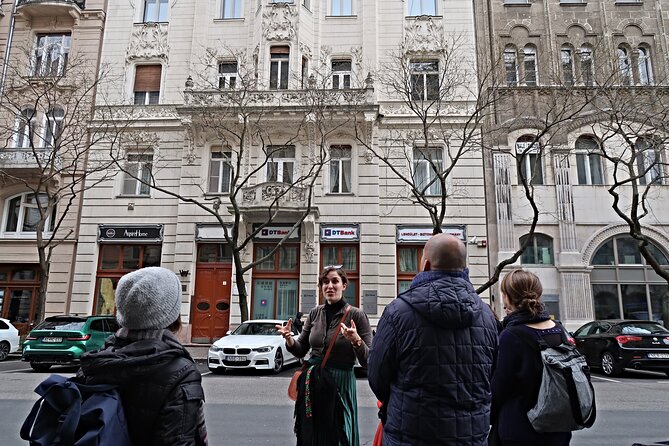
At $123 per person, this is not a bargain city stroll. It is priced as a specialist architectural experience, and the value depends on how much you care about design.
You are paying for three hours with an art and architecture historian, not just transport between famous buildings. That matters in Budapest, where many Art Nouveau details are easy to miss and some interiors require explanation to make sense.
The price is easier to justify for a private or very small group, particularly if you have a serious interest in architecture, decorative arts, or Budapest’s early 20th-century development. It is harder to justify if you mainly want general sightseeing or a quick introduction to the city.
Remember to budget for possible admission fees. The House of Hungarian Art Nouveau may cost 1,000 HUF, and the Kazinczy Street Orthodox Synagogue may cost 2,000 HUF. These charges are modest compared with the tour price, but they are still worth including in your planning.
The flexible cancellation policy helps reduce the risk: you can cancel up to 24 hours ahead for a full refund, and you can reserve now and pay later. That is useful if your Budapest schedule is still shifting.
Who Will Get the Most From This Walk?
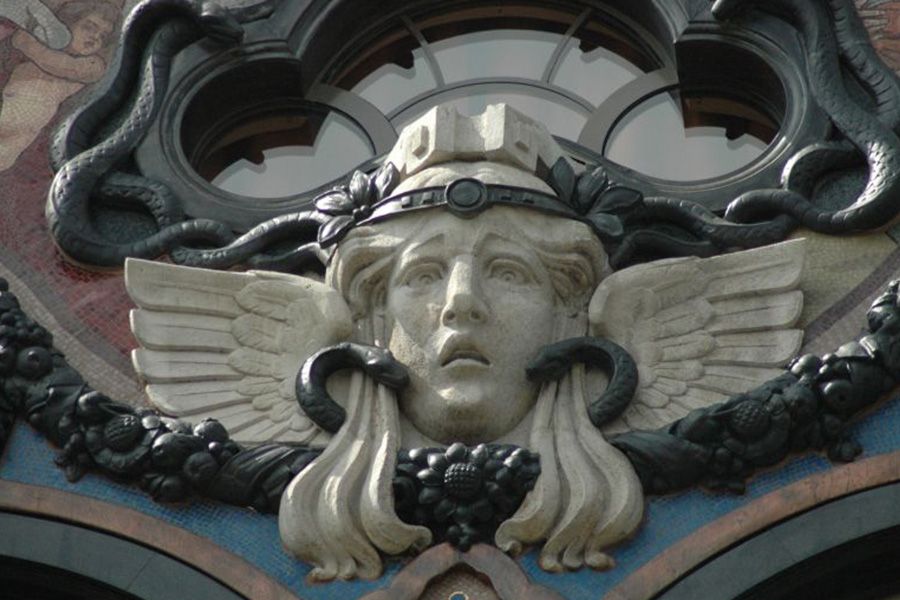
I would choose this tour if you enjoy buildings for their materials, patterns, and ideas rather than only their size. It is also a good fit if you have already seen Budapest’s major sights and want a more focused subject.
Art students, photographers, designers, architecture fans, and repeat visitors should find plenty to discuss. The route also suits curious first-time visitors who want a specialist introduction to the city’s Belle Époque design.
You may want to skip it if you dislike walking, prefer a fast-moving list of landmarks, or need guaranteed access to every interior. Weekend closures and building access can change the route, although the guide can adapt it to other Art Nouveau sites.
Should You Book the Budapest Art Nouveau Walking Tour?
Book it if Hungarian Secession, Zsolnay ceramics, and Art Nouveau interiors sound more interesting than a standard city overview. The Postal Bank, Gresham Palace, Bedő House, Paris Passage, and the possible synagogue visit create a strong three-hour introduction to Budapest’s most distinctive design movement.
Before booking, check the day carefully. Saturday closes the Orthodox Synagogue, and weekends also prevent entry to the Hungarian National Bank. Ask what route is planned, whether the private or small-group format suits you, and allow extra money for possible admission fees.
For the right audience, this is a thoughtful and well-focused way to see Budapest. It is less about collecting landmarks and more about learning how a city expressed wealth, ambition, identity, and artistic freedom through its buildings.
FAQ
How long is the Budapest Art Nouveau Walking Tour?
The tour lasts three hours.
What language is the tour offered in?
The advertised live tour language is English.
Is the tour private or shared?
Private and small-group options are available.
Where does the tour start?
The starting or pickup location depends on the option selected. A central meeting point can be arranged at Madal Café, Budapest, Alkotmány u. 4.
Is hotel pickup available?
Pickup is optional. You can choose a central meeting point instead of pickup from your hotel or holiday flat.
Are public transport tickets included?
No. Tram and metro tickets are not included.
Can I enter Gresham Palace?
The entrance hall is open to visitors, allowing you to see interior details as well as the exterior.
Is the Orthodox Synagogue included every day?
No. The Orthodox Synagogue on Kazinczy Street is closed on Saturdays, and the route may be adapted when it is unavailable.
Are admission fees included?
Possible admission fees are extra. The House of Hungarian Art Nouveau may cost 1,000 HUF per person, and the Orthodox Synagogue may cost 2,000 HUF per person.
Can I cancel the booking?
Yes. You can cancel up to 24 hours in advance for a full refund. You can also reserve now and pay later.
Just added around Budapest
- Walk to recent and aged spiritual sanctuaries near Budapest★ 5.0 · 5 reviews
- Budapest: Private Walking Tour with a Local Guide★ 3.6 · 6 reviews
- Budapest: City Bike Tour with Coffee Stop★ 5.0 · 37 reviews
- From Budapest: Guided Tour of Eger with Wine Tasting★ 4.5 · 6 reviews
- Budapest: Danube River Views Bike Ride★ 4.8 · 23 reviews
- Trash Art Museum: Hungary’s First Scrap Metal Exhibition★ 4.3 · 72 reviews
- True Crime Walking Tour in the Buda Castle district★ 5.0 · 26 reviews
- Budapest: 3-Hour Trabant Sightseeing Tour★ 4.7 · 28 reviews
Walking Tours, compared.
3-Hour Orientation Walking Tour of Buda and Pest
Read our review →
Budapest Historical Sightseeing – Free Walking Tour
Read our review →
Budapest All in One Small Group Walking Tour with Strudel Stop
Read our review →
BloodThirsty Hungary: Walking tour & Dark Historical Stories
Read our review →
Browse the lists this tour appears in