Reviewed · TOURS IN BUDAPEST
Café Wandering: An Excursion through Budapest’s Belle Epoque
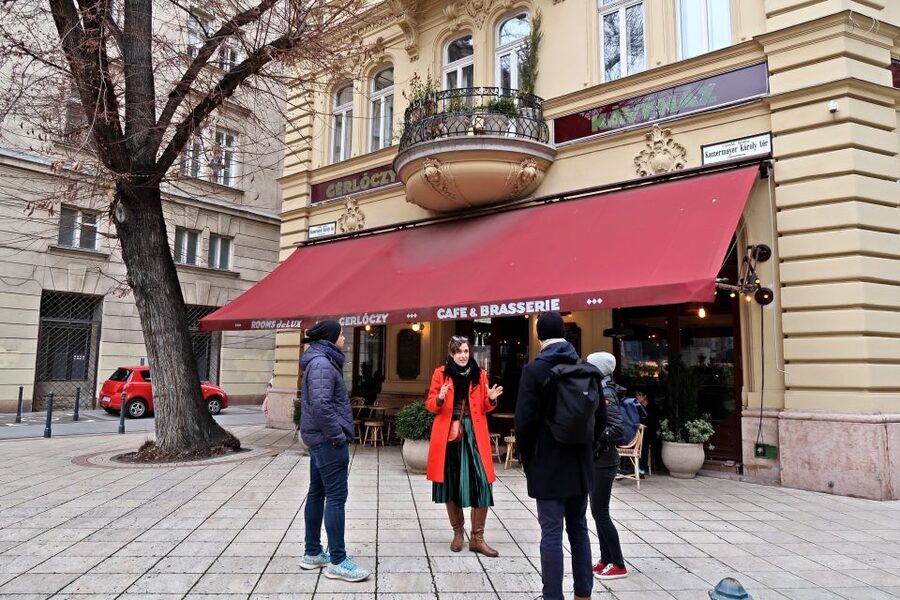
Budapest’s old cafés were more than places to drink coffee. They were offices, salons, newsrooms, and meeting halls for the city’s writers, artists, and intellectuals. This three-hour walking tour brings that world to life through grand interiors and landmark architecture, beginning at Café Gerbeaud on Vörösmarty Square.
I like the small group size, limited to eight people, and the fact that your guide is an art historian rather than a general city guide. I also like the mix of café culture and design history, especially the attention to Asian motifs in Budapest’s architecture. The main drawback is that refreshments are not included, and the published route details name both Urania Café and a separate set of stops, so you should confirm the exact café sequence before booking.
Key details about Budapest’s café walk
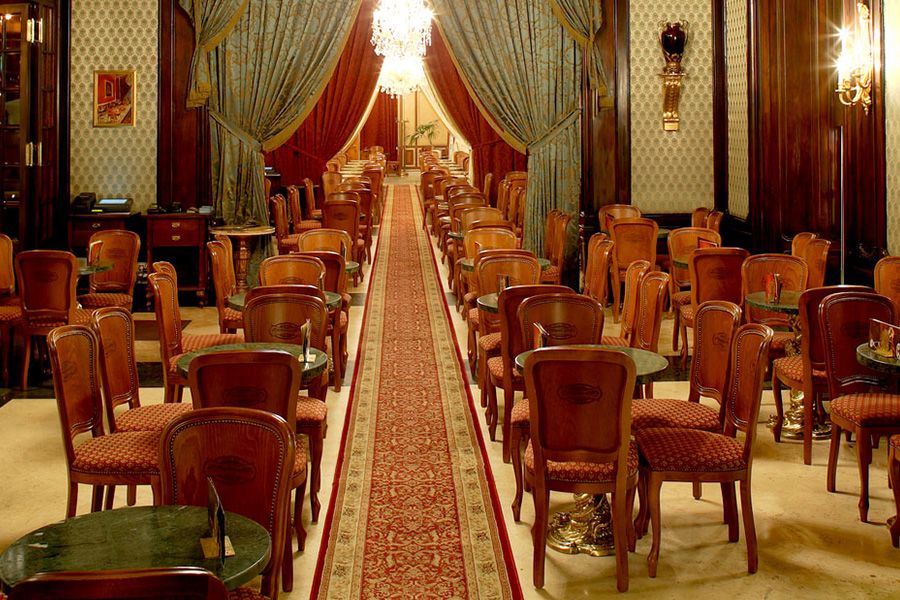
- Gerbeaud begins the story: Start at one of Budapest’s grandest historic cafés, with more than a century of social history behind its ornate interior.
- Art historians lead the walk: Guides may be professors, doctoral students, historians, journalists, art critics, or published authors.
- The tour stays small: A maximum of eight participants makes it easier to hear explanations and ask questions.
- Café culture takes center stage: You learn how cafés shaped the city’s literary and artistic life during the Habsburg period.
- Design details matter: Look for Asian motifs and other decorative elements that reveal the international tastes of Belle Epoque Budapest.
- A striking finish: The route is described as ending at the art nouveau orthodox Kazinczy Street Synagogue, though the listed café stops also include New York Palace Café.
Why Budapest’s cafés tell the city’s story
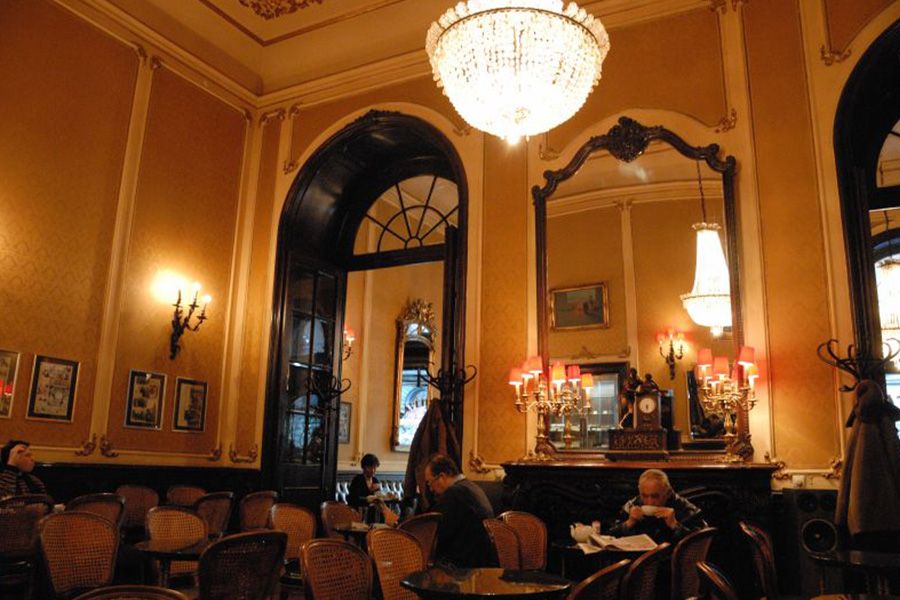
This is not simply a coffeehouse crawl. It is an architecture walk organized around places where Budapest’s cultural life once gathered.
In the late 19th and early 20th centuries, cafés offered more than a quick drink. Writers could work there, artists could meet, and intellectuals could speak to large audiences. The cafés on this route help you see how the city’s wealth and confidence showed themselves in marble, plasterwork, chandeliers, wall decoration, and formal service.
That context gives the buildings more meaning. You are not just looking at an elaborate ceiling. You are considering who used the room, what kind of public life happened there, and why cafés became so important during the height of the Habsburg Empire’s economic and cultural power.
The walk is particularly useful if you enjoy architecture but do not want a museum lecture detached from the city streets. You move between cafés, take a tram along the Danube, and connect individual buildings to Budapest’s wider development.
Other days travellers book around Budapest:
- Budapest: City Highlights Cruise with Welcome Drink
★ 4.6 · 35,610 reviews - Budapest: Unlimited Prosecco, Beer and Aperol Spritz Cruise
★ 4.8 · 25,310 reviews - Budapest: Széchenyi Spa Day Ticket with Optional Upgrades
★ 4.3 · 23,911 reviews
Meeting at Café Gerbeaud on Vörösmarty Square
The tour begins at Café Gerbeaud, at Vörösmarty tér 7 to 8 in central Budapest. This is a practical starting point because Vörösmarty Square sits in the heart of the city and provides an easy reference point for a first visit.
Gerbeaud introduces you to the social world of Imperial Budapest. Its interior is described as exquisite, and its more than 100 years of history give the opening stop real weight. The café served as a central meeting place for local people and visitors during the late 19th century.
Your guide uses the room to explain the atmosphere of that period. Pay attention to how the setting feels designed for lingering rather than rushing in, ordering, and leaving. The point is not only the cakes or coffee. It is the idea of the café as a public sitting room where business, gossip, literature, and politics could overlap.
You should not assume your booking includes a pastry or drink here. All refreshments, cakes, and coffees are extra, so budget separately if you want to order at any stop. The benefit of this arrangement is flexibility. You can choose what interests you, rather than paying for a fixed food package.
Riding the tram to Central Café
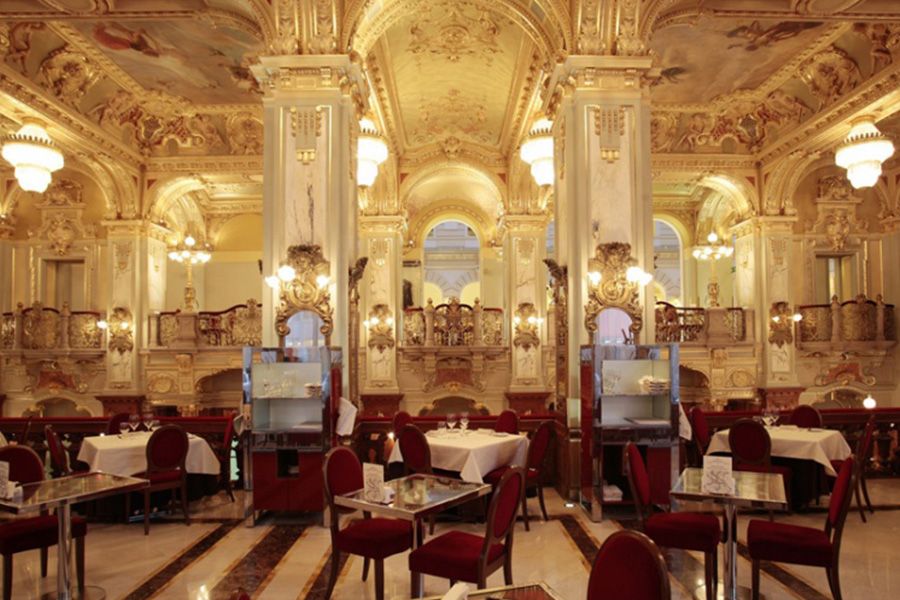
After Gerbeaud, the group takes the tram along the Danube to Central Café and Restaurant 1887. This short ride adds a useful change of pace. You are not confined to a chain of interiors, and the movement between Pest’s streets helps connect the cafés to the actual city around them.
Central Café is presented as one of the clearest expressions of traditional café culture during the Habsburg period. The setting, food, desserts, and drinks all contribute to the feeling of a past culture, but the guide’s explanation is what gives the stop its purpose.
I would pay close attention here to the difference between a café that is simply ornate and one that was built around social exchange. The name Central Café and Restaurant 1887 points to its long connection with Budapest’s café tradition. Its formal atmosphere helps explain why these establishments became such important public rooms.
The tram portion also matters for practical reasons. The tour is not a completely static indoor visit. You will walk and use public transport, so comfortable shoes are sensible. The duration is three hours, which gives the walk enough time for explanation without turning it into a full-day commitment.
Café Astoria and the grand European coffeehouse
The next major stop is Café Astoria Restaurant. It is described as more than a century old and especially effective at evoking the grand style of classic European coffeehouses.
This is the point where the tour’s theme becomes clear. Budapest was part of a broad Central European cultural world, and its cafés shared ideas about decoration, service, literature, and public life with coffeehouses elsewhere in the former Habsburg realm.
Café Astoria helps you compare different expressions of the same tradition. Gerbeaud begins with polished elegance. Central Café focuses on the dignity of established café culture. Astoria brings in the larger image of the classic European coffeehouse, a place where the room itself signals status and refinement.
The guide may direct your eye to materials, layout, and decoration that you could easily pass over without help. This is one reason the art historian format matters. A general sightseeing walk might point out the building and move on. Here, the design is the subject.
Still, do not expect every café stop to operate as a long seated tasting. The tour is primarily a guided cultural walk. You pay for any coffee, dessert, or other refreshment separately, and the exact amount of time spent inside each venue may vary.
A completely different kind of day out:
- Budapest: Nighttime or Daytime Sightseeing Cruise
★ 4.2 · 21,062 reviews - Budapest: 1-Hour Evening Sightseeing Cruise with Drink
★ 4.5 · 8,330 reviews - Budapest Danube Cruise and Dinner Options, Live Music and Dance
★ 4.5 · 7,428 reviews - Budapest: Historic Cruise with Welcome Drink
★ 4.7 · 6,512 reviews
Művész Coffee House and the city’s artistic side
The listed route also includes Művész Coffee House, known in English as Artist Cafe. The name fits the tour’s interest in painters, writers, and other creative figures who used cafés as working and meeting spaces.
This stop should appeal to you if you want more than royal palaces and churches. Café culture shows a less official side of Budapest. Instead of focusing only on rulers or major monuments, the walk considers the people who wrote, debated, taught, performed, and formed opinions in public rooms.
The artistic connection also gives you a way to read the interiors. Look for the relationship between the café’s name, its decorative program, and the kind of cultural identity the space presents. The tour’s wider discussion of Asian motifs is useful here, since Belle Epoque designers often borrowed ideas from far beyond Central Europe.
The supplied route information also describes Urania Café on Rákóczi Street. Urania is connected with the city’s oldest film theater and with lectures given by prominent intellectuals before large audiences. At the same time, the named stop list includes Művész Coffee House and New York Palace Café rather than Urania.
That difference is worth checking before you reserve. It may reflect a route variation, an updated sequence, or separate descriptions combined together. If Urania is important to you, ask the provider to confirm that it is included on your departure.
New York Palace Café and Belle Epoque display
New York Palace Café is the final named café stop and one of the best-known settings associated with Budapest’s grand coffeehouse tradition. The experience includes a guided visit here, giving the art historian another chance to explain how decorative ambition and café culture worked together.
The appeal is visual, but the point is not simply to admire an expensive-looking room. This is where the tour’s themes of social status, literature, design, and urban confidence come together. Lavish interiors were part of the experience. They told customers that the city had money, taste, and a place in modern European culture.
The tour also asks you to notice Asian motifs and design elements. That detail makes the architecture discussion more interesting. Budapest’s Belle Epoque builders were not working in a narrow local style. They used references from different cultures and turned them into decorative features suited to fashionable city interiors.
For a first-time visitor, New York Palace Café can be a memorable visual high point. For a serious architecture fan, the value is in learning how to compare its ornament with Gerbeaud, Central Café, and Astoria. You get more from the visit if you resist treating each café as just another pretty room.
The Kazinczy Street Synagogue finish
The experience is also described as concluding at the art nouveau orthodox Kazinczy Street Synagogue. This gives the walk a strong architectural ending and broadens the story beyond café interiors.
The synagogue is notable for its art nouveau design and orthodox Jewish character. Its presence helps place Budapest’s café culture within the larger city, where different communities, artistic ideas, and religious traditions shaped the streets together.
This final stop is especially useful if you are interested in buildings that do not fit the standard palace and basilica checklist. The tour’s focus on decorative choices, including Asian elements, prepares you to look closely at the synagogue’s visual language rather than seeing it as a brief photo stop.
Again, confirm the exact finish when you book. The supplied details name both the synagogue and New York Palace Café, but they do not clearly explain how those two stops fit into the final sequence.
What the art historian guide adds
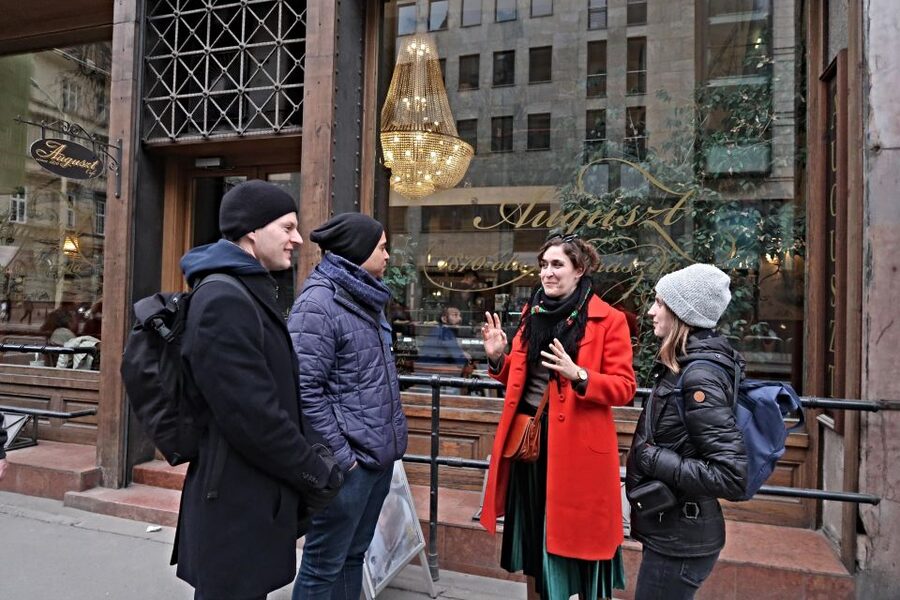
The guide is the main reason to choose this experience instead of visiting cafés independently. The guides are described as professors, doctoral students, historians, journalists, art critics, and published authors. That background suggests a tour built around interpretation, not just directions between buildings.
An art historian can explain why a decorative feature matters, how a design choice fits a period, and what a café tells you about the society that built it. You are likely to get more from the walk if you enjoy asking questions about architecture, cultural life, and historical context.
The published rating is 5 out of 5 from four ratings. The available comments specifically describe the experience as informative, and one named guide, Kota, is praised as excellent. If Kota is leading your departure, that is a useful detail to note. Guide assignments can change, so treat the name as a possibility rather than a guarantee.
The tour is conducted in English. With only eight participants, you should have a better chance of hearing the guide clearly and asking about details that interest you. A small group also keeps the visit more personal than a large city walk, though it does not guarantee private access to every café.
Is $123 a fair price for three hours?
At $123 per person, this is not a cheap coffee break. You are paying for a specialist-led cultural walk, not for the drinks and cakes themselves.
The price makes more sense if you value the guide’s academic or professional background and want the interiors explained in context. It also covers a carefully connected route through several significant cafés and architectural sites, with the tram ride included as part of the movement between locations.
The value is weaker if you mainly want to sit in famous cafés and order refreshments. You can visit many Budapest coffeehouses independently, and you will still need to pay for whatever you eat or drink during this experience.
I would choose this tour if architecture, cultural history, and Belle Epoque Budapest are central to your plans. If you are comparing it with a standard city sightseeing walk, the specialist guide and small group are the main advantages. If you are comparing it with a food tour, this is the wrong product because the food is secondary.
Who should book this Budapest café tour?
You should consider it if you enjoy:
- Historic interiors and decorative arts
- Literary and artistic city history
- Small-group walking tours
- Guided visits led by specialists
- Central Budapest sightseeing with a tram ride
- Cafés as places of public life, not only places to eat
It may suit first-time visitors who want a strong introduction to Budapest’s central architecture. It also works for repeat visitors who have seen the major monuments but want a more focused look at the city’s café tradition.
I would be cautious about booking if you dislike walking, public transport, or paying separately for refreshments. The exact café sequence also deserves confirmation because the route details mention Urania Café, Művész Coffee House, New York Palace Café, and the Kazinczy Street Synagogue in slightly different combinations.
Free cancellation is available up to 24 hours before the start for a full refund, and you can reserve now and pay later. Those terms help if your Budapest schedule is still changing, but they do not alter the main question: are you paying for coffee, or for expert interpretation? Here, the answer is clearly the latter.
Final call: a strong choice for architecture fans
Book this tour if you want Budapest’s famous cafés explained as cultural institutions rather than treated as quick photo stops. The best parts are the small group, the art historian guide, the tram ride along the Danube, and the close attention to interiors and international design influences.
Before paying, confirm whether your departure includes Urania Café and how the final stops are arranged. Also set aside extra money for refreshments. With those points clear, this is a focused and worthwhile three-hour introduction to Budapest’s Belle Epoque café world, especially for anyone who prefers ideas and architecture over a standard checklist of monuments.
FAQ
How long does the Café Wandering tour last?
The guided walk lasts three hours.
Where does the tour begin?
It begins at Café Gerbeaud, Budapest Vörösmarty tér 7 to 8, 1051.
What language is the tour conducted in?
The live tour guide speaks English.
How large is the group?
The group is limited to eight participants.
Who leads the tour?
The guides include professors, doctoral students, historians, journalists, art critics, and published authors. The tour is led by an art historian.
Is the tram ride included?
The route includes a tram ride along the Danube between Café Gerbeaud and Central Café.
Are drinks, cakes, and coffee included in the price?
No. Refreshments, cakes, and coffees selected at the cafés are not included.
What cafés are named as stops?
The named stops include Café Gerbeaud, Central Café and Restaurant 1887, Café Astoria Restaurant, Művész Coffee House, and New York Palace Café.
Is Urania Café included?
The route description mentions Urania Café on Rákóczi Street, but the named stop list gives a different set of cafés. Confirm the exact stops with the provider before booking.
Can I cancel for a full refund?
Yes. You can cancel up to 24 hours in advance for a full refund.
Just added around Budapest
- Walk to recent and aged spiritual sanctuaries near Budapest★ 5.0 · 5 reviews
- Budapest: Private Walking Tour with a Local Guide★ 3.6 · 6 reviews
- Budapest: City Bike Tour with Coffee Stop★ 5.0 · 37 reviews
- Budapest: Danube River Views Bike Ride★ 4.8 · 23 reviews
- From Budapest: Guided Tour of Eger with Wine Tasting★ 4.5 · 6 reviews
- Trash Art Museum: Hungary’s First Scrap Metal Exhibition★ 4.3 · 72 reviews
- True Crime Walking Tour in the Buda Castle district★ 5.0 · 26 reviews
- Budapest: 3-Hour Trabant Sightseeing Tour★ 4.7 · 28 reviews
Tours in Budapest, compared.

Unlimited Prosecco, Beer and Aperol Spritz Cruise
Read our review →
Széchenyi Spa Day Ticket with Optional Upgrades
Read our review →
Budapest Danube Cruise and Dinner Options, Live Music and Dance
Read our review →