
Reviewed · COMMUNISM HISTORY TOURS
Communist Budapest Walking Tour
Budapest’s communist past is not shut away in a museum. It is built into the city’s squares, statues, stadiums, and government buildings. This three-hour walking tour connects those places with the story of Soviet control, the 1956 uprising, the Cold War, and the fall of the Iron Curtain. The guide-led format helps you see the political meaning behind monuments that might otherwise look like ordinary city sights.
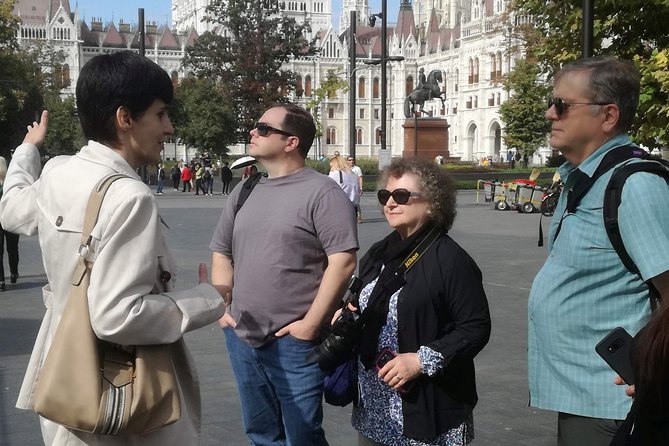
I like two things here. First, the route uses real streets and public spaces, so you get a feel for how politics shaped daily life. Second, the small group, listed as no more than eight people, gives you room to ask questions. Guides including Andras and Kata are praised for clear explanations and thoughtful conversation. The main drawback is price: at $126.50 per person, this is costly for a three-hour walk, and public transport tickets are extra.
Key points to know before booking
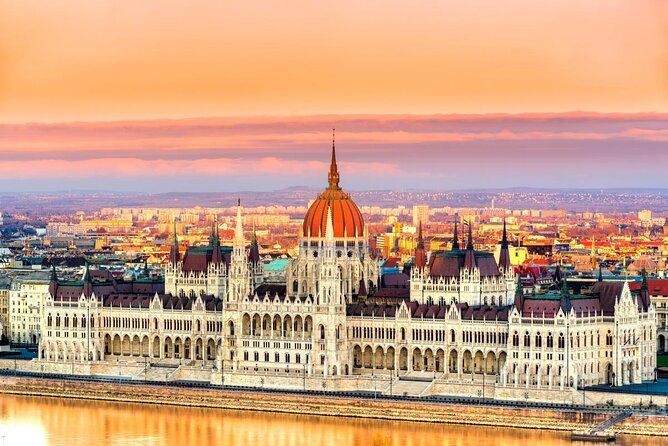
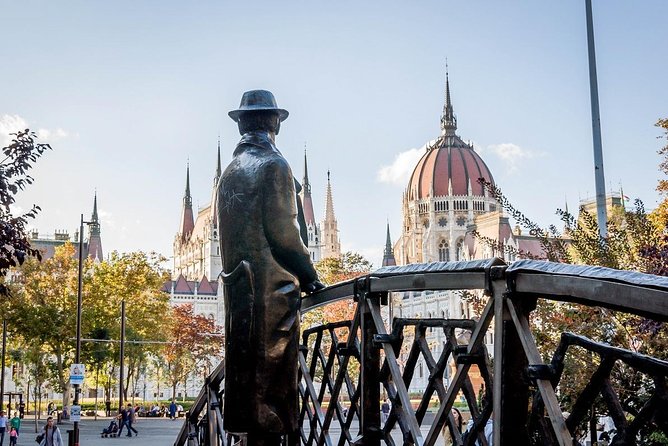
- Parliament and Freedom Square: Begin with the 1956 revolution, the Soviet War Memorial, the US Embassy, and Ronald Reagan’s statue.
- A historian leads the walk: Expect political context and discussion, not just a list of dates and monuments.
- Puskás Stadium adds visual drama: Socialist realist statues show how sport and propaganda worked together.
- The House of Terror is the final stop: The museum is not included, but the location gives you a useful next step.
- Small groups keep the tour personal: The stated maximum is eight people, with morning and afternoon departures.
- Plan for public transport: You travel by subway to Parliament, and you may need to buy Budapest metro or tram tickets.
Why this walk makes sense in Budapest
Many city tours cover Budapest’s grand architecture, thermal baths, and cafés. This one follows a less comfortable thread. You see how the city changed under communist rule, how people resisted it, and how the Cold War remains visible in central Budapest.
The walk is especially useful if you are curious about the period but do not want to spend several hours reading exhibit panels alone. A guide can connect the Soviet monument, the American Embassy, an old coffeehouse, and a stadium into one story. That connection is the real value of the experience.
The tour is offered in English and lasts about three hours. You can choose a morning or afternoon departure. Since the meeting point is on Frankel Leó út in the second district, check your route before setting out. The group then uses the subway to reach Kossuth Square in front of Parliament.
The tour is advertised as a small-group experience. One part of the information describes a limit of six people, while the additional details give a maximum of eight. Either way, this is far smaller than a standard city walking tour, but you should expect the final group size to be anywhere within that stated range.
More of the communist years around Budapest:
- Budapest: Budapest Retro Interactive Museum Ticket
★ 4.4 · 373 reviews - Budapest: Communist History Tour with House of Terror Option
★ 4.8 · 182 reviews - Budapest: 3-Hour Walking Tour About Communism (Small Group)
★ 4.7 · 70 reviews
Parliament and Kossuth Square: starting with 1956
The first major stop is the Hungarian Parliament Building, reached by subway and approached from Kossuth Square. The building itself is one of Budapest’s grandest sights, but the focus here is not its architecture. Instead, you examine monuments connected with the 1956 revolution and the political tension surrounding the uprising.
This is a strong opening because it puts the story in a place of national importance. The square is not just a pretty setting beside the Danube. It was tied to public demonstrations, government power, and the push for change.
Your guide can help explain how the 1956 uprising began, how Hungarians challenged the communist system, and how the Soviet Union responded. The supplied tour details do not promise access inside Parliament, so expect an outdoor discussion rather than an interior visit.
Allow about 25 minutes here. That is enough time for an explanation and questions, but not enough for every event of 1956. If you already know the basics, use this section to ask about daily life, political repression, or the way the uprising is remembered today.
Freedom Square: Cold War symbols in one place
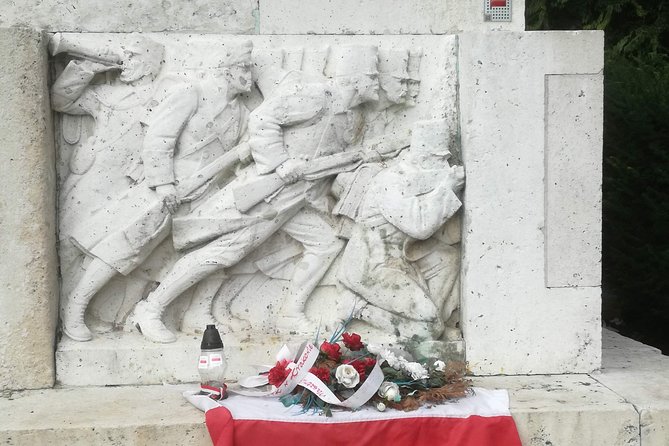
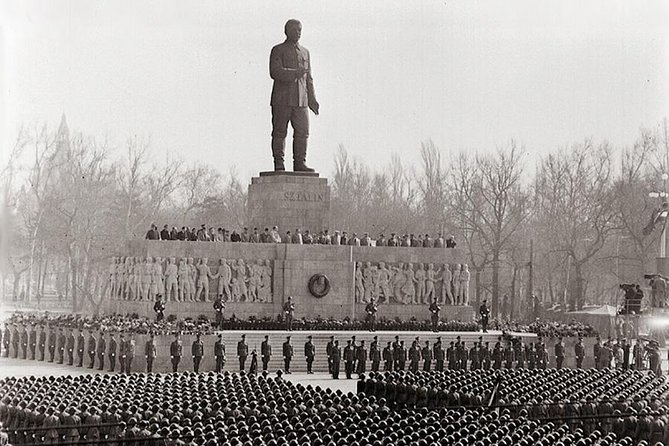
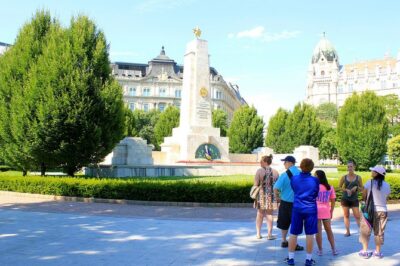
From Parliament, the route continues to Freedom Square. This is one of the most useful parts of the tour because several powerful symbols sit close together. You discuss the Cold War before the US Embassy, see the Soviet War Memorial, and examine the Ronald Reagan statue.
The pairing is striking. The Soviet memorial represents the military power that shaped postwar Hungary, while the American Embassy and Reagan statue point toward the Western alliance and the eventual collapse of the Iron Curtain. A guide gives you the political background needed to understand why these objects occupy the same public space.
You also discuss an atomic shelter. That detail broadens the story beyond Hungarian politics. The Cold War was not only about speeches and military alliances. It also involved fear of nuclear conflict and the practical preparations made beneath the city.
The Soviet War Memorial can be a difficult sight for some people, especially because public memory of Soviet rule remains contested. That is precisely why the stop benefits from a historian’s explanation. You are not left to guess what the monument means or why it remains in place.
The Ronald Reagan statue gets about ten minutes. The focus is Hungary’s sense of gratitude toward the American president for his efforts to bring down the Iron Curtain. This section also offers a useful reminder that the end of communism was shaped by international pressure as well as local resistance.
The former People’s Stadium and socialist realism
The visit to the former People’s Stadium, now Puskás Soccer Stadium, shifts the subject from formal politics to mass culture. The stadium still has classic socialist realist statues, and these sculptures reveal how the regime used public art to project strength, discipline, and collective purpose.
You should not expect a stadium tour or admission to a sporting event. This is an exterior stop, listed at about 20 minutes. Its value comes from seeing propaganda in physical form. The statues were designed to present ideal workers, athletes, and citizens. Their muscular style was not accidental decoration. It was part of the political message.
This stop also gives the route some variety. After squares, memorials, and embassies, the stadium shows how communist imagery reached beyond government buildings. Sport could serve as entertainment, national pride, and political theater at the same time.
If your main interest is architecture or football, you may enjoy this stop for its own sake. If you want a detailed account of the stadium’s sporting history, that is not the stated purpose of the tour. The emphasis remains on propaganda and the visual language of the communist period.
Other guided walks around Budapest:
- Budapest: Buda Castle Walk with Saint Stephen’s Hall
★ 4.5 · 3,012 reviews - Big Bus Budapest Hop-On Hop-Off Bus and Walking Tour
★ 3.5 · 2,206 reviews - Budapest: Buda Castle District Walking Tour
★ 4.6 · 2,108 reviews - Budapest City Landmarks Walking Tour in 2 Hours
★ 5.0 · 2,048 reviews
Bem József Square and the 1956 uprising
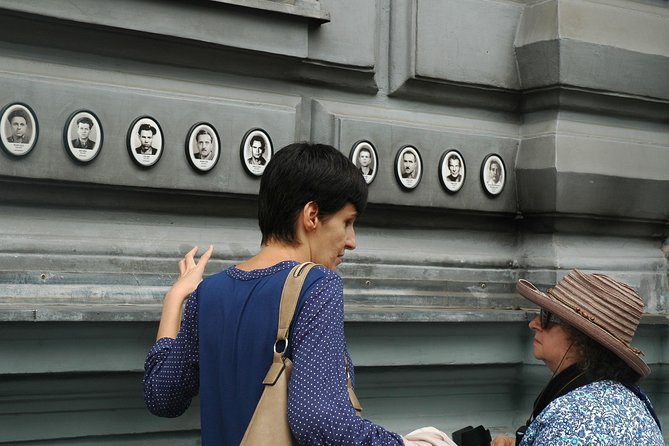
The route includes Bem József Square, identified as the place where the first large demonstration of the 1956 uprising began. This is one of the most important historical points on the walk because it connects a physical location with the start of mass political action.
A guide can help you follow the movement from public protest to open revolt. You will hear about the atmosphere of the period and the demands that brought people into the streets. The tour’s strongest feature is its effort to make political history feel tied to actual places rather than distant events.
There is also a coffeehouse on the square that has retained its original 1960s interior. The details provided do not include a scheduled café visit, so do not assume that a drink or table reservation is part of the tour. Still, the preserved interior adds a small but valuable glimpse of ordinary urban life during the communist period.
That contrast matters. Monuments tell you what governments wanted people to see. A café interior can suggest how people spent time, met friends, and maintained familiar routines. The tour works best when it moves between those two levels: official power and everyday life.
Finishing at the House of Terror
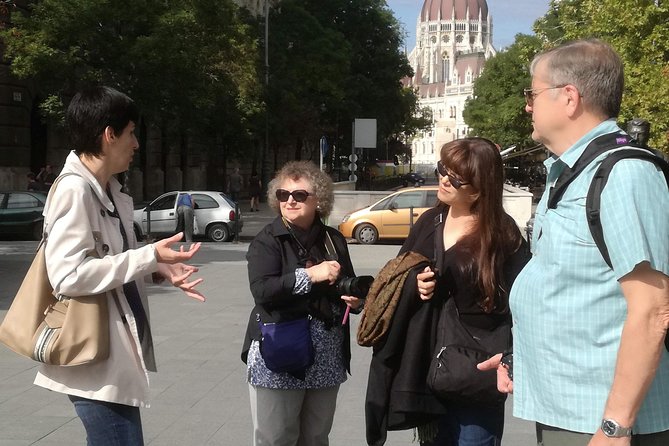
The walk ends outside the House of Terror Museum on Andrássy Avenue. The building was once the headquarters of the communist secret services, and a section of the Berlin Wall sits in front of it.
The museum admission is not included. That is both a limitation and a practical advantage. You can keep the three-hour walk focused, then decide if you want to continue on your own with the indoor exhibits. If you visit the museum afterward, the outdoor tour gives you useful context before you enter.
The House of Terror covers Hungary’s experience under fascist and communist regimes. Since this walking tour ends at the former secret police headquarters, it creates a natural handoff from public spaces to museum displays. You can also stop for the day if three hours of political history is enough.
The endpoint is convenient for extending your Budapest plans, but remember that the tour does not include the museum ticket. Check the museum’s current opening information separately before building your schedule around an immediate visit.
What the guides add to the experience
This tour depends heavily on the guide. The route alone is easy to follow, but the meaning of each location is not. A strong guide can explain why one statue remains while another has disappeared, how the 1956 uprising is viewed, and what communist rule felt like beyond official slogans.
Andras is praised for answering questions with detail and encouraging discussion across major moments in Hungarian history. Kata is described as well informed and especially effective at explaining what daily life under communism felt like. Those names give you a useful sense of the guiding style associated with the experience, though your assigned guide may be someone else.
The best way to use the tour is to arrive with a few questions. Ask about censorship, shortages, political surveillance, the 1956 uprising, or the meaning of the Soviet memorial. The small group makes discussion more practical than it would be on a large coach tour.
This is not the right choice if you want only quick photo stops. One piece of direct advice is clear: if you want sightseeing without much historical explanation, choose a different tour. Here, the history is the point.
Is $126.50 a fair price?
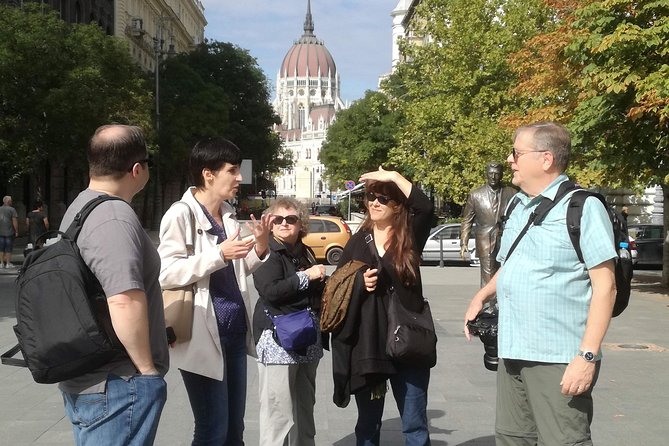
The listed cost is $126.50 per person, which is high for a three-hour city walk. You are not paying for museum admission, food, or a private vehicle. You also need to cover any Budapest tram or metro tickets you do not already have.
The price makes more sense if you value a specialist guide and a very small group. A historian-led walk can save you time and help you understand several sites that would otherwise seem unrelated. You are paying for interpretation and conversation, not expensive attractions.
It is less compelling if you already have a strong grasp of Hungarian communist history or plan to visit only one of the sites. In that case, the tour may feel costly for the amount of ground covered.
For many visitors, the best comparison is not with a basic walking tour, but with the cost of spending a day trying to assemble the same story alone. You would still need to find the monuments, understand their background, and decide how the sites fit together. The tour offers that structure in one morning or afternoon.
Practical advice for the three-hour walk
Wear good walking shoes and bring water. That simple advice comes directly from the nature of the route, which combines outdoor stops with subway travel and several sections on foot.
Keep a Budapest transit pass with you if you have one. If not, the guide will help you buy tram and metro tickets, but those tickets are not included in the tour price.
The tour begins at Frankel Leó út 2-4 in Budapest’s second district and ends at the House of Terror Museum, Andrássy út 60. Since the start and finish are in different parts of the city, the one-way route is useful. You do not need to return to the starting point.
Most people can take part, and the tour operates near public transportation. Confirmation is provided at booking. Free cancellation is available if you cancel at least 24 hours before the start time. Changes or cancellations made inside that window are not refunded.
Who should book this tour?
I would choose this walk if you want political history, Cold War context, and a guide who can handle detailed questions. It suits visitors who have already seen Budapest’s main sights and want to understand the city’s recent past.
It also works well for people who are not self-described history fans but like learning through places. The stadium statues, Soviet memorial, atomic shelter, and preserved café interior give the subject several different entry points.
I would skip it if your main goal is architectural sightseeing, shopping, or relaxed café time. The route includes outdoor monuments, but the guide’s explanations are the main event.
FAQ
How long does the Communist Budapest Walking Tour last?
The tour lasts approximately three hours.
What language is the tour offered in?
The tour is offered in English.
Where does the tour begin?
The meeting point is Budapest, Frankel Leó út 2-4, 1027 Hungary.
Where does the tour end?
The tour ends outside the House of Terror Museum at Andrássy út 60, 1062 Budapest.
Is admission to the House of Terror Museum included?
No. The tour concludes outside the museum, and admission is not included.
Are public transport tickets included?
No. You may need to purchase Budapest tram or metro tickets if you do not already have a visitor pass. The guide can help you buy them.
Just added around Budapest
- Walk to recent and aged spiritual sanctuaries near Budapest★ 5.0 · 5 reviews
- Budapest: Private Walking Tour with a Local Guide★ 3.6 · 6 reviews
- Budapest: City Bike Tour with Coffee Stop★ 5.0 · 37 reviews
- Budapest: Danube River Views Bike Ride★ 4.8 · 23 reviews
- From Budapest: Guided Tour of Eger with Wine Tasting★ 4.5 · 6 reviews
- Trash Art Museum: Hungary’s First Scrap Metal Exhibition★ 4.3 · 72 reviews
- True Crime Walking Tour in the Buda Castle district★ 5.0 · 26 reviews
- Budapest: 3-Hour Trabant Sightseeing Tour★ 4.7 · 28 reviews
Communism History Tours, compared.
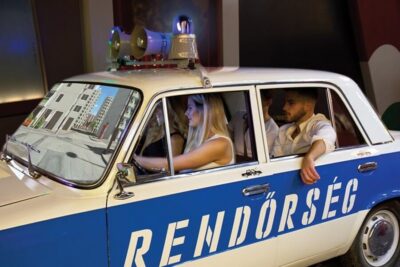
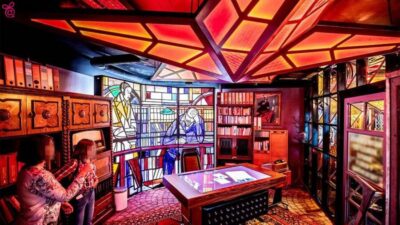
Communist History Tour with House of Terror Option
Read our review →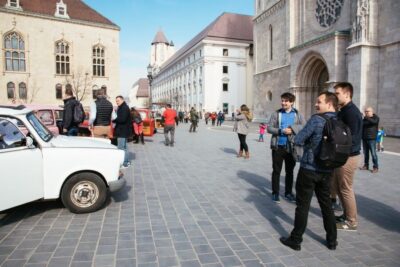
3-Hour Walking Tour About Communism (Small Group)
Read our review →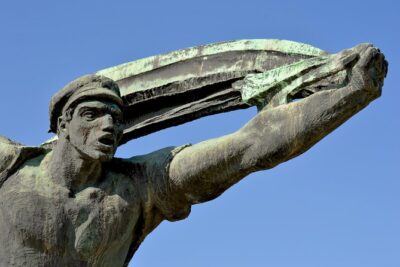
Lives of Hungarians Under Communist and Capitalist system
Read our review →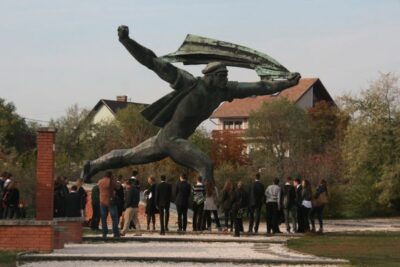
Communist History Evening Walking Tour of Budapest
Read our review →Browse the lists this tour appears in