Reviewed · TOURS IN BUDAPEST
Hungary today: a no-taboo conversation
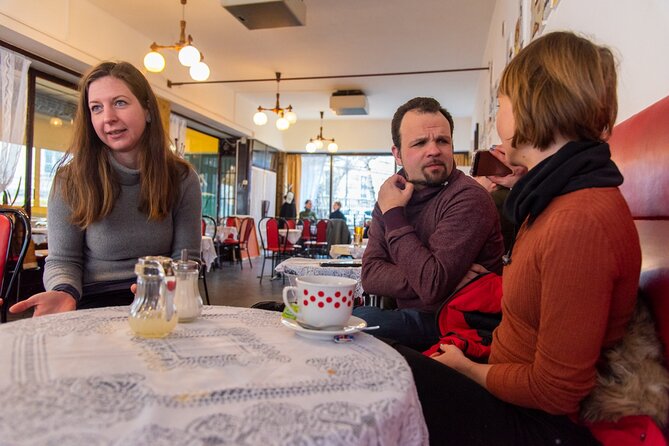
Hungary’s recent story is complicated, and this experience tackles it over coffee rather than from behind a sightseeing script. At Bambi Café, a Budapest institution that has changed very little since the 1970s, you spend 90 minutes discussing the country’s shift from Communism to democracy and the later rise of what is called illiberal democracy.
I like the small six-person limit, which gives you a fair chance to ask direct questions. I also like the flexible format: Daniel or another Budapest Explorers guide begins with a useful introduction, then lets your curiosity set the route. The drawback is clear: if you want monuments, organized sightseeing, or a polished lecture, this is not your tour.
Key points
- A conversation about modern Hungary: Focus on the last 30 years, including politics, economics, and the move from Communism to democracy.
- Bambi Café setting: Meet at a cult café that has changed very little since the 1970s.
- Small maximum group: No more than six people can join, making personal questions possible.
- Flexible discussion: Start with an introduction, then ask about politics, society, the past, or Hungary’s future.
- Daniel may lead the conversation: He is described as friendly, well informed, and happy to continue the discussion beyond the scheduled time.
- Straightforward value: At $40.52 for about 90 minutes, you are paying for access to a local perspective, not admission to a major attraction.
Why this Budapest conversation is different

Most Budapest sightseeing tours take you to grand places: the Parliament, Buda Castle, the Chain Bridge, or the thermal baths. Those sights matter, but they do not always explain how Hungary works today.
This experience takes a different path. You sit down with a local guide and talk about the forces that shaped present-day Hungary. The subject range includes the fall of Communism, the transition to democracy, economic change, current political arguments, and ideas for the country’s future.
That makes this a useful addition to a first visit, but it may be especially helpful if you have already seen the main sights. Once you know Budapest as a place of grand avenues, cafés, markets, and historic buildings, you may want to understand the arguments taking place behind the scenery.
The phrase no taboo signals the intended tone. You are encouraged to ask about controversial politics, difficult parts of the past, and personal opinions. The guide promises honesty, though you should still treat the discussion as one person’s informed view rather than an official statement from every Hungarian.
Other days travellers book around Budapest:
- Budapest: City Highlights Cruise with Welcome Drink
★ 4.6 · 35,610 reviews - Budapest: Unlimited Prosecco, Beer and Aperol Spritz Cruise
★ 4.8 · 25,310 reviews - Budapest: Széchenyi Spa Day Ticket with Optional Upgrades
★ 4.3 · 23,911 reviews
Meeting at Bambi Café at 2:00 pm
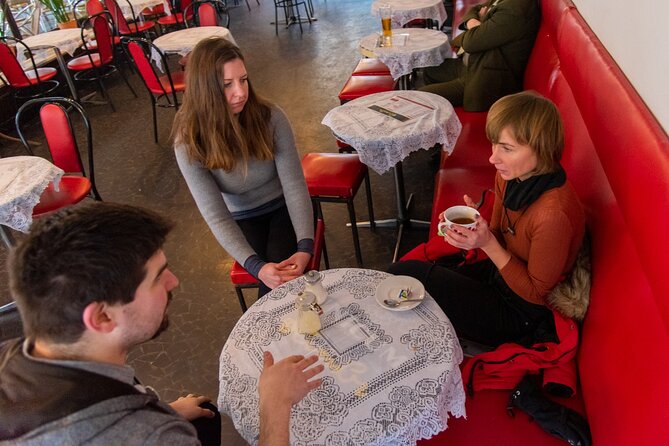
The meeting point is Bambi Café, at Frankel Leó út 2-4 in Budapest’s District II. The activity begins at 2:00 pm and ends at the same location.
The café itself is part of the appeal. It has changed close to none since the 1970s, giving the conversation a setting connected to the period being discussed. You are not simply hearing about Hungary’s recent past in a modern conference room. You are meeting in a place with a long-running local identity.
That does not mean the café is a museum or a formal historical site. The attraction is its continued character. If you enjoy old cafés and ordinary places with a story, Bambi Café should feel more relevant than a generic meeting room.
The location is near public transportation, which makes it practical to reach from other parts of Budapest. The experience finishes where it starts, so you do not need to arrange a second pickup or find your way to an unfamiliar neighborhood at the end.
Give yourself enough time to arrive before 2:00 pm. The supplied information does not specify a café seating procedure, a particular table, or what refreshments are included, so do not book this expecting a meal or a formal café tasting. The point is the conversation.
The first part: Hungary since the end of Communism
If you arrive without a list of questions, the guide begins with an introduction to Hungary’s modern era. The main focus is the last 30 years, with attention to historical, economic, and political change.
This structure is useful because Hungary’s current debates can be hard to follow without a basic timeline. The experience is designed to connect the transition from Communism to democracy with the country’s later political direction. You are not left to guess why certain issues remain sensitive or why the present can feel tied so closely to the past.
The economic side matters, too. Political change does not happen in isolation. Jobs, living costs, ownership, inequality, and the effects of wider European changes all shape how people view democracy and government. The tour description does not promise a technical economics lesson, but it does place economic questions alongside political and historical ones.
The opening section also gives you a shared base for the discussion. With a small group, different people may arrive with very different levels of background knowledge. A short introduction helps keep the conversation from becoming a collection of disconnected questions.
You should expect a discussion rather than a university lecture. The information provided does not specify visual aids, printed material, or a detailed walking route. If you learn best through maps, dates, and monuments, this format may feel light on structure. If you prefer asking why things happened and how they affect life now, it is a better match.
The second part: Your questions shape the afternoon
After the introduction, you can ask about nearly any Hungary-related subject. The stated scope includes controversial politics, the turbulent past, the uncertain future, the economy, personal opinions, and ideas for change.
That flexibility is the heart of the experience. You could ask about the meaning of illiberal democracy, how the democratic transition is understood today, or how political decisions affect ordinary life. You could also ask something less formal, provided it connects to Hungary, Budapest, or the wider region.
The best way to use the time is to prepare a short list. Bring three or four questions that you genuinely want answered. You might begin with a broad question about Hungary’s political direction, then follow up on a point that interests you. The small group makes it easier to keep the exchange focused.
You should also be ready for other people to ask questions. A maximum of six participants is small, but it is not a private one-to-one appointment. Someone else may raise a topic you had not considered, and that can be one of the useful parts of a shared conversation.
The guide’s personal viewpoint is part of the package. Daniel led one reported session and was described as friendly, informative, and happy to continue talking for several more hours. That gives you a good sense of the intended mood: open, conversational, and willing to move beyond a fixed script.
Still, you should keep reasonable expectations. A 90-minute conversation cannot explain every aspect of Hungary. It also cannot represent every political view or regional experience. The value comes from access to a thoughtful local perspective and the chance to ask questions that a standard tour may avoid.
A completely different kind of day out:
- Budapest: Nighttime or Daytime Sightseeing Cruise
★ 4.2 · 21,062 reviews - Budapest: 1-Hour Evening Sightseeing Cruise with Drink
★ 4.5 · 8,330 reviews - Budapest Danube Cruise and Dinner Options, Live Music and Dance
★ 4.5 · 7,428 reviews - Budapest: Historic Cruise with Welcome Drink
★ 4.7 · 6,512 reviews
What Daniel’s hosting style may mean for you
Daniel is specifically identified as a host for this experience. The available details describe him as friendly and well informed, with a strong interest in continuing the conversation rather than rushing through a checklist.
That matters because political discussion can easily become stiff or defensive. A good host needs to explain difficult subjects in plain language and let you ask follow-up questions. The experience is built around that exchange.
Raymond is also associated with Budapest Explorers, the provider. The information does not say that Raymond will lead every departure, so you should not assume a particular host unless your booking confirmation identifies one. Daniel is the named guide connected with one of the experiences described.
The provider’s promise of honesty is appealing, but it also tells you to expect opinions. You may hear interpretations rather than neutral textbook wording. That can be useful, especially when you want to understand how political changes are viewed locally, but it is wise to listen critically and ask how widely held a particular view might be.
This is not a weakness unique to this activity. Any conversation-led tour depends heavily on the person leading it. The six-person cap helps because it allows more time for questions, but your experience will still depend on the guide’s style and on the interests of the group that day.
The value of $40.52 for 90 minutes
The price is $40.52 per person for about an hour and a half. That works out to roughly $27 per hour, before considering the value of the small group and the café setting.
You are not paying for a major ticketed attraction. There is no listed admission fee for Bambi Café, and the experience does not include a monument, museum entry, meal, or transport. You are paying for preparation, local access, and a guided conversation on subjects that can be difficult to understand from a guidebook alone.
For someone interested in modern Hungarian politics, that can be fair value. A conventional sightseeing tour may explain what a building is, while this conversation aims to explain how the country reached its current point. The benefit is less visible, but it may stay with you longer.
The price is harder to justify if you want a broad introduction to Budapest. First-time visitors with only a few hours may get more from a classic city tour that covers major sights. This experience is better for someone willing to give up 90 minutes of sightseeing time for context and discussion.
The maximum of six also matters. A large group can make political conversation awkward, with only a few people able to speak. Here, the limit gives the format a more personal feel, even though it is not advertised as a private tour.
Who should book this experience
I would point this toward you if you fit one or more of these descriptions:
- You have already seen some of Budapest and want to understand present-day Hungary.
- You enjoy politics, economics, and modern European history.
- You prefer asking questions to listening to a fixed narration.
- You want a small group rather than a large bus or walking crowd.
- You are comfortable hearing personal opinions and considering more than one side.
- You like old cafés and ordinary local settings more than staged attractions.
It can also suit repeat visitors. If you have been to Budapest before, you may not need another overview of the Parliament or Castle District. A conversation about the country’s direction can add a new layer to places you have already seen.
I would be more cautious about booking it for young children or anyone who needs constant movement. The entire 90-minute session takes place at Bambi Café, and the subject matter is political and historical. The supplied information says most people can participate, but it does not describe special activities for children.
You should also consider your comfort with open discussion. The title promises no taboo, and the description invites questions about difficult and controversial issues. That is a benefit if you want candor. It may be a poor fit if you prefer a neutral, tightly controlled presentation.
Practical details before you reserve
Confirmation is provided at the time of booking, and the ticket is mobile, so you can use your phone rather than needing a printed voucher. The meeting point is Bambi Café, Frankel Leó út 2-4, 1027 Budapest.
The activity starts at 2:00 pm and returns to the same meeting point after approximately 90 minutes. It is near public transportation, and service animals are allowed. The information also says most people can participate.
The maximum group size is six. That is one of the most important practical details, since the quality of this kind of experience depends on having room to speak.
Free cancellation is available if you cancel at least 24 hours before the local start time. If you cancel later, the amount paid is not refunded, and changes made within that 24-hour window are not accepted.
Should you book Hungary today: a no-taboo conversation?
Book it if you want to understand Hungary through discussion rather than sightseeing. The small group, flexible question period, Bambi Café setting, and focus on the last 30 years make this a thoughtful choice for curious visitors.
I would especially consider it after you have seen the main Budapest sights, or at the beginning of a longer stay when you want context for what you encounter elsewhere. Daniel’s reported approach suggests a host who welcomes follow-up questions, and the format gives you room to ask about politics, economics, history, and the future.
Skip it if your priority is monuments, photographs, food, or a fast survey of Budapest. You will spend the whole session in one café, and the value depends on your interest in conversation.
For the right person, $40.52 buys something a standard sightseeing tour rarely offers: time to ask a local what Hungary’s recent changes mean today.
FAQ
Where does the experience begin?
It begins at Bambi Café, Budapest, Frankel Leó út 2-4, 1027 Hungary.
What time does the conversation start?
The scheduled start time is 2:00 pm.
How long does the experience last?
It lasts approximately 1 hour and 30 minutes.
Where does the experience end?
It ends back at Bambi Café, the same place where it begins.
How many people can join?
The activity has a maximum of six participants.
Is the experience accessible by public transportation?
Yes. The meeting point is near public transportation.
What is the cancellation policy?
You can cancel at least 24 hours before the local start time for a full refund. Cancellations or changes made less than 24 hours before the start are not accepted for a refund.
Just added around Budapest
- Walk to recent and aged spiritual sanctuaries near Budapest★ 5.0 · 5 reviews
- Budapest: Private Walking Tour with a Local Guide★ 3.6 · 6 reviews
- Budapest: City Bike Tour with Coffee Stop★ 5.0 · 37 reviews
- Budapest: Danube River Views Bike Ride★ 4.8 · 23 reviews
- From Budapest: Guided Tour of Eger with Wine Tasting★ 4.5 · 6 reviews
- Trash Art Museum: Hungary’s First Scrap Metal Exhibition★ 4.3 · 72 reviews
- True Crime Walking Tour in the Buda Castle district★ 5.0 · 26 reviews
- Budapest: 3-Hour Trabant Sightseeing Tour★ 4.7 · 28 reviews
Tours in Budapest, compared.


Unlimited Prosecco, Beer and Aperol Spritz Cruise
Read our review →
Széchenyi Spa Day Ticket with Optional Upgrades
Read our review →


Budapest Danube Cruise and Dinner Options, Live Music and Dance
Read our review →