
Reviewed · JEWISH QUARTER TOURS
Jewish Heritage / Full tour
The most powerful part of this Budapest walk is its range. In a few hours, you move from the grand Dohány Street Synagogue and its quiet cemetery to the small iron shoes beside the Danube, then to a memorial that still sparks daily protest. Edith, the guide, brings both historical detail and personal insight, making this more than a list of monuments.
I like two things here. First, the tour connects Jewish life before, during, and after the Second World War instead of treating the past as a sealed chapter. Second, the small format gives you room to ask questions and shape the conversation. The main consideration is cost: the tour is $80.86 per person, and the €26 synagogue ticket is extra.
Key points to know before booking
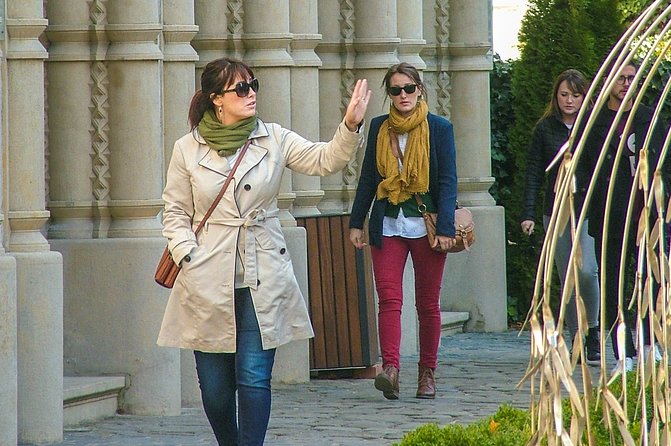
- Dohány Street Synagogue anchors the tour: You visit the synagogue, Jewish cemetery, Raoul Wallenberg Memorial Garden, Emmanuel Tree, and nearby streets.
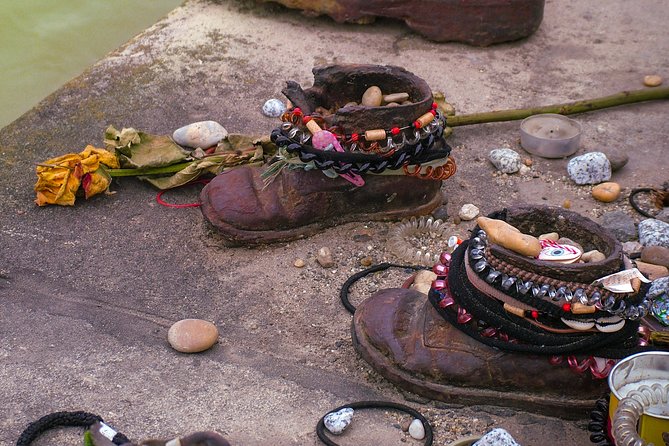
- The Shoes on the Danube Bank is brief but powerful: The fifteen-minute stop gives this stark memorial the attention it deserves.
- Edith is the main reason this tour feels personal: She explains Jewish history in clear English and shares reflections on Jewish life in Hungary today.
- The German Occupation Memorial adds a present-day argument: You see why this memorial remains one of Budapest’s most disputed public monuments.
- It fits neatly into a day: The walk lasts about three hours, leaving time for other Budapest sights.
- Check the group-size wording: The tour is presented as a small-group experience, with one description saying up to ten people and the additional information allowing up to thirteen.
Why this Jewish Budapest tour is different
Budapest has plenty of sightseeing walks, but this one asks you to pay attention to the people behind the buildings. The focus is Jewish life in Hungary, with time given to faith, memory, wartime persecution, postwar life, Soviet influence, and the present-day Jewish community.
That wider frame matters. You will not simply enter a synagogue, admire its architecture, and move on. You will also see a cemetery, a memorial garden, a riverside monument, and a politically charged statue. The route shows how Jewish memory appears in different forms: religious, personal, artistic, civic, and contested.
The tour also encourages discussion about what it means to be Jewish in Hungary today. That makes it a good fit if you want context rather than a fast parade of photo stops. Edith is repeatedly praised for clear English, patience, careful answers, and her ability to connect large historical events with individual experience.
Do keep the subject matter in mind. The Shoah memorials and stories of wartime murder are painful. This is not a light sightseeing stroll, though the tour also includes the streets, street art, nightlife, and current life of the Jewish district.
More of the old Jewish quarter around Budapest:
- Budapest Jewish Heritage Memorial Walking Tour & Synagogue Entry
★ 5.0 · 568 reviews - Budapest: Jewish Heritage Guided Tour with Synagogue Ticket
★ 4.8 · 533 reviews - Jewish Quarter of Budapest Walking Tour
★ 4.7 · 369 reviews
Starting in central Budapest
The listed meeting point is Deák Ferenc tér, a central Budapest square and a practical place to begin. Some descriptions of the meeting arrangements refer to the Lutheran Church area, so read the final confirmation carefully and make sure you know the exact spot before setting out.
The route ends at Dohány Street Synagogue, at Dohány u. 2. That one-way structure is useful. You finish near one of the city’s key sights, rather than returning to the starting point. You can then continue through the Jewish quarter, visit nearby restaurants or ruin bars, or use public transport for your next stop.
Transportation is not included. The experience is primarily a walking tour, though the route may involve public transport. One detailed account describes using the rapid transit system during the walk, so comfortable shoes and a little flexibility are sensible.
Dohány Street Synagogue and the Jewish quarter
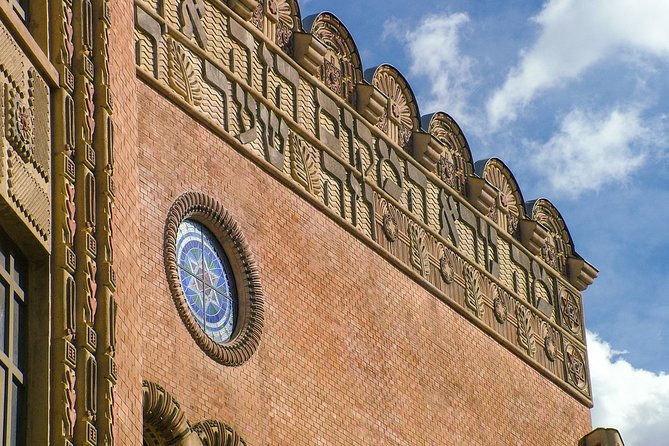
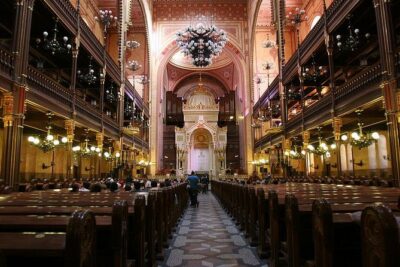
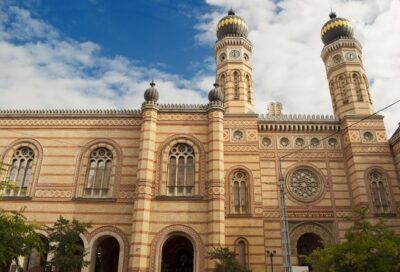
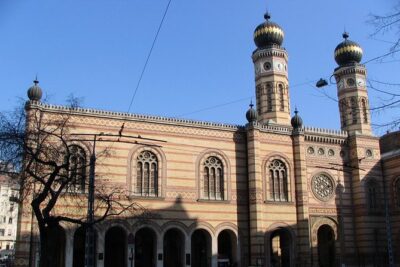
The main visit takes about two hours, making it the heart of the experience. Dohány Street Synagogue is described as the second largest synagogue in the world and is one of Budapest’s most important Jewish landmarks.
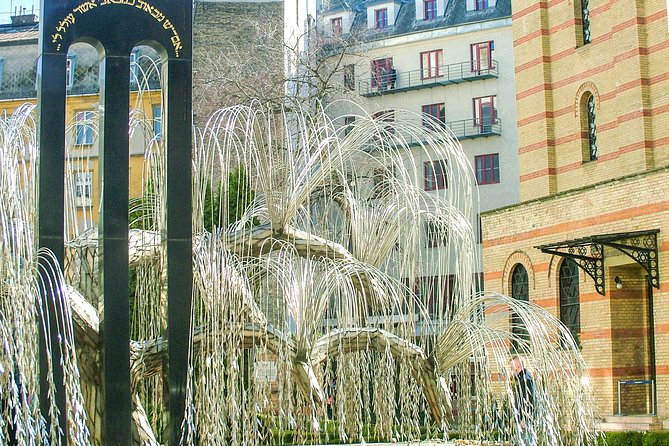
Inside, the scale and decoration make a strong first impression, but the surrounding grounds carry just as much weight. The visit includes the synagogue building, the Jewish cemetery, and the Raoul Wallenberg Memorial Garden. You also see the Emmanuel Tree, a metal memorial whose leaves bear names connected with Jewish victims. The monument was established by Tony Curtis, whose family had Hungarian Jewish roots.
The cemetery is especially significant because it sits within the synagogue complex. It is a quiet place to pause and understand how wartime violence affected this community. The garden and memorials are not treated as decorative add-ons. Edith uses them to explain events and people, giving you a clearer sense of the community that existed here and the losses it suffered.
The tour also covers another functioning synagogue from the outside. That matters because it shows Jewish religious life as something ongoing, not only something remembered through museums and memorials.
Allow time for security, walking, and listening. The synagogue admission fee is not included and is listed as €26 per person. At about $80.86 for the tour itself, this is not a budget activity once the entrance ticket is added. Still, the price can make sense if you value a focused guide and a conversation that a self-guided visit cannot provide.
The streets beyond the monuments
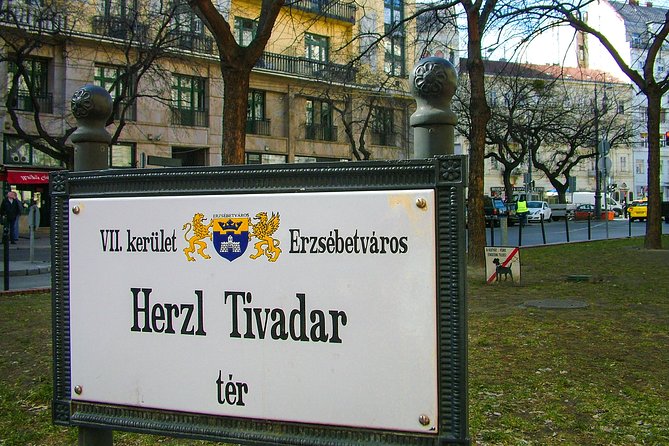
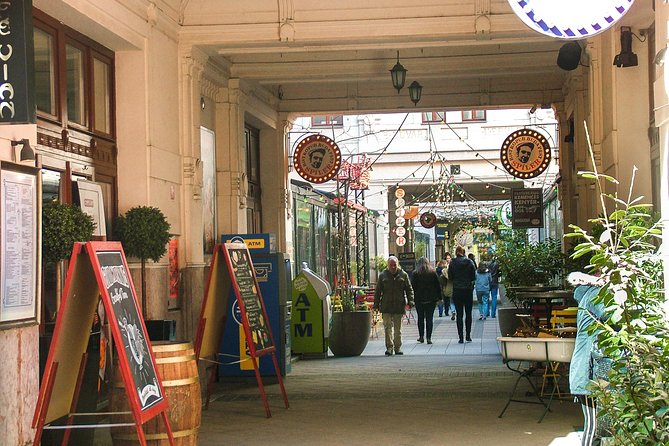
The Jewish quarter is not presented as an open-air memorial alone. You also walk historic streets where Jewish communities once lived and where present-day Budapest continues to change.
The area now contains much of the city’s street art and nightlife, including the famous ruin-bar scene. The tour does not turn into a nightlife crawl, but the contrast is useful. You see a neighborhood shaped by loss and remembrance, yet also occupied by cafés, art, bars, businesses, and ordinary daily life.
I like this part because it prevents the district from feeling frozen in the past. The tour makes room for both the old communities and current happenings. If you plan to return later for food or drinks, ask Edith for suggestions. She has helped people choose restaurants and ruin bars after the walk.
Do not expect every street to receive a long explanation. The synagogue grounds and memorials receive the most time. The district walk works more as context and transition, allowing you to see how the historic Jewish quarter functions today.
More of the past around Budapest:
- Budapest: Historic Cruise with Welcome Drink
★ 4.7 · 6,512 reviews - Budapest Historical Sightseeing – Free Walking Tour
★ 5.0 · 1,302 reviews - Buda Castle District Dark History, Legends and Vampire Night Tour
★ 4.5 · 1,240 reviews - BloodThirsty Hungary: Walking tour & Dark Historical Stories
★ 4.9 · 633 reviews
Shoes on the Danube Bank
The stop at Shoes on the Danube Bank lasts about fifteen minutes and is free. It is one of Budapest’s most affecting memorials: iron shoes placed along the river to represent Jews who were shot at the water’s edge during the Second World War.
The memorial is small, which is part of its power. There is no grand building to distract you. The shoes sit close to the river, and their ordinary shape makes the victims feel immediate. You can look at the different sizes and imagine the people who were forced to leave them behind.
Edith gives the historical setting and allows time for the stop to register. Several detailed accounts describe this point as especially moving. That reaction is understandable, but the setting can also be busy, so listen closely and stay aware of the group.
This is a short stop, not a long lecture. Its purpose is to create a moment of attention before the tour continues. If you prefer a tour that avoids difficult subjects, this may be the point to reconsider. If you want to understand how Budapest remembers Jewish victims, it is essential.
The controversial German Occupation Memorial
The final listed stop is the Memorial to the Victims of the German Invasion. It takes about fifteen minutes and is free to see.
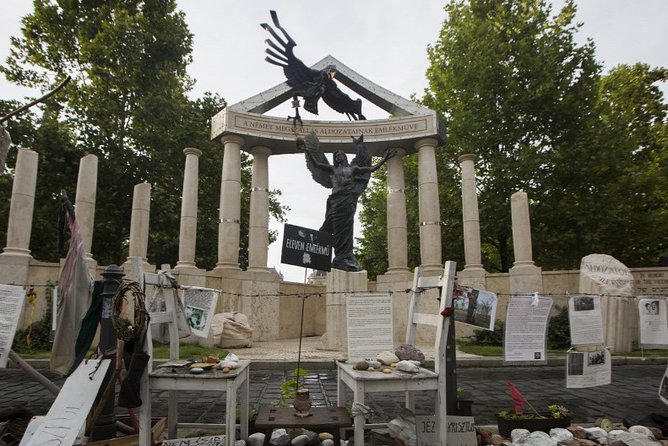
This monument is one of Budapest’s most disputed public memorials. It presents Hungary as a victim of German aggression, while critics argue that this framing minimizes the responsibility of Hungarian authorities and institutions in the persecution and deportation of Hungarian Jews.
The tour explains why the memorial remains controversial. It was erected at night and guarded by police, and protests have continued since its creation. You may see protest materials placed near the monument, adding a living layer to the site rather than leaving the debate as something confined to a textbook.
This stop gives the tour an important present-day edge. You are not only learning what happened during the war. You are also looking at how a country chooses to remember those events, what it leaves out, and why public memory can remain unsettled decades later.
Edith’s guiding style
The strongest praise centers on Edith. She is described as clear, warm, patient, and deeply informed about Jewish culture, Hungarian history, the Second World War, and Soviet influence in Budapest.
Her personal connection is a major part of the experience. She shares stories about her family and reflections on Budapest over the past seventy years. That can make the material easier to understand, but it also means the tour has a personal tone rather than a detached museum presentation.
You can ask direct questions. Edith is praised for tailoring the route to individual interests and limitations, explaining difficult subjects with care, and helping with public transportation. Her excellent English is also repeatedly noted, which matters when the tour deals with names, dates, political arguments, and religious terms.
The small group helps here. The main description promises no more than ten people, while the additional information lists a maximum of thirteen. Either way, this should feel more conversational than a large coach excursion, but confirm the exact group limit when booking if that matters to you.
Is three hours enough?
Three hours is a sensible length for this subject. It gives you enough time for the synagogue complex, the river memorial, the disputed monument, and some neighborhood context without taking over your entire day.
The main trade-off is depth. You will receive a focused introduction rather than a complete study of Hungarian Jewish history. You may leave with more questions, which is not a bad result, but you should not expect every synagogue, museum, or neighborhood story to fit into one morning.
The format works well early in a Budapest visit. It gives you a framework for the Jewish quarter before you return on your own. It also fits neatly between other city activities, since the tour is short compared with a full-day excursion.
Price, group size, and practical value
The listed price is $80.86 per person. The guide is included, but transportation and the Dohány Street Synagogue entrance fee are not. At €26 per person for admission, the total cost is worth considering before you book.
I would judge the value by the kind of experience you want. If you only need directions and basic facts, the price is high. If you want a small group, an English-speaking local guide, careful discussion, and personal context at several significant sites, the cost is easier to justify.
A private departure may sometimes result from the small booking size, though you should not assume that. The tour allows most people to participate, service animals are allowed, and the route is near public transportation. Wear comfortable shoes and plan for outdoor time at the river and memorials.
Confirmation is sent within 48 hours, subject to availability. Free cancellation is available up to 24 hours before the start time. Changes or cancellations inside that window are not refunded, and poor weather can lead to a new date or full refund.
Who should book it?
I recommend this tour if you want a serious, human account of Jewish Budapest and prefer conversation over a recorded audio guide. It is particularly suitable if you want to understand how wartime memory still shapes public life in Hungary.
It also suits repeat visitors. Several people who had already seen Budapest found that Edith added context they would not have gained from a basic sightseeing route. The combination of the synagogue, Jewish quarter, Danube shoes, and German Occupation Memorial gives you a clear path through the subject.
Families with older children may find the format useful, though the wartime material is heavy. It is less suitable if you want a cheerful walk centered on architecture, food, or nightlife. Those elements appear around the route, but they are not the point.
Should you book this Jewish heritage walk?
Book it if you want the Jewish quarter explained by a guide who can connect monuments with personal stories and present-day questions. Edith’s clear English, patience, and personal connection are the tour’s biggest strengths.
Skip it if the $80.86 price plus the €26 synagogue admission feels too high for a three-hour activity, or if you prefer exploring at your own pace. For most visitors who want a thoughtful introduction to Jewish life and memory in Budapest, the short format and focused route make this a strong use of part of a day.
FAQ
How long does the Jewish Heritage tour last?
The tour lasts approximately three hours.
Where does the tour begin?
The listed starting point is Deák Ferenc tér in Budapest. Check your booking confirmation for the exact meeting instructions.
Where does the tour end?
The tour ends at Dohány Street Synagogue, Dohány u. 2, Budapest.
Is the Dohány Street Synagogue entrance fee included?
No. Admission is not included and is listed as €26 per person.
What sites are included at Dohány Street Synagogue?
The visit includes the synagogue building, Raoul Wallenberg Memorial Garden, Jewish cemetery, Emmanuel Tree memorial, and historic streets of the Jewish quarter. Another functioning synagogue is viewed from outside.
Is transportation included?
No. Transportation is not included. The tour is primarily conducted on foot and may use public transportation during the route.
How many people can join the tour?
The tour is described as a small-group experience. One section gives a maximum of ten people, while the additional information lists a maximum of thirteen.
What happens if the weather is poor?
If the tour is canceled because of poor weather, you will be offered another date or a full refund. You can also cancel up to 24 hours before the start time for a full refund.
Just added around Budapest
- Walk to recent and aged spiritual sanctuaries near Budapest★ 5.0 · 5 reviews
- Budapest: Private Walking Tour with a Local Guide★ 3.6 · 6 reviews
- Budapest: City Bike Tour with Coffee Stop★ 5.0 · 37 reviews
- Budapest: Danube River Views Bike Ride★ 4.8 · 23 reviews
- From Budapest: Guided Tour of Eger with Wine Tasting★ 4.5 · 6 reviews
- Trash Art Museum: Hungary’s First Scrap Metal Exhibition★ 4.3 · 72 reviews
- True Crime Walking Tour in the Buda Castle district★ 5.0 · 26 reviews
- Budapest: 3-Hour Trabant Sightseeing Tour★ 4.7 · 28 reviews
Jewish Quarter Tours, compared.
Budapest Jewish Heritage Memorial Walking Tour & Synagogue Entry
Read our review →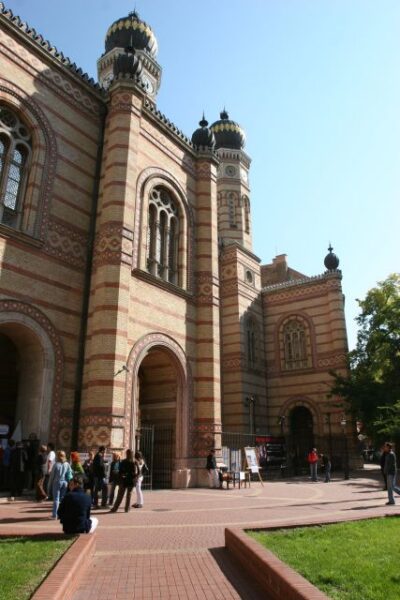
Jewish Heritage Guided Tour with Synagogue Ticket
Read our review →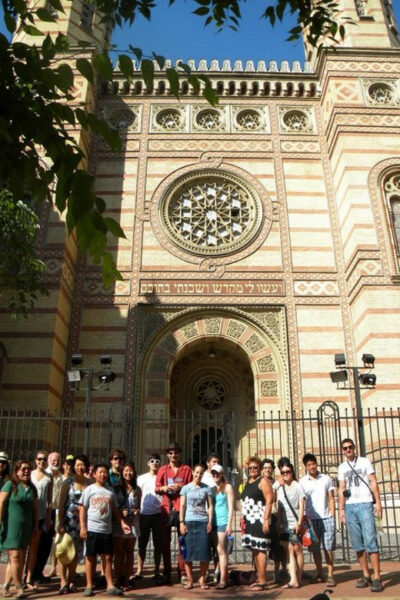
Past and Present of Budapest Jewish District Tour
Read our review →
Budapest Dohany Synagogue & Hungarian Jewish Museum & free extras
Read our review →
Jewish History Guided Walking Tour with Historian
Read our review →Browse the lists this tour appears in