
Reviewed · TOURS IN BUDAPEST
Self Guided Tour In Budapest With 100 Captivating Audio Stories
Budapest becomes more interesting when you know what you are looking at, and this self-guided audio tour gives you that context without tying you to a group or a fixed route. Instead of one long walk, you get more than 100 short, location-based stories covering grand sights, overlooked buildings, bridges, stations, squares, and memorials.
I like the freedom to choose your own route, and I like the low price of $3.62 per person. You can listen for an hour or keep returning to the guide during a full day of sightseeing. The main drawback is that you need your own phone, headphones, and working internet, and there is no live guide to answer questions or adjust the experience for you.
Key points at a glance
- More than 100 location-based stories cover major sights and less obvious corners of Budapest.
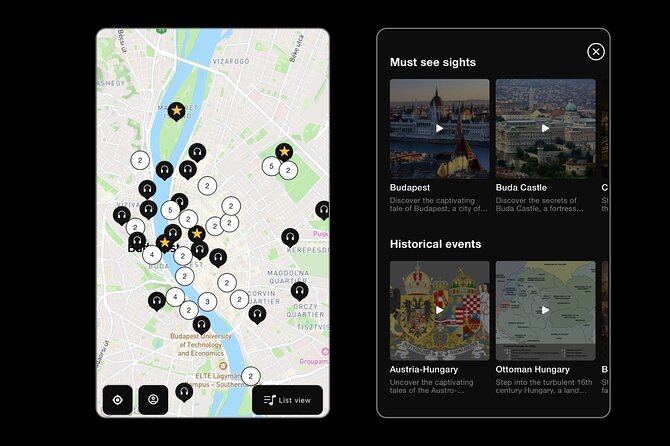
- Use your browser immediately through a one-step activation link, with no app download required.
- Choose your own pace, starting and stopping anywhere as you move around the city.
- Stories usually take about 10 minutes, while major places such as Buda Castle and Margaret Island have longer 20-minute entries.
- The $3.62 price is excellent value if you want background on many sights rather than one guided walk.
- Bring mobile data and headphones, since offline access, equipment, and a physical guide are not included.
A flexible audio guide for a city built around landmarks

Budapest is easy to explore on foot, by tram, and by metro, but its sights are spread across both sides of the Danube. A fixed walking tour may take you through one district and then send you home. This guide works differently. You can select a nearby story, listen for ten minutes, and then continue sightseeing without following a set schedule.
The format suits independent visitors who prefer to pause for coffee, enter a church, shop at a market, or change plans when the weather turns. You can begin near the river, find stories around Buda Castle, or use the map to build your own theme around architecture, Hungarian history, music, religion, or public life.
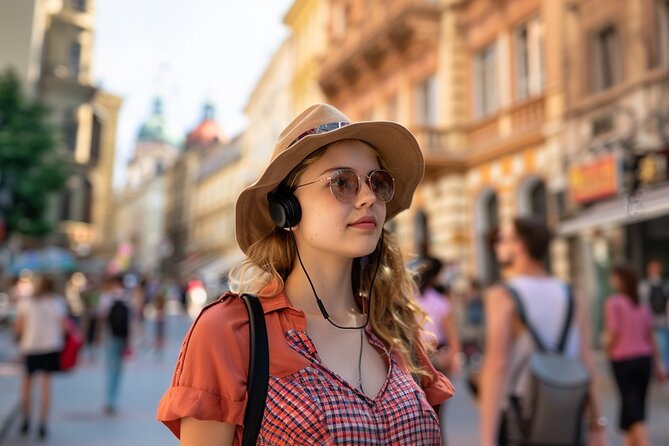
The stories include soundscapes as well as spoken information. That matters because an audio guide can help you look more closely at a building instead of simply walking past it. You will hear about famous people, historic events, and the purpose of important places while standing in front of them.
The guide is offered in English only. It is not a live tour, and it does not include admission to attractions. Think of it as a portable layer of interpretation, not a ticket or a replacement for a museum visit.
Other tours you can do at your own pace in Budapest:
- Budapest: Parliament Building Entry Ticket and Audio Guide
★ 4.5 · 3,844 reviews - Budapest Danube Cruise with Drink, Audio Guide, Margaret Island
★ 4.5 · 1,036 reviews - Budapest: Danube River Sightseeing Cruise with Audio Guide
★ 4.1 · 1,002 reviews
Buda Castle, the Chain Bridge, and the riverfront
Start on the Buda side with Buda Castle, where the audio story covers battles, royal life, and the fortress’s long role in Budapest. The entry is listed at about 20 minutes, giving you more time than the standard ten-minute stories. That makes sense here, since the castle district contains several important buildings and viewpoints.
The National Széchényi Library is also connected with the castle area. Its story takes you into Hungary’s royal and literary past, while the nearby National Archives focuses on centuries of official records and national memory. These are useful choices if you want more than a quick look at the castle courtyards.
Fisherman’s Bastion offers one of the city’s famous views across the Danube. The audio entry focuses on its fortress-like appearance and folklore. You can pair it with the castle story, then walk toward the river and select stories as you go.
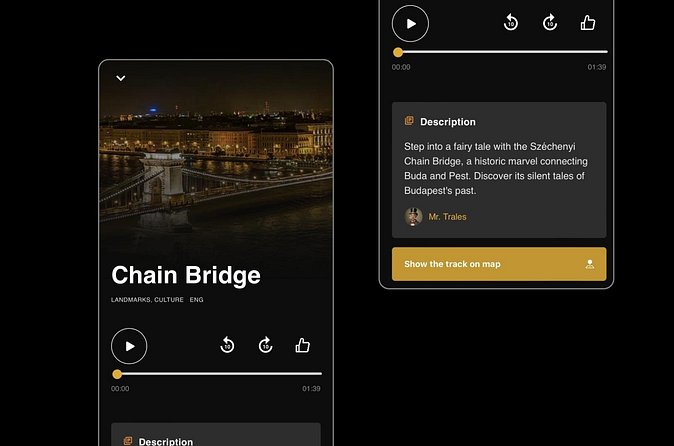
The Chain Bridge is covered twice in the available choices, once through the lion statues and once as a broader bridge story. That is useful if you want to listen from either end or revisit the crossing from a different direction. The guide points you toward the bridge’s role in connecting Buda and Pest and its place in the city’s past.
On the Pest side, the Danube Promenade and Shoes on the Danube Bank offer a more serious subject. The memorial’s metal shoes recall Jewish people murdered beside the river during the Second World War. The audio story gives the site context, but you should still allow a quiet moment rather than treating it as just another photo stop.
Kossuth Lajos Square and the Hungarian Parliament Building add political history to the riverfront. The Parliament story focuses on one of Budapest’s most recognizable buildings, while the square entry looks at the events and public life tied to this part of the city.
Hills, bridges, and views across Budapest
Gellért Hill brings together a number of entries. The main hill story covers history, folklore, and the views over Budapest. The Citadella entry focuses on the fortress at the top, while the Liberty Statue tells the story of the tall bronze monument that has become a symbol of endurance and change.
The Gellért Hill Cave offers a different mood, with stories about its underground setting and legends. You should check the actual opening conditions separately if you plan to enter any attraction, since the audio guide itself does not provide admission.
At the foot of the hill, Liberty Bridge is an art nouveau crossing with its own story. Elisabeth Bridge adds another chapter, focusing on destruction, rebuilding, and the bridge’s place in the city. These entries work well for a river walk, especially if you are already moving between the market hall and the Buda side.
Margaret Bridge leads to Margaret Island, which has a longer 20-minute story. The island entry combines history and nature, while the bridge story explains its unusual 165-degree design. Margaret Island is a good example of why this service is more useful than a simple list of top attractions. You can spend time in a large open area and still have historical context in your headphones.
Margaret Island also gives you a break from the heavier sights. You can listen while walking, but keep your volume low enough to stay aware of bicycles and other people around you.
Markets, squares, and everyday city life
The Great Market Hall, also called Central Market Hall, has a ten-minute story about the building, food culture, and urban planning. It is a practical stop because you can combine sightseeing with a look at produce, local foods, and souvenirs. The audio entry gives the hall a wider purpose instead of treating it as just a shopping stop.
Vörösmarty Square traces the changing identity of one of central Budapest’s best-known gathering places. Deák Ferenc Square is more about the modern pulse of the city, with intersecting transport lines and busy streets. Together, the two stories help you compare a historic public square with one of the city’s main transit hubs.
Liberty Square adds politics and memory, including the Hungarian National Bank and the buildings around the square. The separate National Bank story explains Hungary’s currency and financial changes. These entries are especially useful if grand architecture interests you but you want to know what happens inside the buildings, not just how they look.
Batthyány Square gives you another view toward the Buda side and connects present-day Budapest with older struggles for power and influence. Corvinus University brings an academic angle, while the Metropolitan Ervin Szabó Library tells the story of a palace converted into a public place of learning.
These are short entries, usually about ten minutes, so they are easy to fit between other plans. I would not build an entire day around every square and institution, but I would use the map when you are already nearby.
Other audio-guided walks around Budapest:
- Parliament Tour in Budapest with Audio Guide
★ 4.0 · 814 reviews - Budapest River Cruise with 1 Free Tokaj Frizzante and Audio Guide
★ 4.5 · 473 reviews - Budapest Paddle Steamer Danube Cruise with Tokaj & Audio Guide
★ 4.5 · 338 reviews - Budapest Audio Guide Cruise with Day, Sunset and Night Options
★ 3.5 · 295 reviews
Heroes’ Square, Andrássy Avenue, and City Park

Heroes’ Square is one of the strongest entries for first-time visitors. Its Millennium Monument recalls the 1,000th anniversary of the Magyar conquest of the Carpathian Basin, and the square is framed by the Museum of Fine Arts and the Palace of Art.
The story can help you identify the major figures and understand why the square feels so formal. Afterward, you can continue along Andrássy Avenue, whose own entry focuses on its Neo-Renaissance architecture and long list of stories.
City Park spreads across 302 acres and includes several places that work well with the audio format. The City Park Ice Rink and Boating Lake has a separate story about how the area changes with the seasons. You can also connect this section with the Franz Liszt Academy of Music, whose entry focuses on the institution’s musical legacy.
This part of the guide suits a slow half-day. You have room to walk, stop, and explore rather than squeezing each story into a rapid checklist. The limitation is distance. Budapest’s attractions are not all close together, so you will need to use public transport or plan your route sensibly.
Synagogues, libraries, stations, and working Budapest
The Dohány Street Synagogue is covered through a story about Europe’s largest synagogue and its religious and historic importance. It is one of the more significant stops in the city, and the audio entry can prepare you for the scale and symbolism of the site. Admission is not included, so treat the story as background rather than an entrance ticket.
The Franz Liszt Academy of Music adds another cultural stop. You will hear about music, famous performers, and the institution itself. The entry is brief, so it is best used before or after seeing the building rather than as a substitute for a concert or interior visit.
Budapest’s railway stations receive unusually good attention. Nyugati Railway Station includes the Royal Waiting Room and a story about the station’s connection to the creators of the Eiffel Tower. Keleti Station focuses on railway history and the building’s grand design. Westend, nearby, tells a more modern commercial story about the rise and decline of an important shopping center.
These stations are practical places to visit because public transport already brings you there. The stories turn a transfer point into a short architecture stop. They also give the guide a broader range than many city tours, which often focus only on castles, churches, and memorials.
Újlipótváros offers a neighborhood-level story, while Millenáris covers the history of Budapest’s velodrome and its 412-meter track. Gül Baba’s Tomb takes you to a quieter and more spiritual setting on steep Mecset Street. These entries are useful if you have already seen the central landmarks and want something less predictable.
How the technology works in real use
Access is handled through a link, and the audio guide opens in your web browser. You do not need to download a dedicated app, which saves storage space and makes it easy to begin quickly.
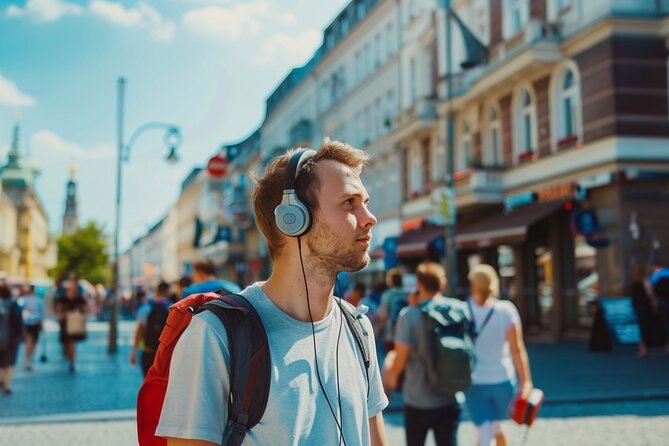
You do need a smartphone with internet access and your own headphones. Offline access is not included, so do not assume you can load everything before leaving your hotel and then use it without a connection.
The map is important. With more than 100 choices, the guide can feel scattered if you simply scroll through the entire list. Pick one area at a time, such as Buda Castle, the riverfront, or City Park, and use nearby stories as stops along a loose route.
Most entries take about ten minutes. Buda Castle and Margaret Island are listed at about 20 minutes, but the actual time you spend at each place is up to you. You can pause, stop, restart, or skip a story. That makes the guide a good match for people who dislike being hurried.
The experience is private in the sense that only your group uses it. There is no scheduled meeting with a guide and no need to keep pace with strangers. It is not recommended for people with hearing impairment, since the main content is delivered through audio.
Is $3.62 good value?
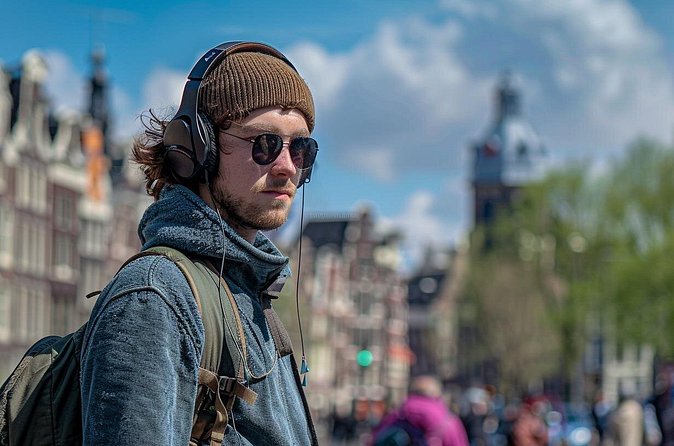
At $3.62 per person, the price is very low for the amount of material available. Even if you listen to only five or six stories, the cost per stop is small. The value improves if you return to the guide across several days, since the activity can last from one hour to as long as eight hours.
The key distinction is that you are paying for information, not entry. Admission fees, transport, food, headphones, and your smartphone are separate. One available comment praised the speed of booking online for St. Stephen’s Basilica and regretted not having time to add the tower. That is useful advice, but do not confuse this audio product with a church ticket. The guide may help you understand the basilica, but entrance and tower access must be handled separately.
The non-refundable policy also matters. You cannot change or cancel the booking for a refund, so check your dates, phone access, and plans before paying.
Who should use this Budapest audio tour?
I would choose this for independent visitors who like to set their own pace, families or couples who do not want a fixed group schedule, and repeat visitors looking for districts beyond the standard center. It is also useful if you want short explanations instead of long lectures.
You may prefer a live guide if you want questions answered, personal recommendations, or help with transport and timing. You may also find a traditional museum guide better for detailed art interpretation. Since this experience is audio-only, it is not a strong choice if hearing is difficult.
Should you book it?
Book it if you want a cheap, flexible way to add context to Budapest’s major sights and less familiar corners. The best use is not to chase all 100 stories. Pick two or three areas, use the map, and let the audio fill in the background while you walk.
Skip it if you need a human guide, offline access, included admission, or a carefully planned route. For everyone else, $3.62 buys a useful Budapest companion, provided you bring headphones, maintain an internet connection, and keep your expectations clear.
FAQ
How much does the self-guided Budapest audio tour cost?
The price is $3.62 per person.
How long does the experience last?
The suggested duration is approximately one to eight hours, depending on how many stories you choose.
Is the tour guided in person?
No. This is a self-guided audio experience with no physical guide.
What language is available?
The audio guide is offered in English.
Do I need to download an app?
No. You access the guide through a web browser using a one-step activation link.
What equipment do I need?
You need your own smartphone, internet access, and headphones.
Is offline access included?
No. Offline access is not included, so you need an internet connection while using the guide.
Does the price include admission to attractions?
No. The listed stops have free admission to the outdoor locations, but attraction entry fees are not included.
Can I start and stop the audio guide?
Yes. You can start and stop the experience at any time and choose stories according to your location and interests.
Can I cancel for a refund?
No. The booking is non-refundable and cannot be changed after purchase.
Just added around Budapest
- Budapest: Private Walking Tour with a Local Guide★ 3.6 · 6 reviews
- Budapest: City Bike Tour with Coffee Stop★ 5.0 · 37 reviews
- Walk to recent and aged spiritual sanctuaries near Budapest★ 5.0 · 5 reviews
- Budapest: Danube River Views Bike Ride★ 4.8 · 23 reviews
- From Budapest: Guided Tour of Eger with Wine Tasting★ 4.5 · 6 reviews
- Trash Art Museum: Hungary’s First Scrap Metal Exhibition★ 4.3 · 72 reviews
- True Crime Walking Tour in the Buda Castle district★ 5.0 · 26 reviews
- Budapest: 3-Hour Trabant Sightseeing Tour★ 4.7 · 28 reviews
Tours in Budapest, compared.


Unlimited Prosecco, Beer and Aperol Spritz Cruise
Read our review →
Széchenyi Spa Day Ticket with Optional Upgrades
Read our review →


Budapest Danube Cruise and Dinner Options, Live Music and Dance
Read our review →
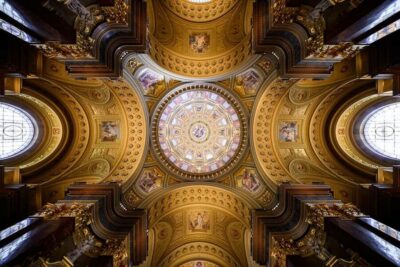
St. Stephen’s Basilica Entry with Terrace Option
Read our review →Browse the lists this tour appears in