Reviewed · TOURS IN BUDAPEST
Transylvania Tour from Budapest to Bucharest: 4 days
The best thing about this four-day trip is its one-way route. You start in Budapest and finish in Bucharest, crossing western Romania and moving through castles, Saxon towns, royal retreats, and old political centers without circling back. It turns a difficult rail-and-bus puzzle into one clear journey.
I like the small group format, which can mean only two people or a maximum of six to eight, depending on the booking arrangement. I also like the guides’ practical touch: Marius helped travelers move efficiently through castle and church visits, while Alex, Andrei, and Emmanuel were praised for their history explanations, restaurant tips, and easy company.
The main point to check before paying is accommodation. The tour description refers to three-star or four-star hotels, breakfast, and hotel pickup, but the included-items section also says no accommodation is provided and that pickup and drop-off are not offered. Confirm exactly what your price covers.
Key things to know before you go
- Budapest to Bucharest in one direction: You see a broad section of Romania without returning to Hungary.
- Corvin Castle and Peles Castle: These are the tour’s two major castle visits, with entrance fees paid separately.
- Small-group travel: The stated maximum varies between six and eight people, and some departures may operate as a private trip.
- Useful guide support: Your guide helps with tickets, explains local history, and can suggest places to eat and drink.
- Three old-town bases: Timisoara, Sibiu, and Brasov give you time on foot instead of only roadside photo stops.
- A full four days: Expect long touring days and a moderate level of walking, not a relaxed hotel holiday.
Why this route works from Budapest to Bucharest
Transylvania is awkward to see on your own in four days. The sights are spread across western and central Romania, and the best-known castles are not all connected by simple public transport. This route solves the geography by moving east each day.
You begin in Budapest at 9 a.m. and travel across the border at Arad. You finish in Bucharest on the fourth day, with drop-off at a location of your choice. That makes the trip useful if you are planning a larger Central European journey and do not want to return to Budapest.
The price is listed at $1,685.76 per person. That is a serious sum, but it covers the value of private transport, a professional guide, live commentary, and a tightly planned route. Breakfast and accommodation are described as included in the main tour summary, though another section says accommodation is not included. You need written confirmation before booking because that difference can change the real cost by a great deal.
Food, drinks, and castle entrance fees are not included. Your guide can help you buy tickets, which saves time and removes some of the guesswork, but keep extra money available for Corvin Castle, Bran Castle, and Peles Castle. The tour also refers to an entrance fee for Liberty Bridge, though the itinerary does not explain when that fee applies.
Other days travellers book around Budapest:
- Budapest: City Highlights Cruise with Welcome Drink
★ 4.6 · 35,610 reviews - Budapest: Unlimited Prosecco, Beer and Aperol Spritz Cruise
★ 4.8 · 25,310 reviews - Budapest: Széchenyi Spa Day Ticket with Optional Upgrades
★ 4.3 · 23,911 reviews
Day one: Arad and Timisoara after crossing the border
The first day takes you from Hungary into Romania, with Arad as the first stop. The walking tour is short, about 30 minutes, so think of it as an introduction rather than a full visit.
Arad’s architecture gives you a quick lesson in the region’s past. You may see City Hall Palace, the Palace of Culture, the neo-Gothic and Secession-style Red Church, the large domed Roman Catholic Church, and the neo-classical State Theatre. If time allows, lunch at a local restaurant is possible, but it is not included.
That short stop has one clear advantage: you get to stretch your legs after the border crossing and begin seeing Romania through its buildings. The drawback is time. A half-hour is enough for a guided orientation and photographs, not enough to explore museums or sit down for a slow meal.
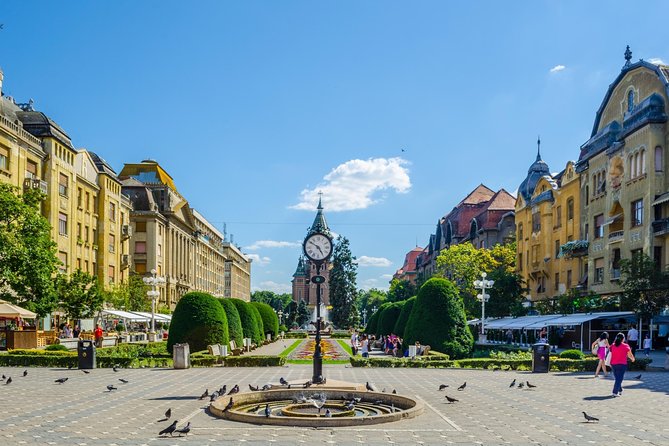
In the afternoon, you reach Timisoara. The city was named European Capital of Culture for 2019, and its center reflects both Turkish influence and the large imprint of the Austro-Hungarian period. The scheduled walking tour is again about 30 minutes.
I would treat Timisoara as a first taste rather than the main event. The day is mainly about getting from Budapest into Romania, so the driving time matters. Still, the city gives you an early look at the mix of empires and cultures that shapes the rest of the trip.
Day two: Corvin Castle, Alba Iulia, and Sibiu
Day two opens with Corvin Castle, one of the most memorable stops on the route. You have about an hour inside the Gothic fortress, with admission paid separately.
The castle’s appeal is easy to understand: stone walls, towers, and a strong medieval outline that feels far removed from modern city life. Your guide’s explanations add value here because a castle can otherwise become a quick walk through rooms and courtyards with names you will forget.
You then continue to Alba Iulia, where the old town connects ancient and medieval Romania with the country’s modern political story. This is the place associated with the 1918 unification treaty, an important moment in the formation of modern Romania.
The planned visit lasts about an hour. That gives you enough time for a purposeful walk through the old town, but not a full museum visit or an unhurried afternoon. If you like political history and urban architecture, this stop may be more rewarding than its brief schedule suggests.
By afternoon, you reach Sibiu for a walking tour of the old town. Sibiu was European Capital of Culture in 2007 and is a medium-sized city with a well-preserved historic center. The tour time is listed as 30 minutes, but the city is also one of the overnight bases associated with the trip.
That overnight position matters. You are not only stopping for a quick look from a vehicle. When accommodation is arranged, the hotels are described as being near the old towns, with breakfast included. This lets you walk to major sights more easily, though you should confirm the exact hotel and meal arrangements before departure.
Day three: Sighisoara and Brasov
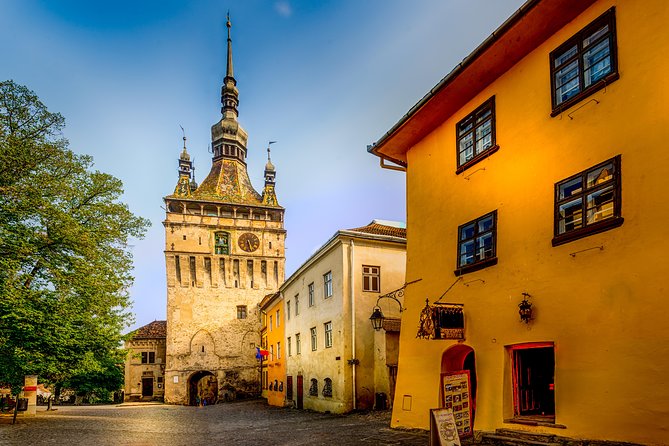
Sighisoara is the day’s first major stop, and it is one of the most atmospheric towns on the route. The old center has a storybook quality, with a medieval setting and a direct connection to Vlad Dracula, who was born here in 1431.
The walking tour lasts about an hour. That is a sensible amount of time for a guided introduction to the old town, though you should not expect to see every corner at a slow pace. Sighisoara is the sort of place where you will want a little freedom after the main tour to look around on your own.
The Vlad connection adds drama, but it is best viewed as one thread in the town’s identity, not the whole story. The setting, old streets, and medieval character are the real reason to pay attention.
Later, you head to Brasov. Its old town is a favorite Romanian destination, with preserved historic streets and major sights such as the Black Church and the city gates. The scheduled walking tour is about 30 minutes.
Again, the time is short, but Brasov functions as another overnight base. The practical benefit is strong: you can stay near the center rather than being left at a distant roadside hotel. The tour gives you a guided orientation, and you may have some personal time to walk, eat, or look for a local drink. One guide was specifically praised for tracking down craft beer in the evening, a small detail that shows how much a good guide can improve a tightly planned trip.
Day three is likely the most balanced day for travelers who want old towns rather than only castles. Sighisoara and Brasov feel different from one another, and both help you see how much of Transylvania’s appeal lies in its towns and streets.
A completely different kind of day out:
- Budapest: Nighttime or Daytime Sightseeing Cruise
★ 4.2 · 21,062 reviews - Budapest: 1-Hour Evening Sightseeing Cruise with Drink
★ 4.5 · 8,330 reviews - Budapest Danube Cruise and Dinner Options, Live Music and Dance
★ 4.5 · 7,428 reviews - Budapest: Historic Cruise with Welcome Drink
★ 4.7 · 6,512 reviews
Day four: Bran Castle and Peles Castle
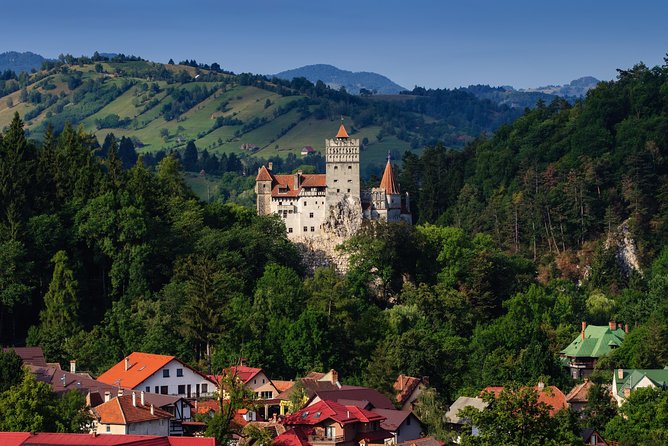
The final day begins with Bran Castle, commonly called Dracula’s Castle. You spend about two hours visiting the inside, with the entrance fee paid separately.
Bran is the most famous name on the itinerary, so expect it to be a central part of the tour. The visit focuses on the castle and the story of Vlad Dracula. The Dracula connection is popular, but the experience is not limited to horror fiction. Your guide can place the castle within the wider story of Romanian rulers and the region.
Two hours gives you more breathing room than the brief city walks earlier in the trip. It also helps balance the fact that Bran is a major paid attraction. Your guide assists with ticket purchases, but the fee remains your responsibility.
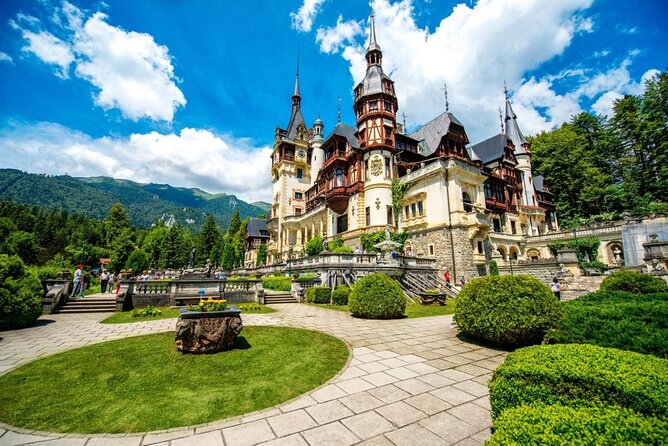
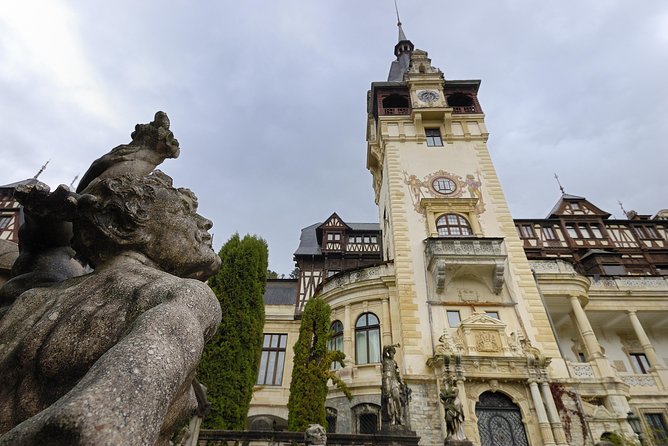
In the afternoon, you continue to Sinaia for Peles Castle. This is a 19th-century royal residence built by Romania’s royal family and preserved in its historic form. It offers a different kind of castle experience from Corvin and Bran. Corvin is medieval and fortress-like, Bran is tied to legend and tourism, while Peles reflects royal taste and later European design.
The schedule allows about two hours at Peles. That is generous enough for an inside visit when the castle is open, but the opening rules need careful attention. Peles Castle is closed on Mondays throughout the year. It is also closed on Tuesdays from August 1, 2024, through May 1, 2025. During those closures, you see the exterior, spend more time at Bran Castle and Brasov, and continue to Bucharest afterward.
The tour ends in Bucharest. Since drop-off can be made at a location of your choice, this is useful if you already have a hotel booked or need to connect with another part of your trip. The exact end time is not provided, so avoid scheduling a tight evening train, flight, or fixed appointment.
What the small group changes
The small group is one of the strongest reasons to choose this tour. The advertised cap is described as six in the highlights and eight in the included details. Either way, this is much more personal than a large coach tour.
A small vehicle also makes the long touring days easier to manage. You can ask questions, hear the live commentary, and get help at ticket counters without trying to find your guide in a crowd. If your departure has only two people, as happened on one private arrangement, the experience becomes closer to a custom road trip.
The guide is central to the value. Marius was praised for being both professional and fun, with strong timing at castles and churches. Alex was described as engaging and able to explain Romanian history in a way that connected the sights. Andrei was especially helpful and easy to communicate with, while Emmanuel mixed Romanian and neighboring-country history with food suggestions.
Those names do not guarantee who will lead your departure. They do show the kind of service to expect when the guide is a good fit: historical context, help with tickets, restaurant suggestions, and flexibility when the day allows it.
Accommodation, transport, and the fine print
The tour uses hotel, hostel, or accommodation pickup and drop-off in its included information, but the additional notes say the operator does not provide pickup or drop-off and can assist with overnight accommodation on request. The information is not consistent, so ask before booking:
- Are three nights of accommodation included in the quoted price?
- Are breakfasts included?
- Where is the first meeting point in Budapest?
- Is pickup from your Budapest hotel available?
- Where exactly will you be dropped off in Bucharest?
The accommodation descriptions connected with the trip are encouraging: comfortable hotels near the old towns in Timisoara, Sibiu, and Brasov, with good breakfasts. Still, do not assume a specific property or room type until it is confirmed.
You should have a moderate level of fitness. This is not a strenuous hiking tour, but you will walk through old towns, enter castles, and spend much of each day moving between stops. The tour guide sets the departure point and time for each day, so daily schedules may be adjusted as the trip unfolds.
Cancellation is allowed for a full refund up to three full days before the start time. Changes made inside that window are not accepted, and poor weather may lead to a different date or a full refund.
Is $1,685.76 per person good value?
The answer depends on what is actually included. If the price covers transport, a private guide, breakfast, and three nights in well-located three-star or four-star hotels, it can be a fair price for a four-day cross-border trip with a very small group.
The route is efficient, and a good guide adds something you cannot buy with a bus ticket: context. You are not only transferred from Budapest to Bucharest. You receive explanations at castles, help with admission, walking tours in several historic centers, and suggestions for food and drinks.
If accommodation is not included, the price looks less attractive because you will need to add three nights, meals, and all entrance fees. That does not make the trip poor value, but it changes the calculation. Get the full cost in writing before comparing it with a self-drive trip or a larger group tour.
I would also budget for lunch and dinner each day. Food and drinks are excluded, and the daily schedule does not guarantee long restaurant stops. Your guide can point you toward local places, but meals remain your responsibility.
Who should book this tour?
This trip suits you if you want to see a lot of Romania in a short time and prefer to let someone else handle the driving. It is a good match for first-time visitors who want castles and Dracula connections but also care about city centers, architecture, and modern Romanian history.
It works especially well for couples, friends, or families who value a small group. The one-way route is useful if Bucharest follows Budapest in your wider itinerary. You will also appreciate it if you like looking out of a vehicle window rather than navigating unfamiliar roads.
You may want a different plan if you prefer long museum visits, slow meals, or several free afternoons in one city. The itinerary is full, and some walking tours last only 30 minutes. It gives you a broad first look, not a deep stay in each place.
Should you book it?
Book this tour if you want a practical Budapest-to-Bucharest route with excellent guide support, major castles, and several Transylvanian old towns in four full days. The strongest value comes from the small group, the lack of backtracking, and the chance to learn as you go.
Before committing, confirm the group size, accommodation, breakfast, pickup arrangements, and Peles Castle opening day. If those points are clear and included as expected, this is a strong choice for an efficient first visit to Romania. If not, add the missing costs before deciding.
FAQ
Where does the tour start and finish?
It starts in Budapest, Hungary, at 9 a.m., and ends in Bucharest, Romania. Drop-off in Bucharest can be made at a location of your choice.
How long is the tour?
The experience lasts approximately four days, with a full touring schedule from the first morning through arrival in Bucharest on day four.
What is the maximum group size?
The information gives two limits: the highlights state a cap of six travelers, while the included details state a maximum of eight. Confirm the limit for your departure when booking.
Are accommodation and breakfast included?
The tour summary says three-star or four-star accommodation and breakfast are included. Another section says no accommodation is provided and that overnight help is available on request. Confirm the exact arrangement before booking.
Are entrance fees included?
No. Entrance fees are not included for Corvin Castle, Bran Castle, or Peles Castle. Your guide will assist you with purchasing tickets.
Is Peles Castle always open during the tour?
No. Peles Castle is closed on Mondays year-round and was also scheduled to close on Tuesdays from August 1, 2024, through May 1, 2025. On a closure day, you see the exterior and spend more time at Bran Castle and Brasov.
What is the cancellation policy?
You can receive a full refund if you cancel at least three full days before the local start time. Cancellations or changes made less than three full days before the start are not refunded or accepted. If poor weather cancels the tour, you are offered another date or a full refund.
Just added around Budapest
- Walk to recent and aged spiritual sanctuaries near Budapest★ 5.0 · 5 reviews
- Budapest: Private Walking Tour with a Local Guide★ 3.6 · 6 reviews
- Budapest: City Bike Tour with Coffee Stop★ 5.0 · 37 reviews
- Budapest: Danube River Views Bike Ride★ 4.8 · 23 reviews
- From Budapest: Guided Tour of Eger with Wine Tasting★ 4.5 · 6 reviews
- Trash Art Museum: Hungary’s First Scrap Metal Exhibition★ 4.3 · 72 reviews
- True Crime Walking Tour in the Buda Castle district★ 5.0 · 26 reviews
- Budapest: 3-Hour Trabant Sightseeing Tour★ 4.7 · 28 reviews
Tours in Budapest, compared.

Unlimited Prosecco, Beer and Aperol Spritz Cruise
Read our review →
Széchenyi Spa Day Ticket with Optional Upgrades
Read our review →


Budapest Danube Cruise and Dinner Options, Live Music and Dance
Read our review →