
Reviewed · COMMUNISM HISTORY TOURS
Budapest Hammer & Sickle Communist Times Tour
Budapest’s communist past feels most real when you leave the grand monuments and look at ordinary life: crowded banana lines, restricted passports, Soviet tanks, family rooms, and the small comforts people used to get through the day. This tour connects those personal details with the places where Hungary’s political story unfolded, including Parliament, Liberty Square, and the memorial to Imre Nagy.
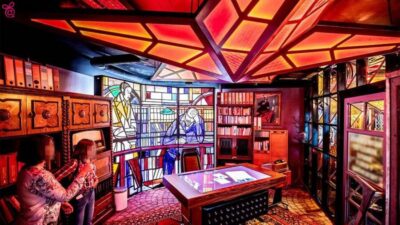
I like the small groups of up to 10, which give you room to ask questions, and I like the Budapest Retro Interactive Museum, where books, household items, games, photographs, and period objects make the era easier to understand. Guides such as George, Laszlo, Tomas, Rebecca, Anna, and Bogata have received especially strong praise for their clear explanations and personal stories. The main drawback is that the tour can feel heavy on historical discussion, and the walking portion may be difficult to hear in noisy conditions because no audio equipment or headphones are provided.
Key points to know before booking
- The 1956 Revolution is the main thread: Follow the route of speeches, protests, shootings, and Soviet intervention.
- Everyday life gets equal attention: See how families lived, traveled, shopped, studied, and managed shortages under communist rule.
- The Retro Museum adds real texture: Period furniture, newspapers, toys, books, and household objects turn political history into daily experience.
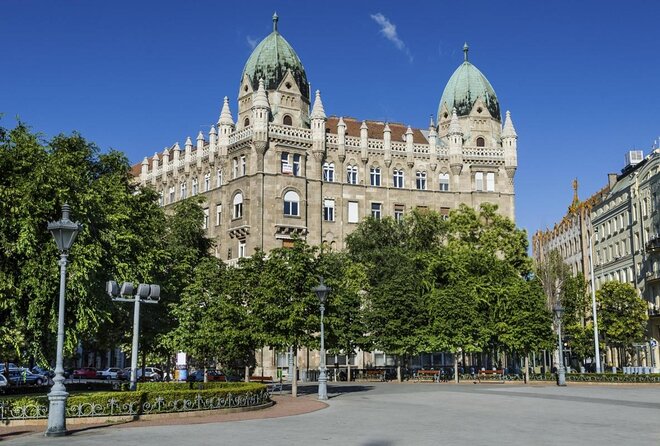
- The route links major central sights: Deák Ferenc Square, St. Stephen’s Basilica, Liberty Square, Parliament, and the Imre Nagy memorial all fit into one walk.
- Expect a personal guide-led experience: The best guides adjust the discussion to your questions and may share family memories of the period.
- Plan for about 2.5 hours and a 3 p.m. start: The advertised group size is capped at 10, but some tours have lasted closer to three hours.
Why this tour works for understanding modern Budapest
Many Budapest tours concentrate on the Austro-Hungarian era, elegant boulevards, royal buildings, and the Danube. Those are worthwhile, but they do not explain why modern Hungary carries such strong memories of Soviet rule, the 1956 Revolution, and the fall of communism.
This tour takes a different route through the city. You begin with Hungary’s place in World War I and World War II, then move into the Soviet occupation, the communist takeover, the 1956 uprising, and the eventual fall of the Iron Curtain. That broad frame matters because the revolution did not appear from nowhere. It grew from war, political pressure, economic hardship, and anger over outside control.
I especially like the balance between public events and private life. You hear about speeches, marches, executions, and tanks, but also about passports, food shortages, schoolchildren, travel restrictions, and the black market. That mix helps you see communism not only as a political system, but as something that shaped the smallest parts of a family’s routine.
The tour is conducted in English and takes place in central Pest. The meeting point is by the Lutheran Church at Deák Ferenc Square, one of the easiest areas in Budapest to reach by public transportation. It begins at 3 p.m. and ends near Liberty Square, so you can continue on foot toward Parliament, the Danube, or other central sights afterward.
More of the communist years around Budapest:
- Budapest: Budapest Retro Interactive Museum Ticket
★ 4.4 · 373 reviews - Budapest: Communist History Tour with House of Terror Option
★ 4.8 · 182 reviews - Budapest: 3-Hour Walking Tour About Communism (Small Group)
★ 4.7 · 70 reviews
Beginning at St. Stephen’s Basilica and Deák Ferenc Square
The first historical stop is St. Stephen’s Basilica, where the guide explains how communist rule affected religious life and the operation of churches. This is a useful opening because the basilica is not only a beautiful landmark. It also provides a clear example of how the government managed institutions that had authority outside the Communist Party.
You are not simply looking at the building’s architecture. You are considering what happened to religious organizations, how faith was treated by the state, and how public life changed after the war. The stop lasts about 15 minutes, and entry to the basilica is not included, so do not expect a formal interior visit as part of the tour.
The tour begins at 3 p.m., which can work well if you spend the morning visiting Buda Castle or the Great Market Hall. It also means you should allow time to locate the Lutheran Church at Deák Ferenc Square before the group sets off.
Liberty Square and the Soviet memorial
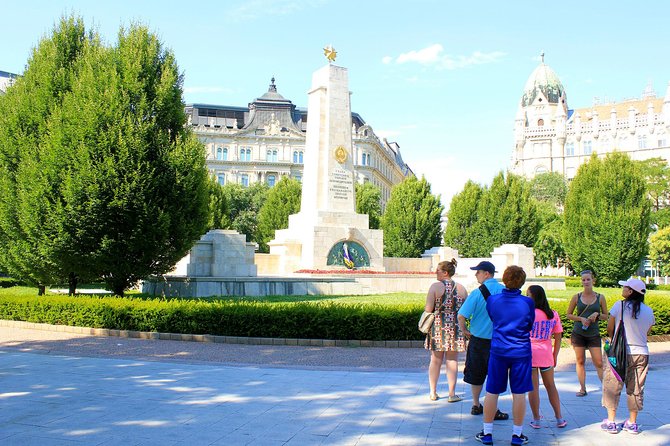
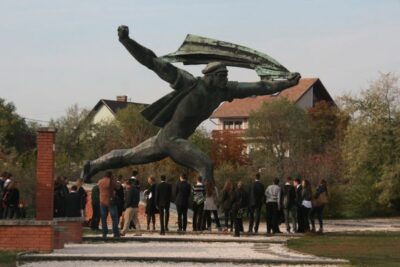
At Szabadság tér, or Liberty Square, the tour turns directly toward the end of World War II and the start of Soviet occupation. The Soviet memorial here provides a physical reminder of how Hungary moved from wartime defeat into a new political order controlled by Moscow.
The guide explains how the Communist Party gained power and how the country’s political system changed. This is one of the most important parts of the walk because it links military occupation with the gradual loss of political freedom. The process was not just a single dramatic moment. It involved pressure, party control, and the reshaping of public institutions.
Liberty Square also helps explain Hungary’s complicated relationship with memory. The square contains several monuments and political references close together, so the guide’s context is valuable. Without explanation, you might pass through quickly and miss why this small area carries so much meaning.
The stop is free and lasts about 15 minutes. Since the tour finishes near Liberty Square, you may return to this area later if you want more time with the memorials and surrounding buildings.
Parliament and the opening days of the 1956 Revolution
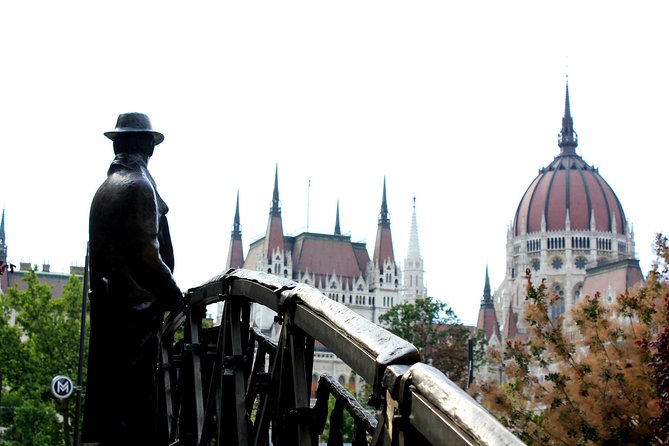
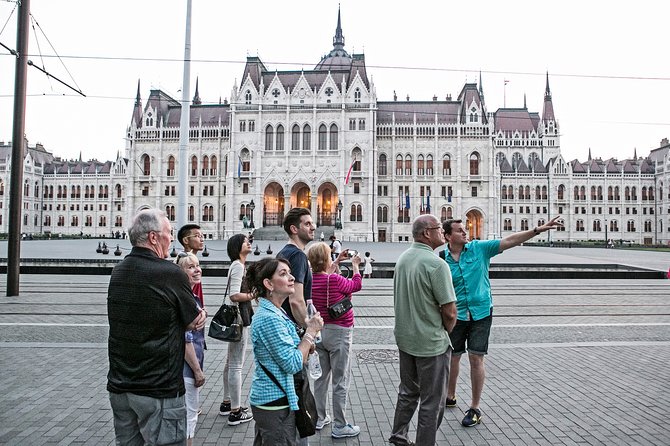
The Hungarian Parliament Building is one of Budapest’s most famous sights, but this tour uses the square in front of it to tell a darker story. The area played an important role in the first days of the 1956 Revolution, and the first shots of the uprising were fired nearby.
Your guide explains what led people into the streets, why protests grew, and how the party leadership and Soviet authorities responded. The focus is on the political crisis as it unfolded, not just on the polished exterior of Parliament.
This is also where Imre Nagy enters the story. He was a communist leader who challenged Soviet direction and became associated with the revolution. After the uprising was crushed, he was executed for treason. His later reburial became a major moment in Hungary’s move away from communist rule.
The Parliament stop lasts about 20 minutes. It is an outdoor explanation rather than an interior Parliament tour, and entry into the building is not included. If you want to see the inside, you will need a separate ticket and visit.
A completely different kind of day out:
- Budapest: City Highlights Cruise with Welcome Drink
★ 4.6 · 35,610 reviews - Budapest: Unlimited Prosecco, Beer and Aperol Spritz Cruise
★ 4.8 · 25,310 reviews - Budapest: Széchenyi Spa Day Ticket with Optional Upgrades
★ 4.3 · 23,911 reviews - Budapest: Nighttime or Daytime Sightseeing Cruise
★ 4.2 · 21,062 reviews
The October 25 memorial and the cost of protest
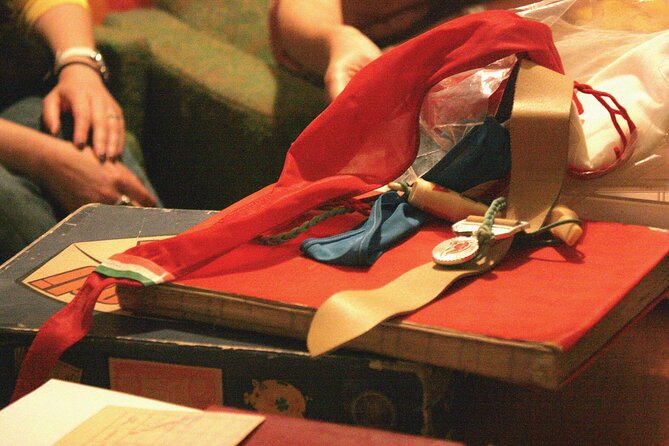
The In Memoriam 1956 October 25 Memorial focuses on one of the most painful moments of the uprising. On the second day of the revolution, military authorities and Soviet tanks fired into a gathering crowd.
An exhibition at the memorial uses archive footage and personal recollections to present the event. The format adds a visual and human layer to the guide’s explanation. Instead of hearing only about political decisions, you get a sense of how quickly a public gathering could turn into a massacre.
The stop lasts roughly 15 minutes and is free. It may be emotionally difficult, especially after hearing the broader story of the uprising. The tour does not treat the revolution as a simple heroic episode. It also addresses the danger, confusion, and cost of the fighting.
The memorial is one of the stronger reasons to choose this tour over a general city walk. It places you at a site tied to a specific event rather than offering only broad commentary about communism.
Imre Nagy, memory, and the fall of the old system
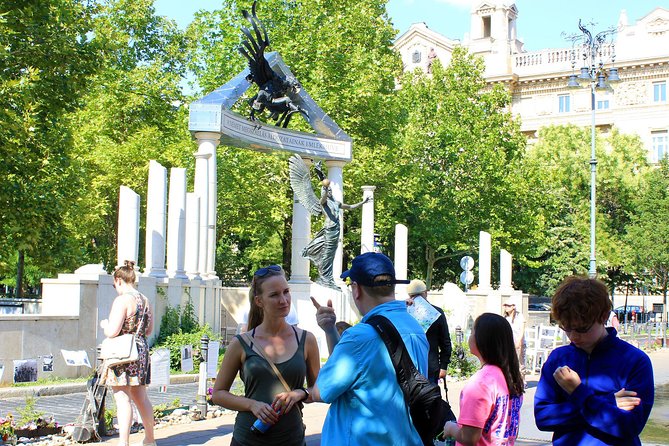
The statue of Imre Nagy provides another chance to consider how public memory changed after 1989. His execution made him a symbol of resistance to Soviet control, and his reburial helped mark the end of the communist era.
The guide connects his story with October 23, Hungary’s annual remembrance day for the 1956 Revolution. That date remains important because it honors the uprising and the country’s long effort to regain political freedom.
This part of the tour is especially useful if you want to understand how historical figures can change meaning over time. Nagy began as a communist politician, yet his opposition to Soviet leaders and his fate after the revolution made him a symbol of national independence.
The route ends near Liberty Square in central Budapest. Depending on the guide and the pace of the group, the walk and discussion can run longer than the listed two hours and 30 minutes. One small group reported a tour closer to three hours, so avoid scheduling a tight dinner reservation immediately afterward.
The Budapest Retro Interactive Museum
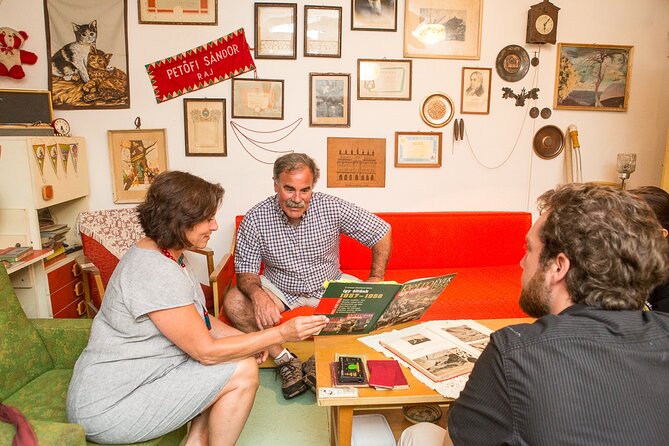
The museum section is the tour’s most unusual feature. Rather than viewing communism only through monuments and political speeches, you enter a recreated world of everyday objects and routines.
You may see the type of living room, books, games, newspapers, photographs, and household items associated with the period. Guides explain how children were raised, how families spent their time, how people traveled, and which countries were difficult or impossible to visit.
The details about passports and travel restrictions are especially helpful. Modern visitors can cross borders with little thought, so learning how long it could take to obtain a passport gives you a concrete measure of state control. The stories of black markets and banana lines show how shortages shaped shopping and social life.
Some guides begin with the museum-style material in a basement setting, while others place the visit toward the end of the route. The exact order may vary, but the purpose remains the same: to make the political story personal.
I would give this section extra weight when deciding on value. A standard walking tour can point out monuments, but a period room filled with ordinary objects helps you picture what people actually touched, read, played with, and used at home. One caution: a few visitors found the apartment section longer than expected. If you prefer a fast-moving outdoor walk, this may feel slow.
Shoes on the Danube and the wider wartime story
The experience also includes a World War II overview and a visit to Shoes on the Danube Bank, the memorial to Jewish victims who were shot along the river. The shoes are a simple and powerful reminder of wartime persecution and murder.
This part expands the tour beyond communism. Hungary’s postwar political story cannot be understood without first considering the destruction of World War II, the country’s losses, and the power vacuum that followed. The guide uses the wartime period as a prelude to Soviet occupation and the Communist Party takeover.
Because the walk covers several major historical periods, you should expect a broad overview rather than a full treatment of either World War I or World War II. The strongest detail is reserved for the communist period and the 1956 Revolution.
Guide quality and group atmosphere
The guide is central to the experience. The most effective leaders bring both firm historical structure and personal context. Guides named in the feedback include Anna, Celeste, Greg, Andrea, Rebecca, Bálint Alkonri, Bogata, Tomas, George, and Laszlo.
Several of these guides have been praised for explaining the subject in clear, neutral language rather than turning the tour into a political speech. Personal or family stories can make the period easier to picture, but the best presentation still separates memory from the larger historical record.
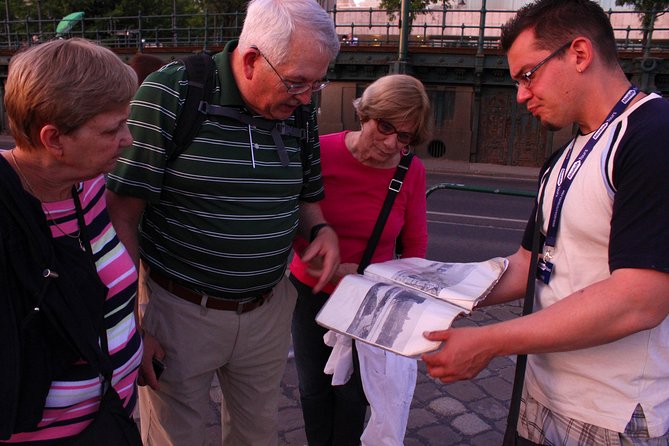
The group limit of 10 is a real advantage. You can ask about travel, food, school, religion, work, or family life without needing to shout across a crowd. Some departures have had only two or three people, creating something close to a private discussion.
The downside is sound. There are no audio devices or headphones, and outdoor noise can interfere with the guide. Aircraft, helicopters, traffic, or large events may make it hard to catch every sentence. Stay close to the guide, and ask for a point to be repeated if needed.
Price, timing, and practical value
At $79.65 per person, this is not the cheapest way to learn about Budapest’s recent past. You are paying for a small group, an English-speaking guide, the museum visit, and a structured route through several historically important locations. A coffee, tea, or soft drink is included, but meals and hotel transportation are not.
I think the cost is reasonable if you want more than a free walk and value a guide who can answer detailed questions. It is less compelling if you only want to see the monuments from the outside and read about them later.
Wear shoes suitable for walking and dress for the weather. The tour runs in rain, cold, or sun. Most people can take part, but the subject matter is not recommended for children under 14. The route is near public transportation, and it concludes in the center rather than returning you to your hotel.
Free cancellation is available up to 24 hours before the 3 p.m. start time. Changes or cancellations made inside that window are not eligible for a refund.
Who should book this Budapest history walk
I would choose this tour early in a Budapest stay if you want the city’s recent past to shape what you see afterward. Once you understand the 1956 Revolution, the Soviet memorial, and the restrictions of daily life, other Budapest sights take on added meaning.
It suits history-minded adults, first-time visitors, and anyone curious about how ordinary families lived under communism. It is also a good choice if you prefer conversation and questions over a large group with a fixed script.
You may want a different activity if you dislike political history, have limited walking stamina, or prefer a quick sightseeing loop. The museum section and historical explanations require attention, and the outdoor portions can be cold or noisy.
Should you book the Hammer and Sickle Communist Times Tour?
Book it if you want a clear, personal introduction to Hungary’s twentieth-century story, especially the 1956 Revolution and daily life behind the Iron Curtain. The combination of central sites, a small group, and the Retro Interactive Museum gives the tour more substance than a simple monument walk.
For the best experience, go early in your Budapest visit, stay close to the guide, and allow three hours rather than scheduling something immediately afterward. If you get a guide such as George, Laszlo, Tomas, Rebecca, Anna, or Bogata, expect a lively discussion shaped by questions as much as by the planned route.
FAQ
How long does the Budapest Hammer and Sickle Communist Times Tour last?
The stated duration is approximately two hours and 30 minutes. Some departures have lasted closer to three hours, so allow extra time if you have a fixed evening plan.
What time does the tour start?
The tour starts at 3 p.m.
Where does the tour begin?
The meeting point is the Lutheran Church at Deák Ferenc Square, Deák Ferenc tér 4, 1052 Budapest.
Where does the tour finish?
The tour concludes near Liberty Square at Budapest, Szabadság tér 1, 1054 Budapest.
Is the Retro Interactive Museum included?
Yes. Entry to the Budapest Retro Interactive Museum is included, with the guide explaining the objects and stories about daily life under communism.
Is transportation or hotel pickup included?
No. Hotel pickup and drop-off are not included. The tour takes place near public transportation.
Is the tour suitable for children?
The activity is not recommended for children under 14. The tour operates in all weather conditions, so dress appropriately.
Just added around Budapest
- Walk to recent and aged spiritual sanctuaries near Budapest★ 5.0 · 5 reviews
- Budapest: Private Walking Tour with a Local Guide★ 3.6 · 6 reviews
- Budapest: City Bike Tour with Coffee Stop★ 5.0 · 37 reviews
- Budapest: Danube River Views Bike Ride★ 4.8 · 23 reviews
- From Budapest: Guided Tour of Eger with Wine Tasting★ 4.5 · 6 reviews
- Trash Art Museum: Hungary’s First Scrap Metal Exhibition★ 4.3 · 72 reviews
- True Crime Walking Tour in the Buda Castle district★ 5.0 · 26 reviews
- Budapest: 3-Hour Trabant Sightseeing Tour★ 4.7 · 28 reviews
Communism History Tours, compared.

Communist History Tour with House of Terror Option
Read our review →
3-Hour Walking Tour About Communism (Small Group)
Read our review →

Lives of Hungarians Under Communist and Capitalist system
Read our review →
Private Budapest Hammer & Sickle Communist Times Tour
Read our review →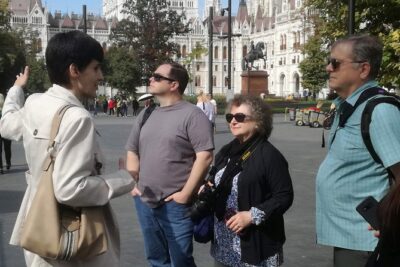
Browse the lists this tour appears in