
Reviewed · COMMUNISM HISTORY TOURS
Born Under The Red Star – Communist tour with Coffee in a Retro Bar
Budapest’s Communist past is not locked away in one museum. It appears in monuments, squares, old political buildings, and arguments that still shape the city. This three-hour walk connects those places, from the Soviet Heroic Memorial to the 1956 Revolution memorial, with a retro bar stop that adds a little everyday flavor.
I like the sharp historical focus, and I like the way the tour takes you to places many sightseeing routes skip. The guide’s commentary is the main value, especially if you want political context rather than only pretty architecture. The possible drawback is price: at $90.31, this is a costly three-hour walk, and museum or church admission is not included.
Key points to know before booking
- The tour follows Budapest’s political story: You move from Soviet wartime memory to fascism, Communism, the 1956 uprising, and modern national symbols.
- A retro bar stop is included: You receive coffee or tea and a classic soda in a bar decorated with Communist-era themes.
- The group is limited to 15 people: That should make questions and conversation easier than on a large city tour.
- The route includes several outdoor memorials: Much of the experience depends on walking and good weather.
- The commentary is the heart of the tour: The stops are often brief, so the guide’s explanation gives them meaning.
- You finish at Liberty Square: The end point is useful for continuing on your own near central Budapest.
Why this Communist walk adds something different to Budapest
Many first visits to Budapest focus on the Danube, the Parliament exterior, grand cafés, thermal baths, and the Castle District. Those sights matter, but they can leave out the political struggles that shaped modern Hungary.
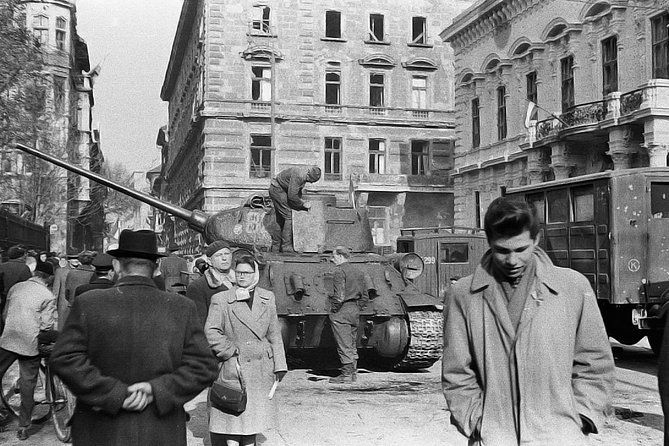
This tour gives you a different way to read the city. A Soviet monument is not simply a monument. A public square is not just a place to cross on the way to Parliament. A memorial can carry several competing versions of the past, and your guide helps explain why.
I especially like the way this experience links several periods rather than treating Communism as an isolated chapter. You encounter World War II memory, the fascist and Communist dictatorships, the 1956 uprising, and the symbols of Hungarian independence. That wider frame is useful because Budapest’s public spaces often contain several political messages at once.
The group limit of 15 is another practical advantage. You are not guaranteed a small group, but the cap keeps the experience from becoming a moving crowd. One booking ended up with only two people and the guide Ferenc, which allowed for a more personal walk and plenty of discussion. Ferenc may not be your guide, but the example shows how different the experience can feel in a small group.
More of the communist years around Budapest:
- Budapest: Budapest Retro Interactive Museum Ticket
★ 4.4 · 373 reviews - Budapest: Communist History Tour with House of Terror Option
★ 4.8 · 182 reviews - Communism in Hungary with a Historian
★ 5.0 · 70 reviews
Starting at the Opera and meeting Budapest’s 20th-century past
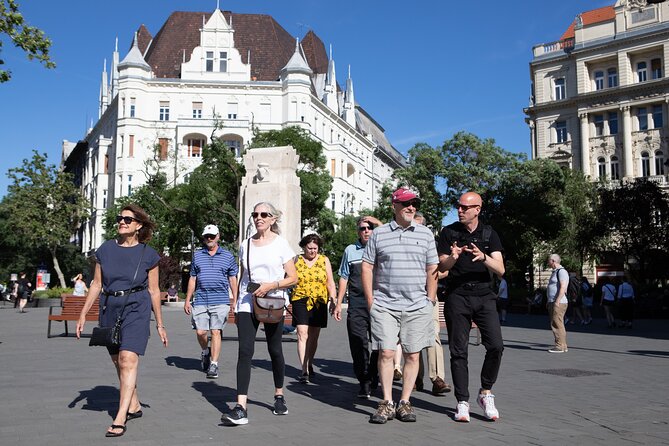
The tour begins at the Hungarian State Opera on Andrássy út 22. This is a central and easy-to-recognize meeting point, close to public transportation. From there, the route moves into a less decorative side of Budapest, one shaped by power, fear, resistance, and remembrance.
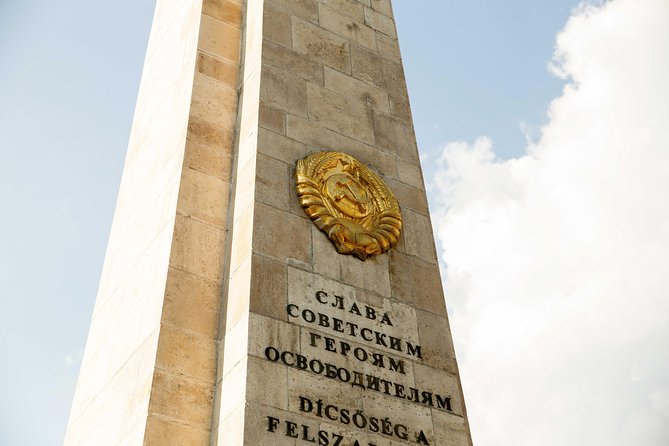
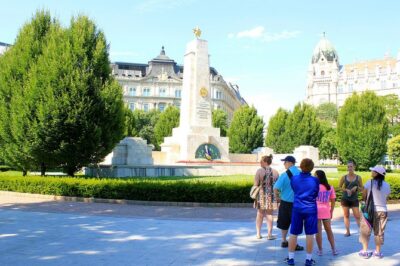
The first stop is the Soviet Heroic Memorial, a white obelisk in a landscaped park. It commemorates Russian military personnel who served in World War II. The stop lasts about 15 minutes and has no admission charge.
The memorial is useful as an opening because it introduces a central question: who gets to define liberation? For some, Soviet forces ended Nazi occupation. For others, the end of one dictatorship led directly into another period of Soviet control. Your guide’s explanation is important here, since the monument alone cannot explain the competing feelings attached to it.
You should expect to spend most of this part outside. The stop is short, so this is not a long inspection of the monument. Instead, it works as a focused introduction to the political language of Budapest’s memorials.
House of Terror: a brief but serious stop
The route includes the House of Terror Museum at Andrássy út 60. The building is tied to both the fascist and Communist regimes in 20th-century Hungary. It is also a memorial to people who were detained, interrogated, tortured, or killed there.
The scheduled stop is about 15 minutes, with no admission ticket included. That detail matters. This tour takes you to the House of Terror, but it does not provide time or admission for a full museum visit. You should treat this as an exterior and context stop, then return independently if you want to see the exhibits inside.
I like this arrangement for travelers who want a broad introduction before deciding how much time to devote to the museum. I would not consider it enough for anyone whose main goal is the House of Terror itself. The museum deals with painful material, and a proper visit requires more time than this walking tour allows.
The short stop also keeps the route moving. You get the essential setting and political background without spending the whole morning or afternoon in one institution. Your guide’s commentary can help you understand why the building matters before you choose to enter later.
St. Stephen’s Basilica and the symbols of old Hungary
St. Stephen’s Basilica brings a different kind of power into the route. This Roman Catholic basilica is named for Stephen, Hungary’s first king, and its reliquary holds his right hand. It was the sixth-largest church building in Hungary before 1920.
The stop lasts about 15 minutes, and admission is not included. That means you can see the basilica as part of the walk, but you should not expect a guided interior visit covered by the tour price.
This stop helps widen the discussion beyond Communist monuments. Modern Hungarian identity also draws on monarchy, Christianity, national tradition, and the memory of Saint Stephen. Set beside the later memorials and political buildings, the basilica shows how Budapest’s public symbols come from very different eras.
If you want to go inside, check the admission arrangements separately. The tour’s value here is primarily the connection between the site and the guide’s larger explanation, not included church entry.
A completely different kind of day out:
- Budapest: City Highlights Cruise with Welcome Drink
★ 4.6 · 35,610 reviews - Budapest: Unlimited Prosecco, Beer and Aperol Spritz Cruise
★ 4.8 · 25,310 reviews - Budapest: Széchenyi Spa Day Ticket with Optional Upgrades
★ 4.3 · 23,911 reviews - Budapest: Nighttime or Daytime Sightseeing Cruise
★ 4.2 · 21,062 reviews
The Liberty Statue and the question of freedom
The Liberty Statue, also called the Freedom Statue, rises on Gellért Hill. It commemorates people who sacrificed their lives for Hungary’s independence, freedom, and prosperity.
The supplied schedule does not give a precise duration or admission detail for this stop. What it does make clear is the monument’s symbolic role. Freedom is a word used by many political movements, and this statue can be read through the changing politics of Hungary after World War II.
For you, the main consideration is physical. This is an outdoor monument on Gellért Hill, so the walk may feel more demanding than the flat central-city sections. The tour requires good weather, and this stop makes that condition especially relevant. The route may be less comfortable in rain or poor conditions, so keep an eye on the forecast.
The statue is also a reminder that the tour is not only about Communist architecture. It asks how a city remembers sacrifice and how the meaning of a monument can shift as governments change.
Liberty Square: Budapest’s most useful political classroom
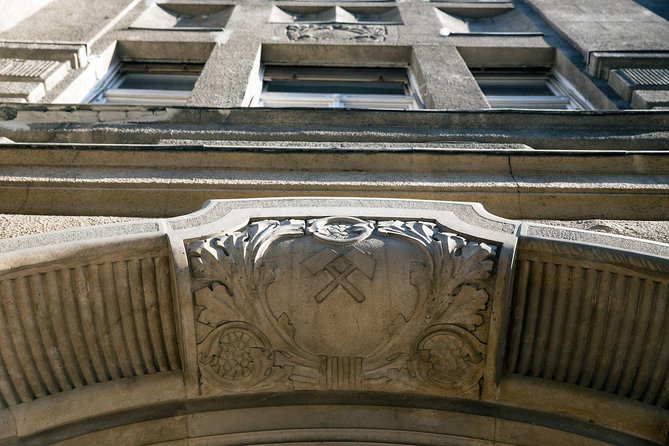
Liberty Square, or Szabadság tér, is the final meeting point and one of the most important stops. It lies in the Lipótváros neighborhood, near the United States Embassy and the Hungarian National Bank’s historicist headquarters.
The square contains two controversial memorials. One commemorates Hungarian Jewish victims of the Holocaust. The other commemorates Soviet soldiers who liberated Budapest from the Nazis in 1945. Placing these subjects in the same public space creates a direct encounter with competing memories of war, occupation, responsibility, and liberation.
This is where the tour’s political focus becomes especially clear. You are not looking at a single agreed-upon story. You are seeing how public memorials can provoke disagreement, and how a square can become a place where national memory is argued in stone and bronze.
The tour ends here, which is practical. You can continue exploring central Budapest after the walk, and the guide provides maps and further recommendations. That extra advice may be one of the most useful parts of the experience if this is your first visit and you still have time to explore independently.
The 1956 memorial and Hungary’s uprising
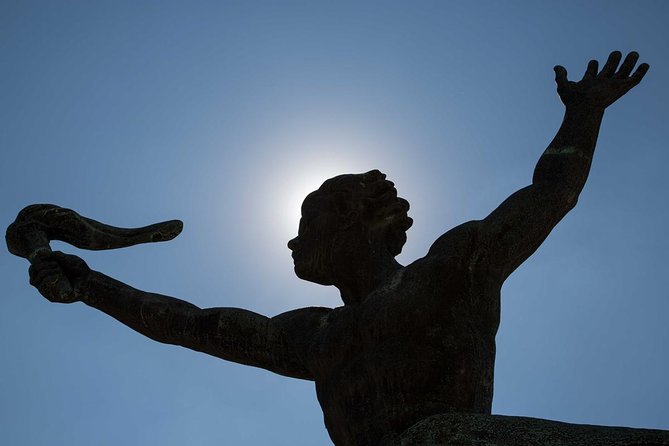
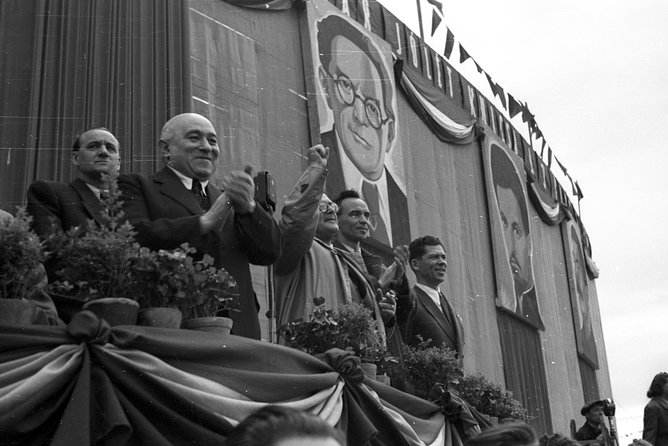
The route also includes a memorial to the 1956 Hungarian Revolution and War of Independence. It honors the people who resisted the Communist regime during the uprising.
The memorial gives the tour a clear human and national focus. Instead of discussing Communism only through Soviet monuments or government buildings, you confront the Hungarians who challenged the system. The stop helps explain why 1956 remains such an important part of the country’s modern identity.
The details provided do not specify a separate admission charge, and the memorial is an outdoor stop. As with the other brief visits, the guide’s explanation is likely to matter more than the physical structure alone.
I appreciate this inclusion because it prevents the tour from becoming a one-sided account centered only on Soviet influence. It makes room for resistance, sacrifice, and the desire for national independence.
Parliament from the outside, with time to continue alone
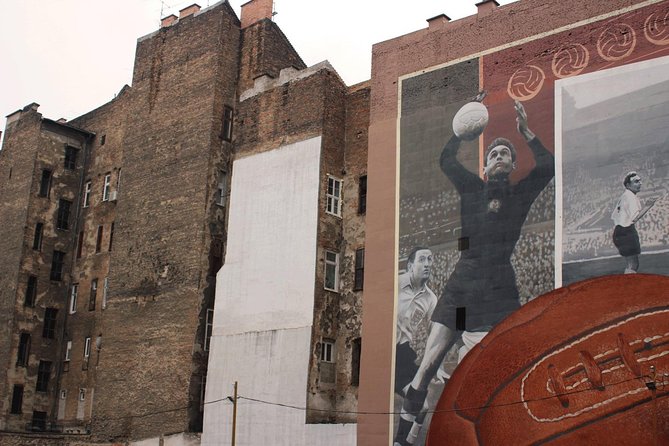
The Hungarian Parliament Building is one of Budapest’s most famous sights and the seat of the National Assembly. Its official name translates as House of the Country or House of the Nation.
The tour includes a stop of about 15 minutes, but admission is not included. You should expect to see and discuss the building as part of the walking route rather than take a full interior tour.
Parliament is an effective closing subject because it links the past to the political life of Hungary today. Its grand appearance can easily become a quick photo stop, but the guide can place it within the larger story of government, national identity, and public power.
If you want to visit inside, plan that separately. This tour does not replace a dedicated Parliament visit. It gives you a useful introduction and leaves you at Liberty Square, where you can continue toward other central sights.
The retro bar stop: coffee, tea, and a classic soda
The most playful part of the experience is the stop at a Communist-themed retro bar. You receive a classic soda, along with coffee and/or tea. Food and other drinks are not included unless specifically stated.
This stop matters because political history is not only found in monuments. It also appears in the design, objects, and everyday atmosphere associated with a former political era. A retro bar can make the subject feel less abstract after a series of serious memorials.
Do not expect a meal. The included drink is a small part of the price, not a replacement for lunch or a café visit. Still, it gives the group a natural pause and a chance to ask questions in a less formal setting.
I like this balance. The tour deals with difficult subjects, but it does not remain solemn for all three hours. The soda and café stop add a human scale without turning the past into a joke.
Is $90.31 a fair price?
At $90.31 per person, this is expensive for a three-hour walking tour. The price makes the most sense if you place high value on an English-speaking guide who can explain the political meaning of several sites in one continuous story.
You are paying for more than transport between landmarks. The experience includes the guide’s commentary, a classic soda, coffee or tea, maps, and recommendations for places to visit on your own. The group cap of 15 also gives the tour a more personal limit than a large public walk.
Still, several costs remain outside the price. Admission to St. Stephen’s Basilica is not included. The House of Terror stop does not include museum entry, and Parliament admission is not included. Food and additional drinks are also extra.
I would book this if you want context and conversation, not if you simply want to collect Budapest landmarks. If you are comfortable researching the history yourself and visiting the sights independently, $90.31 may feel steep. If you want a guide to connect difficult subjects and point out details you might otherwise miss, the cost is easier to justify.
Who should book this experience?
This tour suits you best if you:
- Want to understand Hungary’s Communist period and its connection to World War II and 1956
- Prefer a focused walking tour with political and historical commentary
- Have already seen Budapest’s main postcard sights and want a different angle
- Enjoy memorials, public squares, and questions about national memory
- Appreciate recommendations for independent sightseeing afterward
- Can manage an outdoor walk in changeable weather
It may not suit you if you want long interior visits, a meal, or a low-cost overview of Budapest. The House of Terror, basilica, and Parliament all require separate planning if you want to go inside.
Children must be accompanied by an adult. Service animals are allowed, most people can participate, and the route is near public transportation. Confirmation is provided when you book.
Should you book the Communist tour?
Book it if Budapest’s political past is a major reason for your visit. The combination of Soviet memory, the House of Terror, the 1956 memorial, Liberty Square, Parliament, and the retro bar creates a thoughtful three-hour introduction that goes beyond standard sightseeing.
The strongest reason to choose it is the guide’s explanation. The stops are relatively short, and several have no included admission, so the experience depends on how well the guide connects them. The small maximum group and the possibility of a personal outing, as happened with Ferenc, are welcome advantages.
Skip it if your budget is tight or you mainly want interior access to Budapest’s famous buildings. At $90.31, you need to care about the story behind the places. For the right reader, that story is exactly what makes the walk worthwhile.
FAQ
How long does the tour last?
The tour lasts approximately three hours.
What language is the tour offered in?
The tour is offered in English.
Where does the tour start?
It starts at the Hungarian State Opera, Budapest, Andrássy út 22, 1061 Hungary.
Where does the tour end?
It ends at Liberty Square, Budapest, Szabadság tér, Hungary.
What is included in the price?
The price includes a classic soda in a Communist-themed bar, coffee and/or tea, maps, and further recommendations.
Are museum and church admission fees included?
No. Admission is not included for St. Stephen’s Basilica or the Hungarian Parliament Building. The House of Terror stop also lists admission as not included.
How large can the group be?
The tour has a maximum of 15 participants.
Can children join the tour?
Yes, but children must be accompanied by an adult.
Can I cancel for a full refund?
Yes. You can cancel at least 24 hours before the experience start time for a full refund. Cancellations or changes made less than 24 hours in advance are not accepted for a refund, and poor weather may lead to a different date or a full refund.
Just added around Budapest
- Walk to recent and aged spiritual sanctuaries near Budapest★ 5.0 · 5 reviews
- Budapest: Private Walking Tour with a Local Guide★ 3.6 · 6 reviews
- Budapest: City Bike Tour with Coffee Stop★ 5.0 · 37 reviews
- Budapest: Danube River Views Bike Ride★ 4.8 · 23 reviews
- From Budapest: Guided Tour of Eger with Wine Tasting★ 4.5 · 6 reviews
- Trash Art Museum: Hungary’s First Scrap Metal Exhibition★ 4.3 · 72 reviews
- True Crime Walking Tour in the Buda Castle district★ 5.0 · 26 reviews
- Budapest: 3-Hour Trabant Sightseeing Tour★ 4.7 · 28 reviews
Communism History Tours, compared.

Communist History Tour with House of Terror Option
Read our review →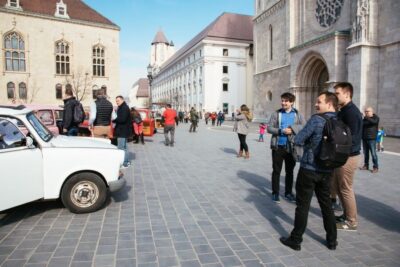
3-Hour Walking Tour About Communism (Small Group)
Read our review →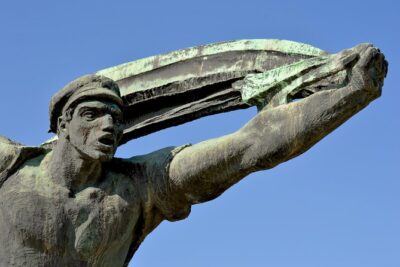

Lives of Hungarians Under Communist and Capitalist system
Read our review →
Browse the lists this tour appears in