
Reviewed · COMMUNISM HISTORY TOURS
Communism in Budapest: Private Tour with House of Terror Museum
Budapest’s political story comes alive on foot, beginning at the square where students gathered during the 1956 uprising and ending inside the House of Terror, a former site of detention and torture. Along the way, you’ll pass Parliament, Communist-era reminders, Ronald Reagan’s statue, and even a statue of Columbo.
I like the private format, since your guide can shape the pace around your group. I also like the route’s mix of grand political sites and odd little details, including Falk Miksa Street’s retro shops and the unlikely detective statue. The main thing to consider is that the tour covers serious material, and the House of Terror can be emotionally heavy.
Key points to know before booking
- Start at a major 1956 protest site: Bem József Memorial Square gives the tour a clear link to Hungary’s revolt against Soviet control.
- See Budapest through political symbols: The route includes Liberty Square, Ronald Reagan, Parliament, monuments, and statues that reflect changing ideas about power.
- Meet Columbo in an unexpected setting: Falk Miksa Street adds a lighter, curious moment to an otherwise serious walk.
- Enter the House of Terror Museum: Admission is included, but you continue through the museum at your own pace after the guide’s walking portion.
- Enjoy a genuinely private experience: Only your group takes part, with a professional guide and time for photographs.
- Plan for a city walk: Food, drinks, hotel transfers, and transportation are not included, so you need to reach Bem József tér on your own.
Starting at Bem József Memorial Square
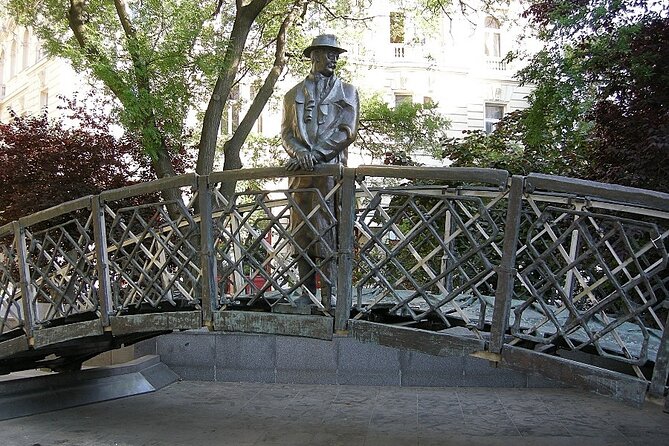
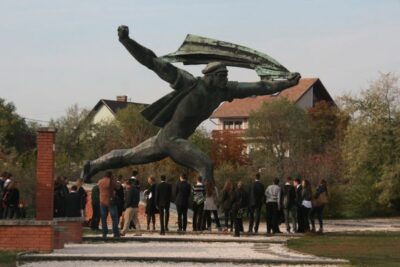
The tour begins at Bem József tér, across the Danube from central Pest. This is more than a convenient meeting point. The square became a major gathering place during the Hungarian Revolution of 1956, when roughly 200,000 Hungarian students and supporters protested Soviet rule.
Your guide uses the square to explain the political pressure behind the uprising. That opening matters because it gives the rest of the walk a clear purpose. You are not simply ticking off Budapest sights. You are following the city’s movement from fascist rule and war, through Soviet control, and toward democracy.
The first stop lasts about 30 minutes and has no admission charge. You’ll want comfortable shoes and enough time to listen, since the value here comes from the explanation rather than from entering a building.
I like beginning here because the site helps you understand the courage and frustration behind the 1956 revolt before you encounter later monuments. The setting also gives your group a calm place to get oriented before the longer walk through the city.
More of the communist years around Budapest:
- Budapest: Budapest Retro Interactive Museum Ticket
★ 4.4 · 373 reviews - Budapest: Communist History Tour with House of Terror Option
★ 4.8 · 182 reviews - Budapest: 3-Hour Walking Tour About Communism (Small Group)
★ 4.7 · 70 reviews
Falk Miksa Street and the Columbo surprise
From Bem József Memorial Square, the route continues through central Budapest. Falk Miksa Street brings an unexpected change of mood. You may see retro bars, traditional butcher shops, and other everyday details while your guide explains what daily life looked like under Communist rule.
The street is also home to a statue of Columbo, the fictional Los Angeles police detective known for his rumpled appearance and stubborn pursuit of the truth. It is an odd sight on a history walk, but that is exactly why it works. The statue gives you a memorable visual break and shows how Budapest mixes serious public memory with playful urban art.
The guide’s job here is to connect ordinary streets with political history. A butcher shop or old-style bar may not look like a political monument, yet these places help you picture how people lived under a system that shaped work, shopping, public speech, and daily choices.
This section takes about an hour. It is the longest part of the walking route, so you should be prepared to remain on your feet and move between several points. The route does not include food or drinks, so plan to eat before the tour or save a café stop for afterward.
Liberty Square and Budapest’s political symbols
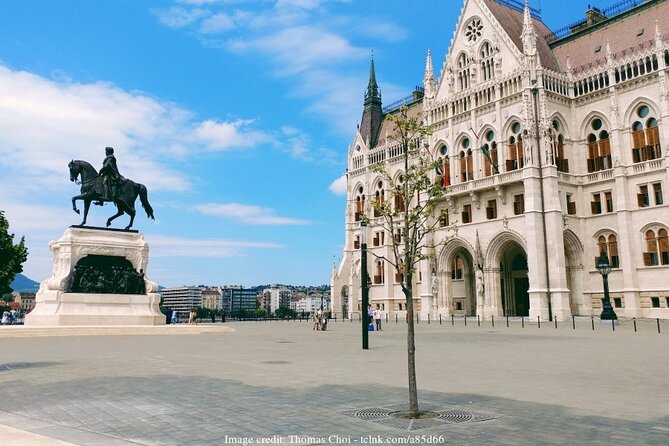
The central district includes monuments and squares that reflect Hungary’s uneasy relationship with the past. Liberty Square is one of the most useful stops because it brings several layers of twentieth-century politics into one public space.
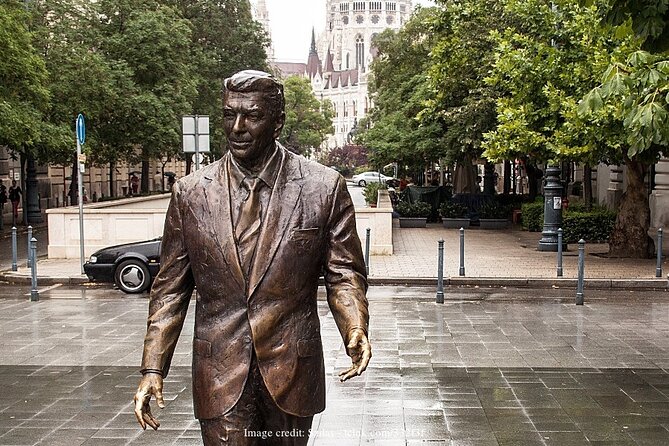
Your guide points out Ronald Reagan’s statue there, along with other memorials connected to the country’s political changes. These sights are valuable because they show that public space is never neutral. A statue can honor a leader, challenge an earlier message, or help a city argue with its own past.
You will likely get more from this section if you ask questions. The private setting gives you room to pause when a particular monument catches your attention, rather than moving with a large group on a fixed script.
I especially like the way the route uses statues and squares as evidence. Political history can feel abstract in a classroom, but here you can see how different periods are represented, remembered, or contested in the middle of modern Budapest.
Parliament from the outside
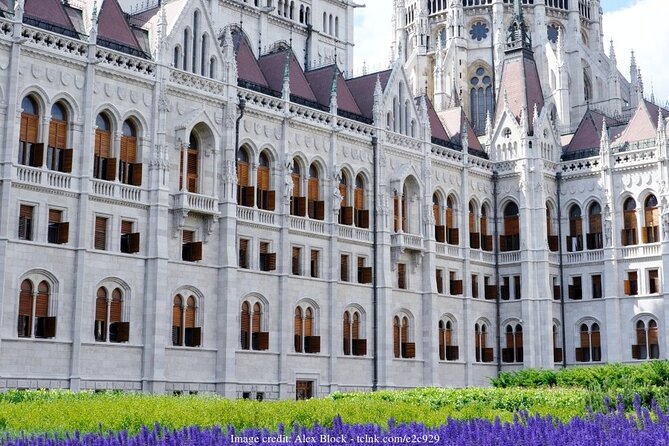
The next major sight is the Hungarian Parliament Building on Kossuth Lajos Square. You will see the enormous Neo-Gothic exterior and hear how Hungarian politics developed from earlier centuries into the twentieth and twenty-first centuries.
The visit is outside only, and entrance to the Parliament visitor center is not included. That distinction is important if you had hoped to tour the interior. This experience is about the building’s public role and the political setting around it, not an inside visit.
Even from outside, Parliament makes a strong impression. Its scale gives physical weight to the discussion of national government, sovereignty, and the changes Hungary experienced before and after Communist rule.
The Parliament stop is listed at about 15 minutes. That is enough for an exterior explanation and photographs, but not for a long architectural visit. If you want more time for pictures, tell your guide. The tour includes plenty of time for photographs, though the exact pace depends on your group.
Other collections worth an afternoon in Budapest:
- Budapest: Cat Museum Budapest Entry Ticket
★ 4.4 · 2,210 reviews - Budapest: Light Art Museum – Immersive New Media Experience
★ 3.9 · 1,269 reviews - Star Wars story Museum Ticket Pass
★ 5.0 · 249 reviews - Budapest Card: Free Public Transport, Spa & Museums with Delivery
★ 3.5 · 241 reviews
The House of Terror Museum on Andrássy Avenue
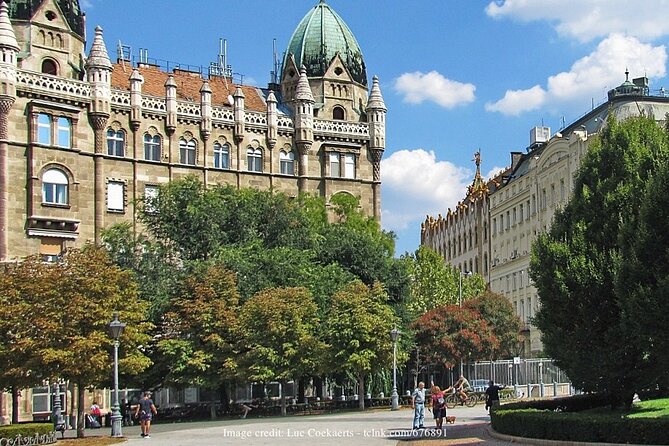
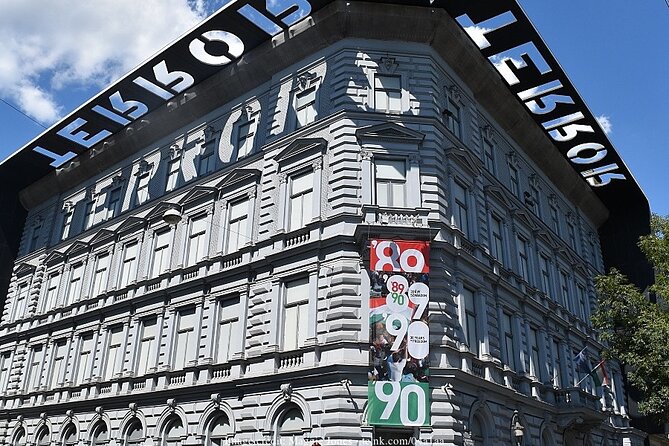
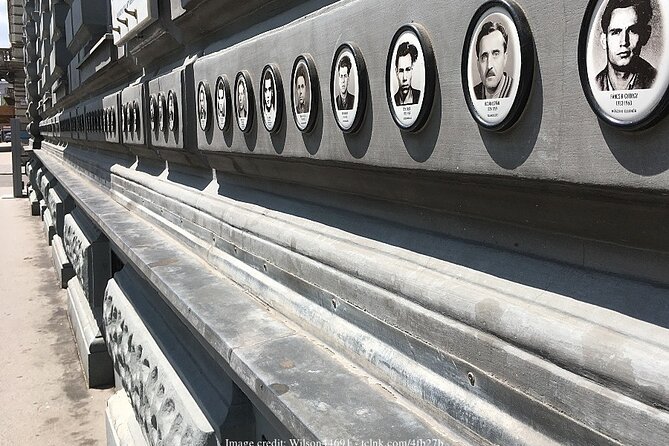
The walk ends at the House of Terror Museum, at Andrássy út 60. This building serves as a memorial to people detained, tortured, and killed under Hungary’s fascist and Communist regimes.
The museum contains exhibits connected to both systems, allowing you to compare the different forms of oppression that shaped twentieth-century Hungary. The focus is not light sightseeing. You should expect a serious visit that deals with imprisonment, violence, fear, and the lives of people who suffered behind the Iron Curtain.
Your guide provides the entrance tickets. After the walking tour, you visit the museum at your own pace, rather than staying with the guide for every room. The scheduled museum portion is about 30 minutes, but the arrangement gives you some freedom to decide how long you need inside.
That freedom is useful. You can move slowly through difficult material, spend more time with an exhibit that interests you, or leave once the experience becomes too much. Since the tour ends at the museum, you should also plan your day around that location rather than expecting a return to your hotel or the starting point.
The House of Terror is likely to be the most affecting part of the experience. I would not pair it with another demanding museum immediately afterward. Give yourself a quiet period, a meal, or a simple walk after leaving.
What a private guide adds
A private guide changes the feel of this experience. Only your group participates, so you do not have to match the pace of a large tour. You can ask about a monument, request a short pause for photos, or spend more time on a subject that matters to you.
The guide is also important because the route includes many places that could otherwise seem disconnected. Bem József tér, Liberty Square, Parliament, and the House of Terror each tell only part of the story. A good explanation links them into a sequence of political control, protest, repression, and democratic change.
Vera is one guide associated with this experience. Her explanations have been praised for making Budapest’s past easier to understand, and one group spent more than three hours on the full experience. The listed duration is about three hours, but you should allow some flexibility, particularly because the museum portion continues at your own pace.
A private tour is not automatically better for everyone. If you prefer to explore quietly with an audio guide, this format may feel too structured. If you want to ask questions and have difficult subjects explained in plain language, the private setting is a strong advantage.
Is $180 per person good value?
At $180 per person, this is a significant purchase for a three-hour experience. The value depends heavily on your group size and how much you want personal attention. Group discounts are available, but the specific discount is not stated, so check the final booking price carefully.
You are paying for a private professional guide, the walking route, and admission to the House of Terror Museum. You are not paying for transport, meals, drinks, hotel pickup, or entry to the Hungarian Parliament.
For a solo visitor or a couple, the cost may feel high compared with a standard group walk. For a family or small group that wants its own guide, the price can make more sense, especially if you value the chance to stop for questions and photographs.
I would also consider the time saved. The route joins several politically important locations and finishes at the museum, so you do not need to plan the connections yourself. That convenience is part of the value, even though you still need to reach the starting point and arrange your own onward transport.
Timing, walking, and practical planning
The tour begins at Bem József tér 2 and finishes at the House of Terror Museum on Andrássy út. Both points are near public transportation, but hotel pickup and drop-off are not included.
You should have a moderate level of physical fitness. The experience is a walking tour through the city, with several stops and time spent standing. Comfortable shoes will matter more than formal clothing.
Bring water, especially in warm weather. Food and drinks are not included, and no transportation is provided during the route. You may want to eat before meeting the guide, since the schedule moves from the starting square through the central district and onward to Parliament.
Mobile tickets make the booking practical, and confirmation is sent when you reserve. Free cancellation is available if you cancel at least 24 hours before the local start time. Changes or cancellations made inside that window are not accepted for a refund.
The subject matter also deserves practical planning. The tour deals with fascism, Communist repression, torture, and death. It may suit older children and teenagers who already have an interest in history, but the data provided does not specify a minimum age, so families should decide based on the child’s maturity.
Who should book this Budapest history walk?
I would choose this tour if you want Budapest’s political past explained as you move through real streets and public squares. It suits first-time visitors who want context for what they see, as well as returning visitors who want something beyond the usual views of the Danube and the city center.
It is a good match for people who appreciate a private guide, have questions, and want photographs without being rushed. It also works well for a group with mixed levels of historical interest, since the guide can adjust the conversation.
I would think twice if you want a light sightseeing stroll. The Columbo statue and retro shops add humor and variety, but the central subject remains serious. The House of Terror can be unsettling, and the Parliament visit is exterior only.
Should you book it?
Book this experience if you want a focused explanation of Hungary’s twentieth-century political changes, a private walking pace, and included entry to the House of Terror. The strongest parts are the opening at the 1956 protest site, the links between public monuments, and the chance to ask questions throughout the route.
Skip it if $180 per person feels too steep for a three-hour activity, if you want to tour Parliament’s interior, or if you prefer a casual city walk without difficult historical material. For the right group, especially one that values personal guidance, the route gives Budapest’s political story a clear shape and a memorable finish.
FAQ
How long does the tour last?
The experience lasts approximately three hours. The museum portion can continue at your own pace after the guide provides your entrance tickets.
Where does the tour begin?
It begins at Bem József Memorial Square, at Budapest, Bem József tér 2, 1027 Hungary.
Where does the tour finish?
The walking tour finishes at the House of Terror Museum at Andrássy út 60, 1062 Budapest. You visit the museum at your own leisure after receiving your tickets.
Is the House of Terror Museum included?
Yes. Entrance to the House of Terror Museum is included in the tour price.
Is Parliament entry included?
No. The tour visits the outside of the Hungarian Parliament Building. Admission to the Parliament visitor center is not included.
Is this a private tour?
Yes. Only your own group participates in the activity.
Is hotel pickup included?
No. Hotel pickup and drop-off are not included, so you must reach the starting point yourself and arrange your own onward transport.
Are food and drinks included?
No. Food and drinks are not included.
Do I need to be physically fit?
You should have a moderate level of physical fitness because the experience is a walking tour with several stops.
Can I cancel for a refund?
You can cancel for a full refund if you cancel at least 24 hours before the experience begins. Cancellations or changes made less than 24 hours before the local start time are not accepted for a refund.
Just added around Budapest
- Walk to recent and aged spiritual sanctuaries near Budapest★ 5.0 · 5 reviews
- Budapest: Private Walking Tour with a Local Guide★ 3.6 · 6 reviews
- Budapest: City Bike Tour with Coffee Stop★ 5.0 · 37 reviews
- Budapest: Danube River Views Bike Ride★ 4.8 · 23 reviews
- From Budapest: Guided Tour of Eger with Wine Tasting★ 4.5 · 6 reviews
- Trash Art Museum: Hungary’s First Scrap Metal Exhibition★ 4.3 · 72 reviews
- True Crime Walking Tour in the Buda Castle district★ 5.0 · 26 reviews
- Budapest: 3-Hour Trabant Sightseeing Tour★ 4.7 · 28 reviews
Communism History Tours, compared.

Communist History Tour with House of Terror Option
Read our review →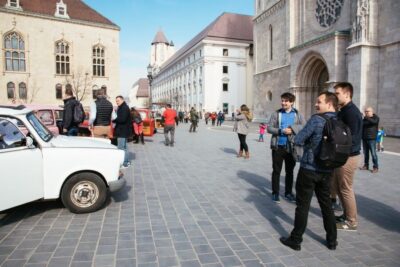
3-Hour Walking Tour About Communism (Small Group)
Read our review →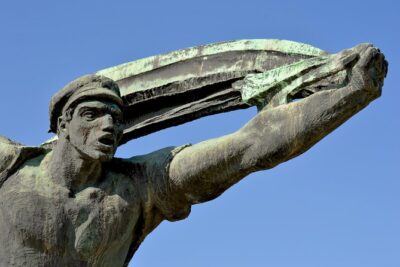
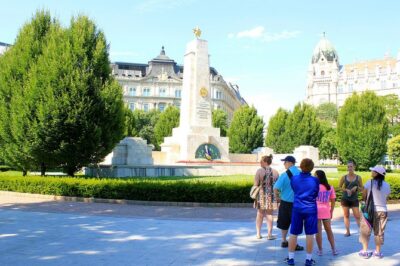

Lives of Hungarians Under Communist and Capitalist system
Read our review →
Browse the lists this tour appears in