
Reviewed · COMMUNISM HISTORY TOURS
Rise Against the Soviet: The 1956 Revolution – Private Tour
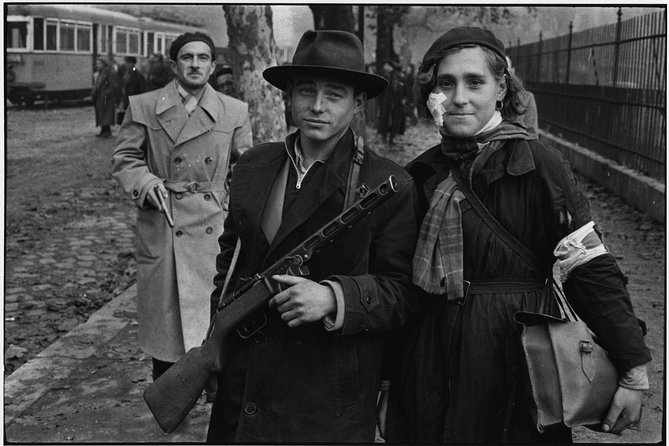
The most striking part of this tour is the way it turns Budapest streets into a map of the 1956 uprising. You go from the Parliament massacre site to the former Communist Party headquarters, then on to the radio station and Corvin Cinema, where young Hungarians fought Soviet tanks. I especially like the personal accounts and the chance to hear how daily life changed before and after 1956. I also like that the route mixes walking with public transport instead of keeping you in one small square.
The main drawback is time. Three hours is enough to trace the main story, but not enough to examine every site or give equal weight to the revolution itself. The route can also feel broad if you already know the subject well, and public transport tickets are not included. Guides Peter and Miklos are named in the feedback, with Miklos receiving particular praise for his Communist-era experience and clear answers.
Key points to know before you book
- Parliament’s Kossuth Square is linked to one of the uprising’s darkest episodes, a government massacre following a mass demonstration.
- Bem Square recalls a huge 1956 protest, while nearby Bambi Eszpresszó preserves a Communist-era interior and atmosphere.
- Radio Budapest was a fighting center where revolutionaries appealed to the outside world for help.
- Corvin Cinema marks the main resistance area, where young people attacked Soviet forces with improvised weapons.
- Private transport and pacing make the tour flexible, but you pay separately for buses, trams, or other public transport.
- The $228.66 group price covers up to five people, making it far better value for a full group than for one or two people.
Why Budapest’s 1956 story is best followed on foot
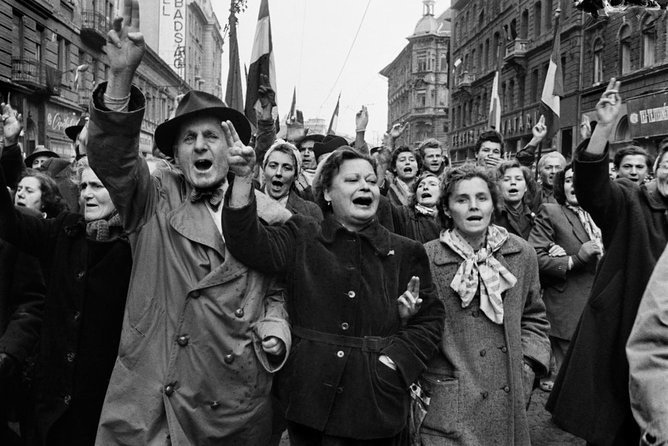
The 1956 revolution was not one isolated protest. It grew from years of political pressure, Soviet control, restricted speech, and anger over the Hungarian Communist government. The route helps you follow those connections across the city rather than treating the uprising as a list of dates.
That broader frame matters. One person who took the tour wanted a clear account of the revolution but found the guide spent considerable time on Hungarian history before 1956 and the fall of Communism in 1990. I see that as both a strength and a warning. If you want context, the wider story will help. If you want three straight hours of battle sites, you may find the focus too general.
You join this as a private group of up to five. That is useful for a serious history conversation, since you can ask questions without competing with a large crowd. The guide can also adjust the pace. One guide slowed down for a 91-year-old participant who had escaped Hungary during the uprising and shaped the discussion around his family’s connection to the events.
The tour lasts about three hours, though one reported departure ran about half an hour longer. Treat the timing as approximate rather than fixed. You will cover ground between Buda and Pest, with public transport forming part of the experience.
More of the communist years around Budapest:
- Budapest: Budapest Retro Interactive Museum Ticket
★ 4.4 · 373 reviews - Budapest: Communist History Tour with House of Terror Option
★ 4.8 · 182 reviews - Budapest: 3-Hour Walking Tour About Communism (Small Group)
★ 4.7 · 70 reviews
Kossuth Lajos Square and the Parliament massacre
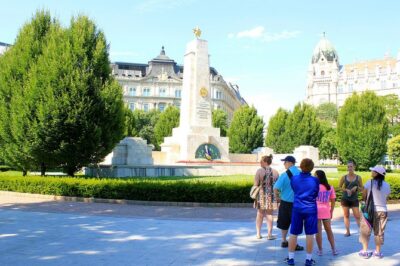
Begin at Kossuth Lajos Square, the broad civic space in front of the Hungarian Parliament. The architecture is impressive, but the square is not just a grand photo stop. It was the scene of a mass demonstration during the 1956 uprising, followed by the killing of dozens by government forces.
This is a powerful opening because it puts the political crisis in a real place. Your guide can explain how the demonstration, the government response, and the growing revolt fit together. You are not simply looking at Parliament from the outside. You are standing where public protest met state violence.
Allow about 25 minutes here. There is no admission fee listed for the stop, and the emphasis is on the square, the surrounding buildings, and the events connected with them. I would pay close attention to the guide’s explanation of who controlled the area and how the massacre affected the wider revolt.
Margaret Bridge and the former Communist headquarters
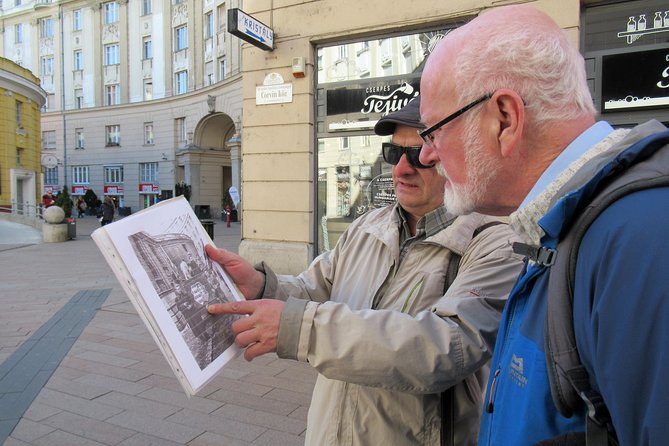
Near Margaret Bridge, on the Danube, you see a building once known as the White House. During the Communist period, it served as headquarters for the Hungarian Communist government. The location helps show how the uprising moved beyond student demonstrations and into a direct challenge to the ruling party.
You also see the statue of Imre Nagy, the prime minister associated with the 1956 revolution. Nagy was later executed, and his story gives the tour a human center. He was not merely a name in a textbook. His political position, changing role, and eventual fate reflect the painful choices made during the revolt and its aftermath.
The stop takes about 20 minutes. It is short, so you will want to ask questions as you go. The guide’s personal knowledge can make this section far more useful than a quick photograph beside the Danube.
Bem Square and Bambi Eszpresszó
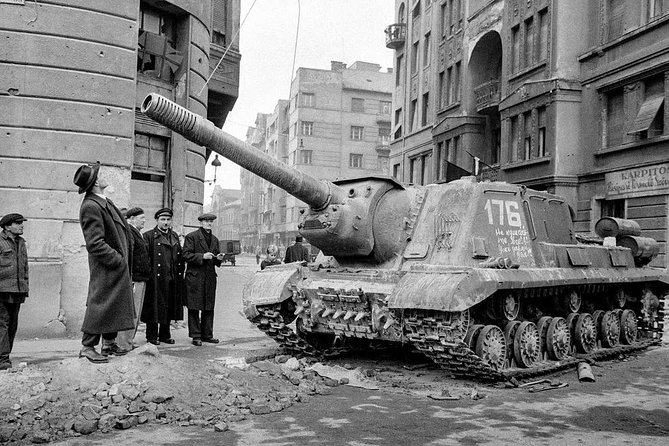
Continue to Bem Square, one of the key meeting places of the uprising. About 200,000 Hungarian students gathered here in 1956 in a rally first organized to support Polish workers. That connection is important because the Hungarian revolt did not unfold in isolation from political change elsewhere in Eastern Europe.
The square gives you a sense of the movement’s scale. This was not a small underground gathering. It was a large public expression of opposition to Soviet rule, supported by students and ordinary citizens.
The tour then includes Bambi Eszpresszó on Frankel Leó Street. The café served as a refuge for Buda intellectuals and has kept its interior and general atmosphere since the 1960s. I like this stop because it shifts the story from speeches and street fighting to everyday social life. A café can show you how people met, talked, and maintained some sense of normal life during the Communist era.
The planned time here is about 30 minutes. Food and drinks are not included, so any café purchase is your own expense. If the group has time, this is a natural place to ask how the revolution changed ordinary routines, not just government institutions.
Other private tours around Budapest:
- Private Budapest TukTuk Tour: Custom Route, Hotel Pickup
★ 5.0 · 1,307 reviews - Budapest Essentials Private Tour Highlights and Hidden Gems
★ 5.0 · 861 reviews - Budapest Private Tuk Tuk Half-Day Tour
★ 5.0 · 606 reviews - Budapest One Way Private Transfer to or from Airport
★ 4.5 · 548 reviews
The Sándor Petőfi statue and the language of revolt
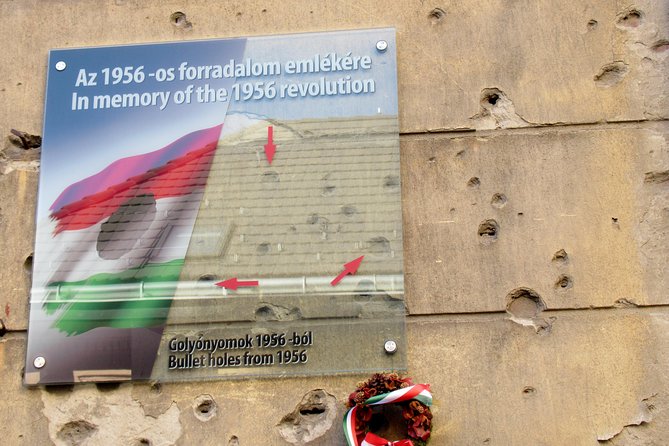
Sándor Petőfi was a central figure in Hungary’s 1848 revolution. By 1956, his name and poetry had become symbols of resistance to government control. His statue still serves as a meeting point for political events and protests.
The guide explains how actor Sinkovits Imre came to the statue during the 1956 uprising and recited Petőfi’s revolutionary words. He was later arrested and imprisoned. That episode shows how culture, performance, and public speech became political acts.
You spend about 15 minutes here. It is one of the shorter stops, but it adds useful depth. The revolution was not only fought with weapons. Poems, speeches, and public gatherings helped people express a shared demand for change.
If you are mainly interested in military events, this may seem less substantial than Corvin Cinema. I would still keep it in the route because it explains why certain public figures and older revolutions mattered so much in 1956.
Radio Budapest and the call for outside help
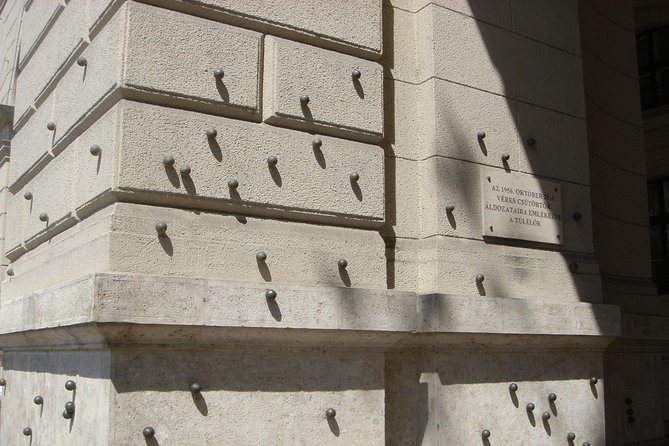
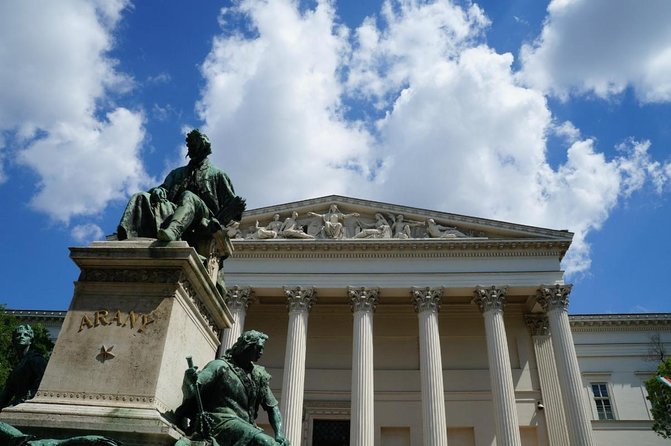
The next stop is the Magyar Rádió building, also called Radio Budapest, along narrow Sándor Bródy Street near the Hungarian National Museum. The location is somewhat tucked away from the city’s larger roads, which makes the fighting here easy to miss unless someone points it out.
Radio Budapest was one of the main centers of conflict. Revolutionaries tried to broadcast their demands and appealed to the rest of the world for help. The building therefore mattered as both a communications site and a military target.
The stop lasts about 20 minutes. The supplied details identify the building as the focus, not a museum visit, so you should not expect a long indoor exhibition here. Instead, the guide connects the building to the wider struggle over information, public morale, and international attention.
For me, this is one of the most useful stops because it explains how a rebellion becomes visible beyond its own streets. It also gives you a better sense of why control of radio and news mattered so much under an authoritarian government.
Corvin Cinema and the young resistance
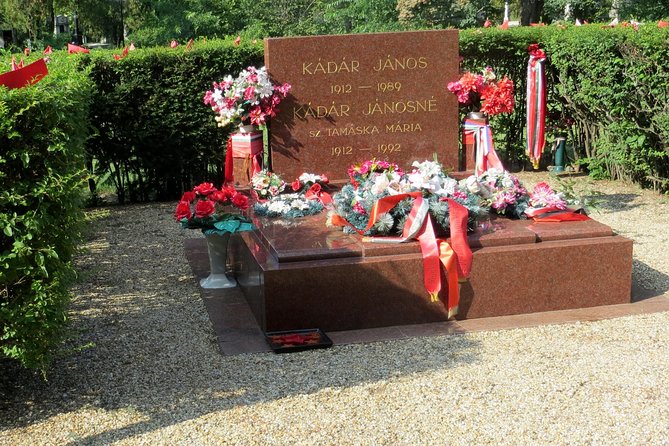
The final main stop is Corvin Cinema and the nearby Corvin köz. This was the principal resistance center during the 1956 fighting. Local young people used guns taken from soldiers and Molotov cocktails against Soviet tanks.
The site gives the tour its most direct view of the armed struggle. Your guide discusses the traces and reminders of the battles, the Soviet invasion, and what followed after resistance was crushed. Compared with the ceremonial setting of Parliament or the symbolic role of Petőfi, Corvin feels more immediate and physical.
Plan on about 30 minutes here. One participant particularly valued the mix of walking and tram rides and also mentioned an underground memorial connected with the revolution. The tour details do not promise a fixed underground memorial visit on every departure, so ask your guide at the start if that part matters to you.
Corvin is also where the route’s wide scope pays off. You have moved from public protest and political authority to street fighting. The stops make it easier to understand that the uprising involved students, workers, intellectuals, political leaders, and very young people taking enormous risks.
What the guide adds to the places
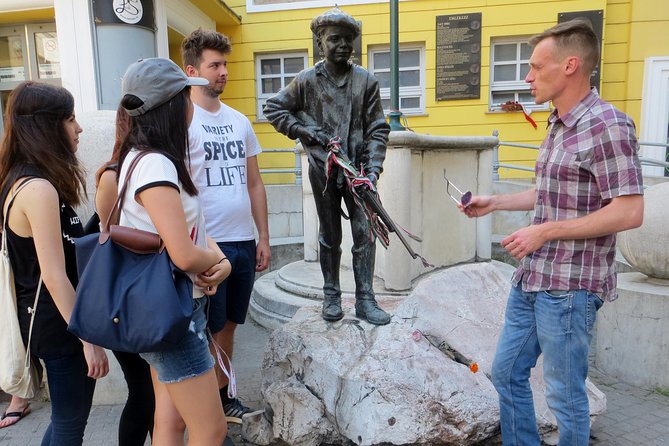
The buildings and statues are important, but they do not explain themselves. The best part of this experience is the guide’s ability to connect each location to people and choices.
Miklos is praised for having lived through the Communist era and for giving personal insight into the period. That can add a layer no printed timeline can provide. Peter is also described as able to explain Budapest’s long history in simple terms while answering detailed questions.
The experience is not dependent on one fixed style. One guide reportedly admitted it was his first time leading this particular route, and that departure felt too general for someone who had already studied the 1956 revolution. That point is worth taking seriously. A private tour can be excellent, but the depth may depend on who leads it and how strongly you steer the discussion.
At the beginning, tell the guide what you want most. You might ask for more time on the Radio Budapest fighting, the fate of Imre Nagy, the role of students, or what daily life was like after the uprising. If you already know the basic timeline, say so and request less background on earlier Hungarian history.
Price, group size, and practical value
The listed price is $228.66 per group of up to five people. For five, that works out to about $45.73 per person. For two people, it is about $114.33 each, and for a solo booking the price is much harder to justify.
That makes this tour best suited to a family or small group with a shared interest in twentieth-century history. You get a private guide, hotel pickup or a central meeting point, handouts, and a communism-related souvenir. Public transportation tickets, food, and drinks cost extra.
The value comes from the guide rather than admission fees, since the listed stops are free. You are paying for interpretation, route planning, and the ability to ask questions. If your group has little background in Hungarian history, that service can save you hours of sorting out names and events on your own.
You should expect a moderate level of physical fitness. The tour involves walking and public transport, and the route covers several parts of Budapest. Service animals are allowed, and the meeting point can be arranged at your Budapest hotel or at a central location.
Who should book this private history tour?
I would choose this experience if you want more than a general city tour and have a real interest in the Communist period, political protest, or twentieth-century Europe. It is especially well suited to anyone who wants personal stories alongside the main events.
It can also work well for a mixed-age family. The private format lets the guide adjust the pace, as shown by the slower approach taken for an elderly participant. A relative with a family connection to the 1956 exodus may find the subject especially moving.
I would hesitate if you want only battle sites or only the 1956 revolt. The route includes Hungary’s earlier revolutionary tradition, Communist life, and the transition that ended in 1990. That wider frame is useful, but it takes time away from the central subject.
The tour is offered in English. Confirmation arrives at booking, and cancellation is free if you cancel at least 24 hours before the start time. Changes or cancellations inside that window are not accepted for a refund.
Should you book Rise Against the Soviet?
Book it if you are a small group willing to pay for a private guide and want Budapest’s 1956 uprising explained on location. The strongest elements are the sequence of sites, the personal Communist-era perspective associated with Miklos, the flexibility of a private group, and the move between Buda and Pest by public transport.
Think twice if you have only a casual interest or expect a tightly focused military history lesson. Three hours passes quickly, and one past departure felt too general for someone who already knew the subject. For most first-time learners, though, the combination of Parliament, Bem Square, Radio Budapest, and Corvin Cinema gives you a clear starting point for understanding why 1956 still matters in Hungary.
FAQ
How long is the tour?
The tour lasts approximately three hours. One departure ran about half an hour longer, so allow some flexibility in your schedule.
How many people can join the private tour?
The private experience is for your group only, with a maximum of five people.
Is hotel pickup available in Budapest?
Yes. The guide can meet you at your Budapest hotel or at a central meeting point you agree on.
Is the tour offered in English?
Yes. The experience is offered in English.
Are public transportation tickets included?
No. Public transportation tickets or passes are not included. Food and drinks are also separate.
What is included in the price?
The tour includes handouts and a communism-related souvenir. The listed site visits do not require admission fees.
Can I cancel for a full refund?
Yes, if you cancel at least 24 hours before the experience start time. Cancellations or changes made less than 24 hours before the start time are not eligible for a refund.
Just added around Budapest
- Walk to recent and aged spiritual sanctuaries near Budapest★ 5.0 · 5 reviews
- Budapest: Private Walking Tour with a Local Guide★ 3.6 · 6 reviews
- Budapest: City Bike Tour with Coffee Stop★ 5.0 · 37 reviews
- Budapest: Danube River Views Bike Ride★ 4.8 · 23 reviews
- From Budapest: Guided Tour of Eger with Wine Tasting★ 4.5 · 6 reviews
- Trash Art Museum: Hungary’s First Scrap Metal Exhibition★ 4.3 · 72 reviews
- True Crime Walking Tour in the Buda Castle district★ 5.0 · 26 reviews
- Budapest: 3-Hour Trabant Sightseeing Tour★ 4.7 · 28 reviews
Communism History Tours, compared.
Communist History Tour with House of Terror Option
Read our review →
3-Hour Walking Tour About Communism (Small Group)
Read our review →
Lives of Hungarians Under Communist and Capitalist system
Read our review →
Browse the lists this tour appears in